
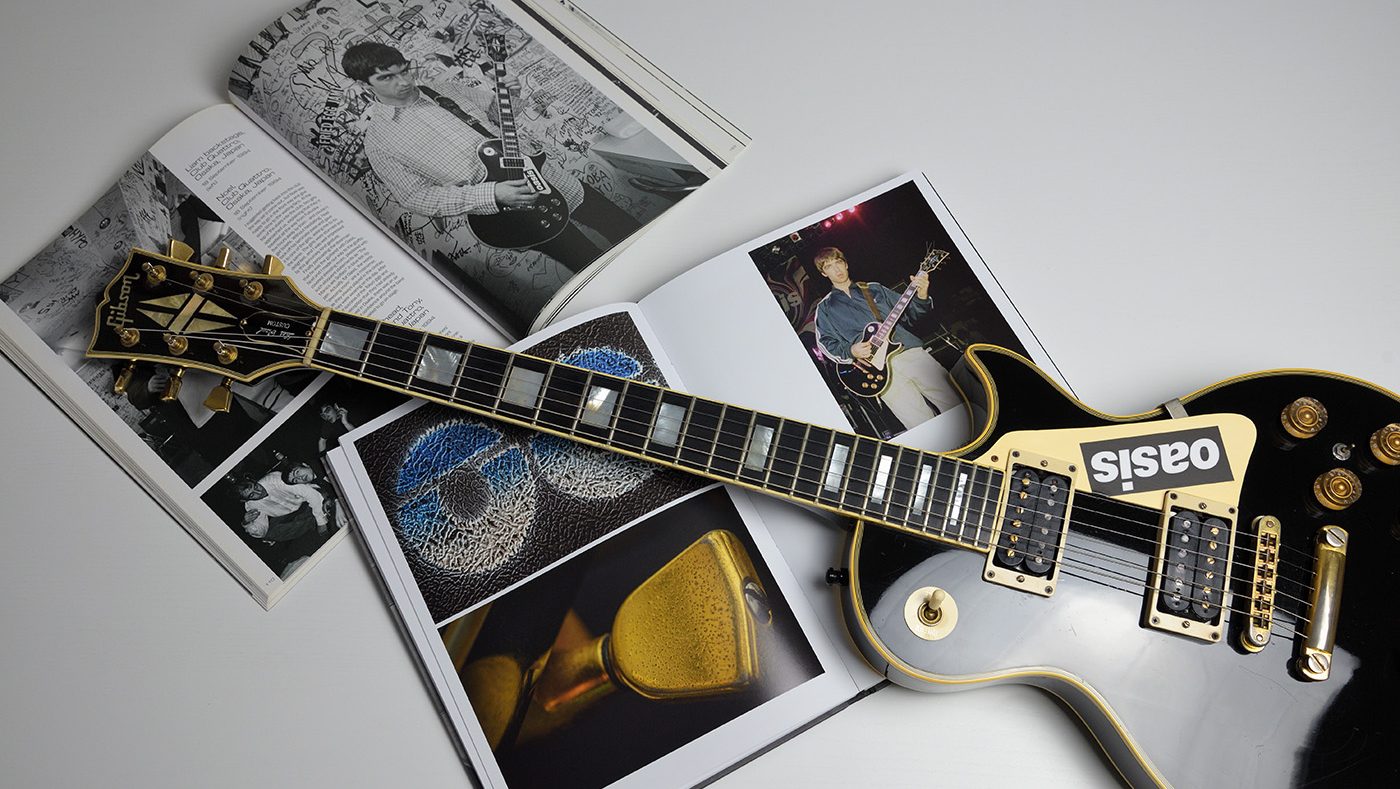
Since the very first days of my oasis obsession, few guitars have captured my attention like Noel Gallagher’s black Les Paul, forever immortalized in the Whatever video clip which – not by coincidence – was filmed on this very day 30 years ago, on December 5, 1994.
I wasn’t such a guitar nut back then, but that Les Paul looked badass and truly special. And it really is, given its background history: it is a 1978 Custom model, formerly owned by Johnny Marr, who used it to write and record various songs for the album The Queen Is Dead. For all the historical details, check out the dedicated page, which will be updated in the next few days with plenty of new material.
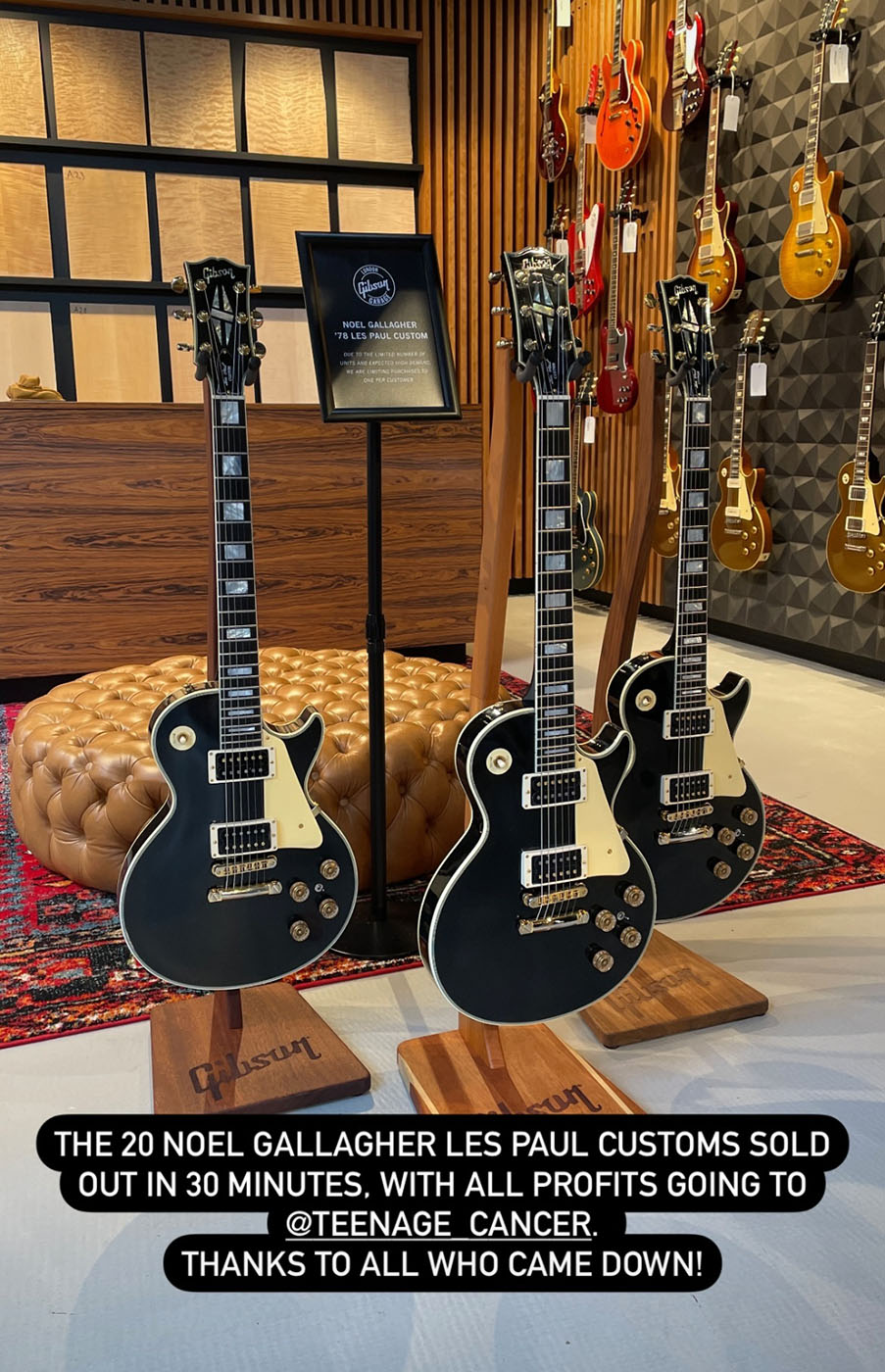
In February of this year, to coincide with the opening of the Gibson Garage in London, a gorgeous, uber-limited, and uber-pricey replica of Noel’s black Les Paul was released: only 20 pieces worldwide, and they were only available in-person to attendees on the official opening day. Getting one was never an option for me, but its release prompted me to assemble my own vintage-accurate replica – something I had wanted to do for years.
Keep reading this post for everything you’d like to know about the 2024 Gibson reissue and how to build a proper vintage replica.
The 2024 “Gibson Garage” limited edition replica
These replicas look awesome, don’t they? They feature a lightly aged Ebony finish by the Gibson Custom Murphy Lab, and each guitar is hand-signed by Noel Gallagher. All profits from the sales were donated by Gibson and Noel to support the Teenage Cancer Trust.
Only 20 instruments were built and sold in-person at an undisclosed price, probably between £10k and £12k. Unfortunately, many were bought not by hardcore fans but by the usual scalpers, who are now reselling them for an insane profit. At least three are currently listed for more than £20k, with none of that sum going to charity, I bet.
By the way, just to keep up the ranting mood, a leading guitar news outlet published an article about the Gibson Garage replica and lifted a lot of information about the 1978 original from here without giving any credit. How do I know? Well, there was a small mistake in the description I had written, and they blatantly included it in theirs. Whoops! Please credit my hard research work next time: it would be very appreciated.
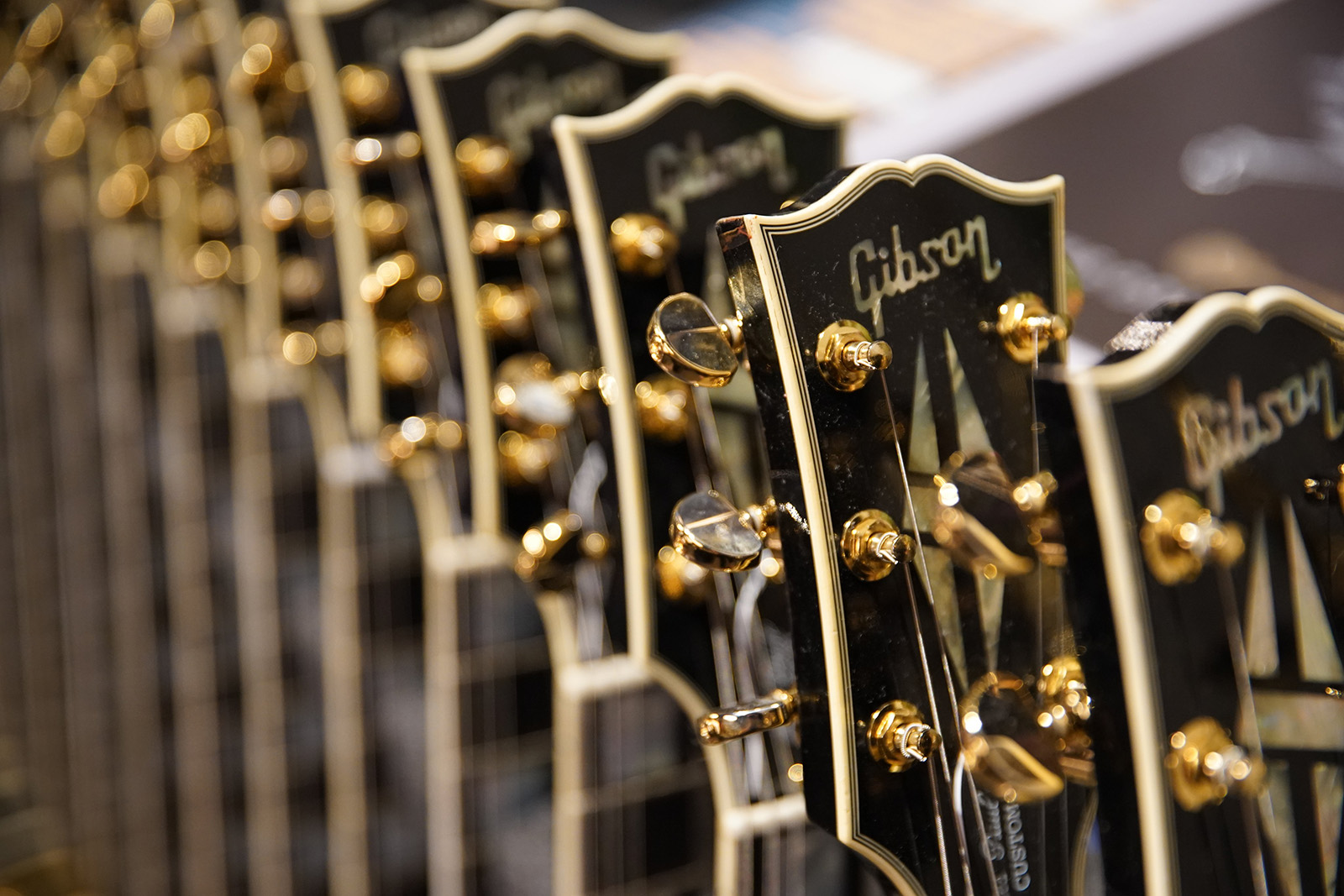

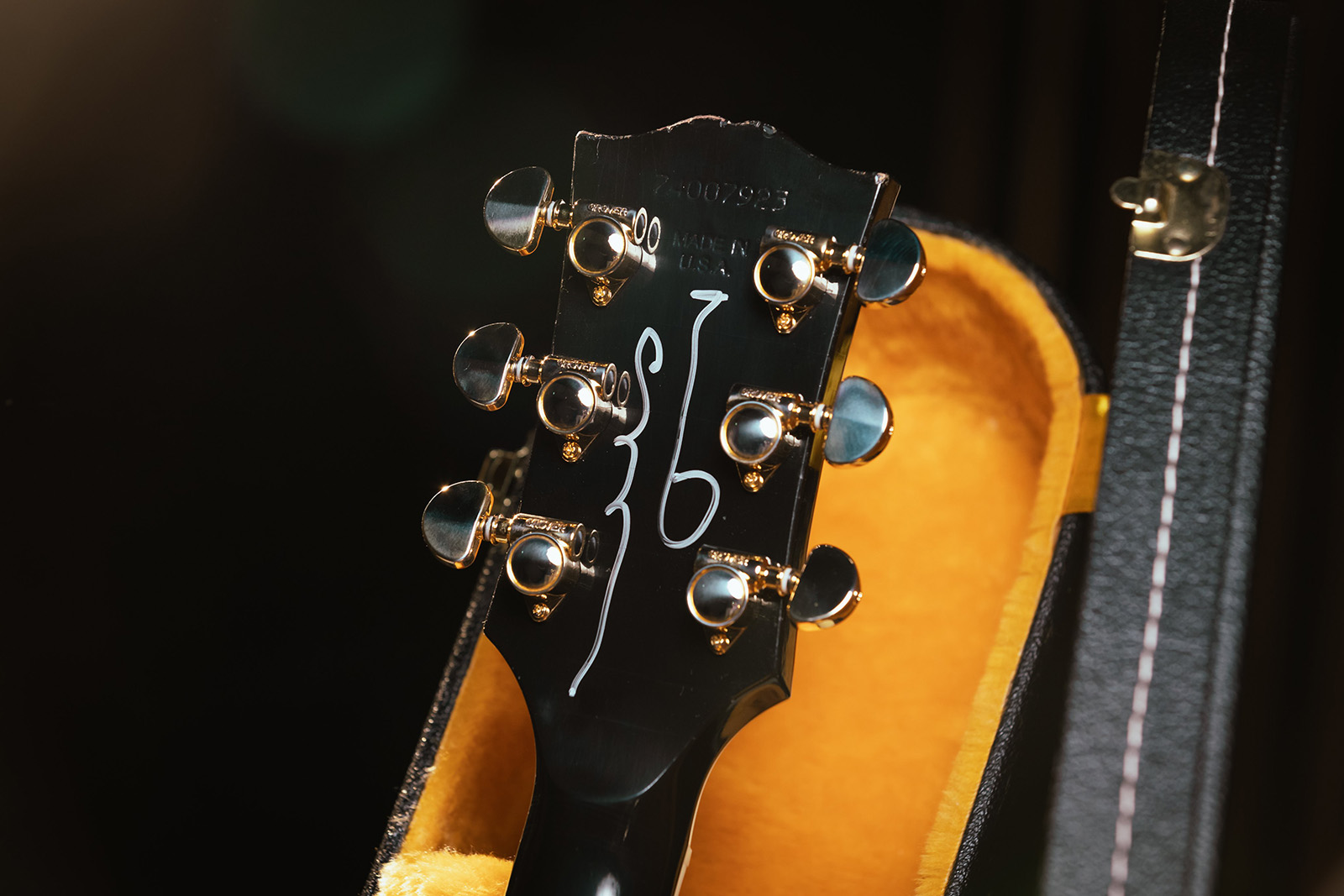
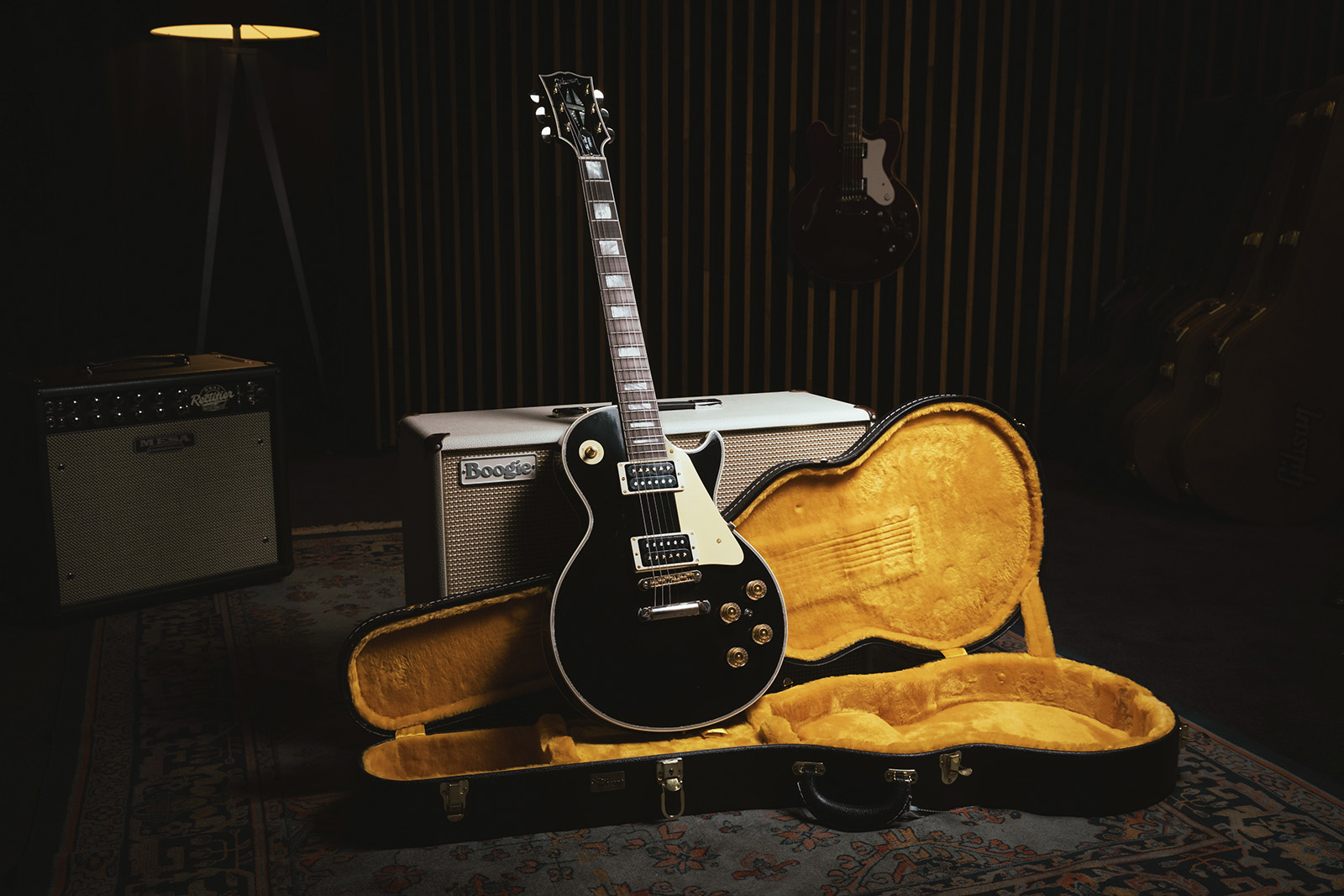
This limited edition replica is very close to Noel’s original 1978 model. It features a few distinctive elements of Gibson guitars from the ’70s, like the volute on the back of the headstock to reinforce the famously weak spot, and the “pantograph” Gibson logo.
Most interestingly, it also features the peculiar small switch between the four knobs, which was probably added by Johnny Marr or a previous owner. This switch operates a coil split, which, in short, makes humbucker pickups sound more like single-coils.
Although Gibson didn’t release the official specs of the Noel Gallagher Les Paul Custom replica, a lucky owner confirmed to me that it is equipped with a 498T pickup in the bridge position and a 490R pickup in the neck position. It’s not a pickup set that I particularly like; they sound a bit too hot and slightly harsh for my taste, but they’ve always been a popular choice on hard-rocking Les Pauls.
It is unknown which pickups were in Noel’s original 1978 guitar, but they were very hot and “modern-sounding,” according to Noel. The 498T/490R combo sounds like a fitting choice from Gibson, then.
UPDATE (Sept 2025) – After some detective work, the mystery of which pickups it had has finally been solved… check out the full in-depth article for all the details!
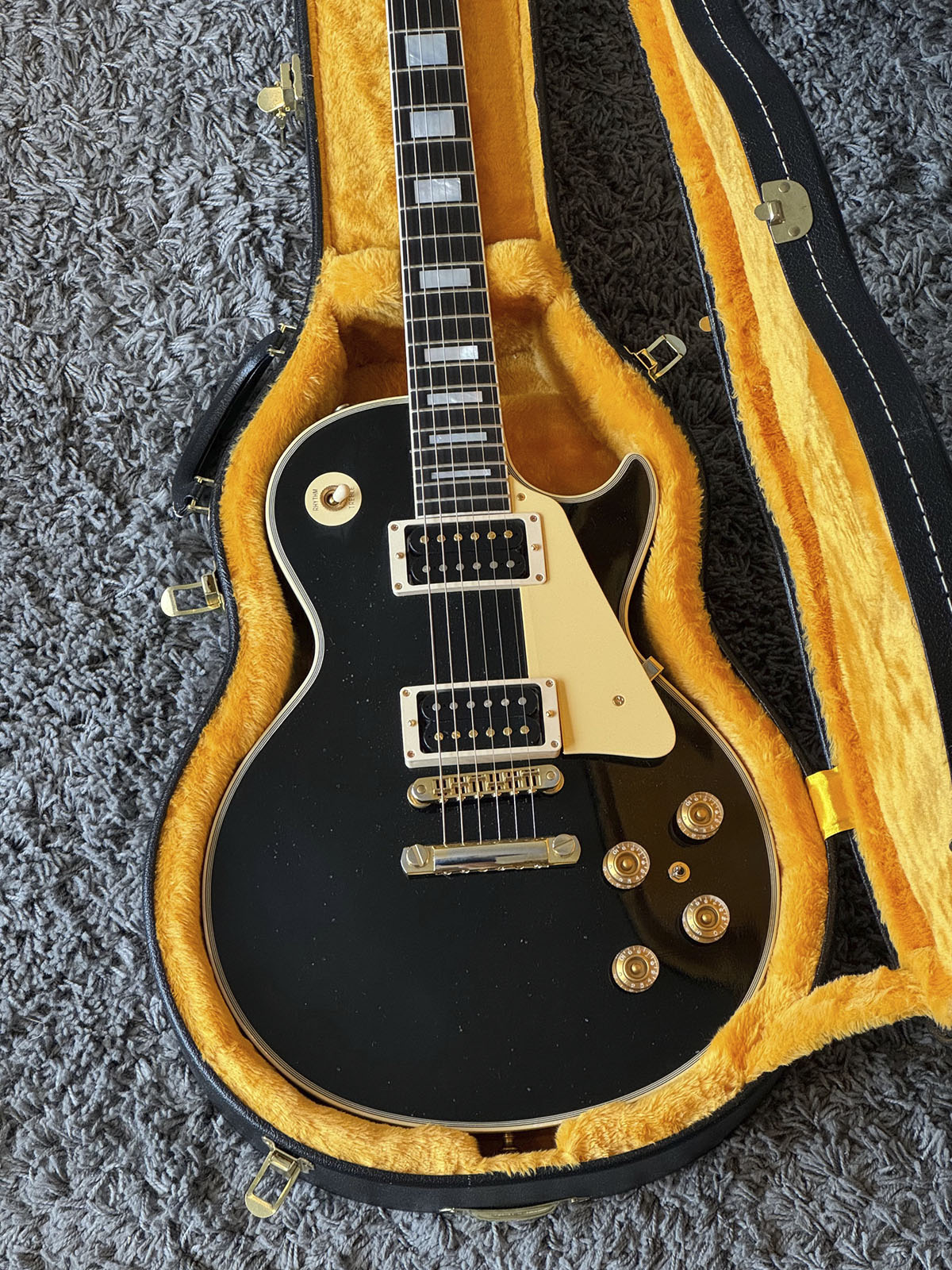
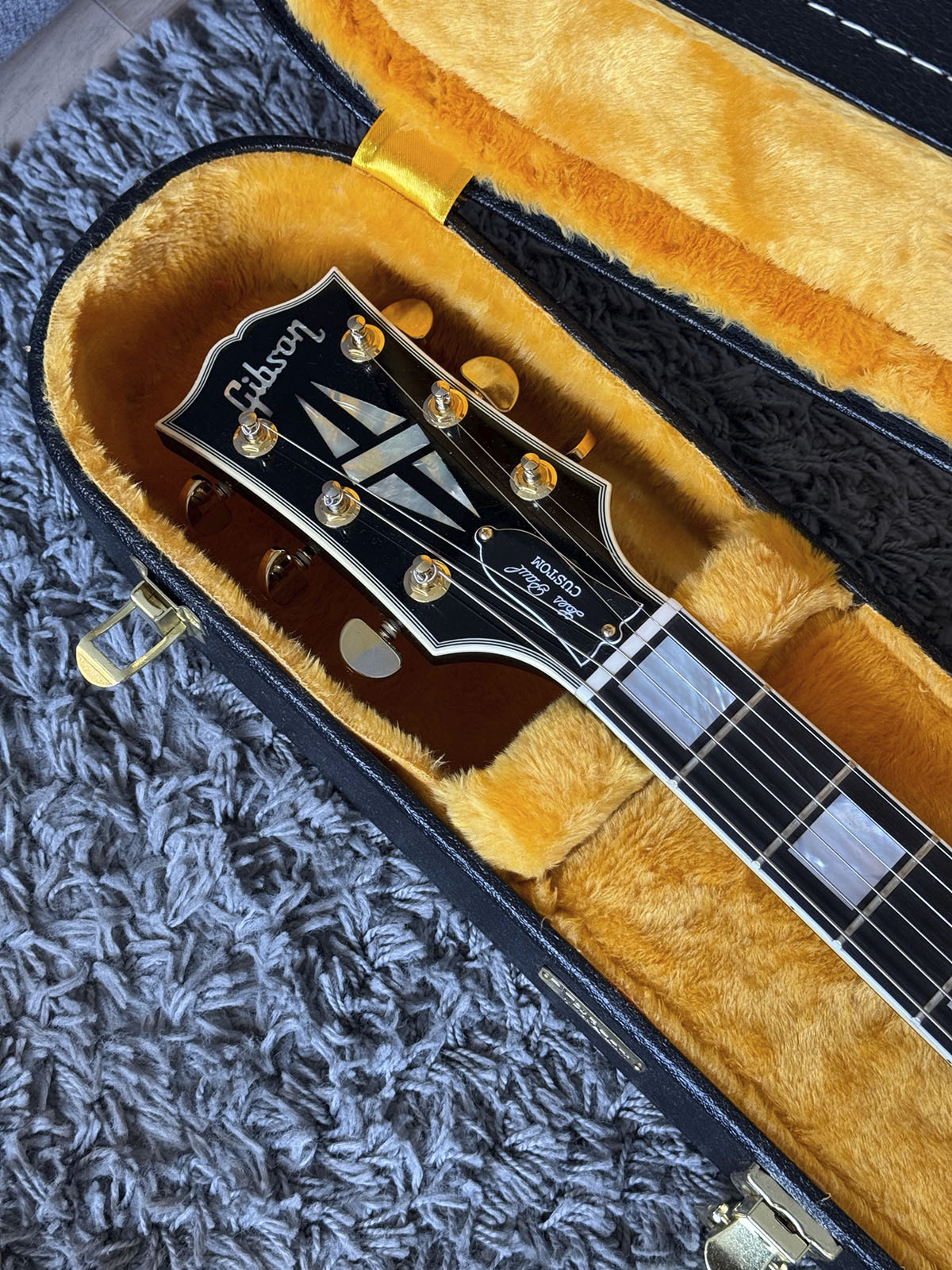


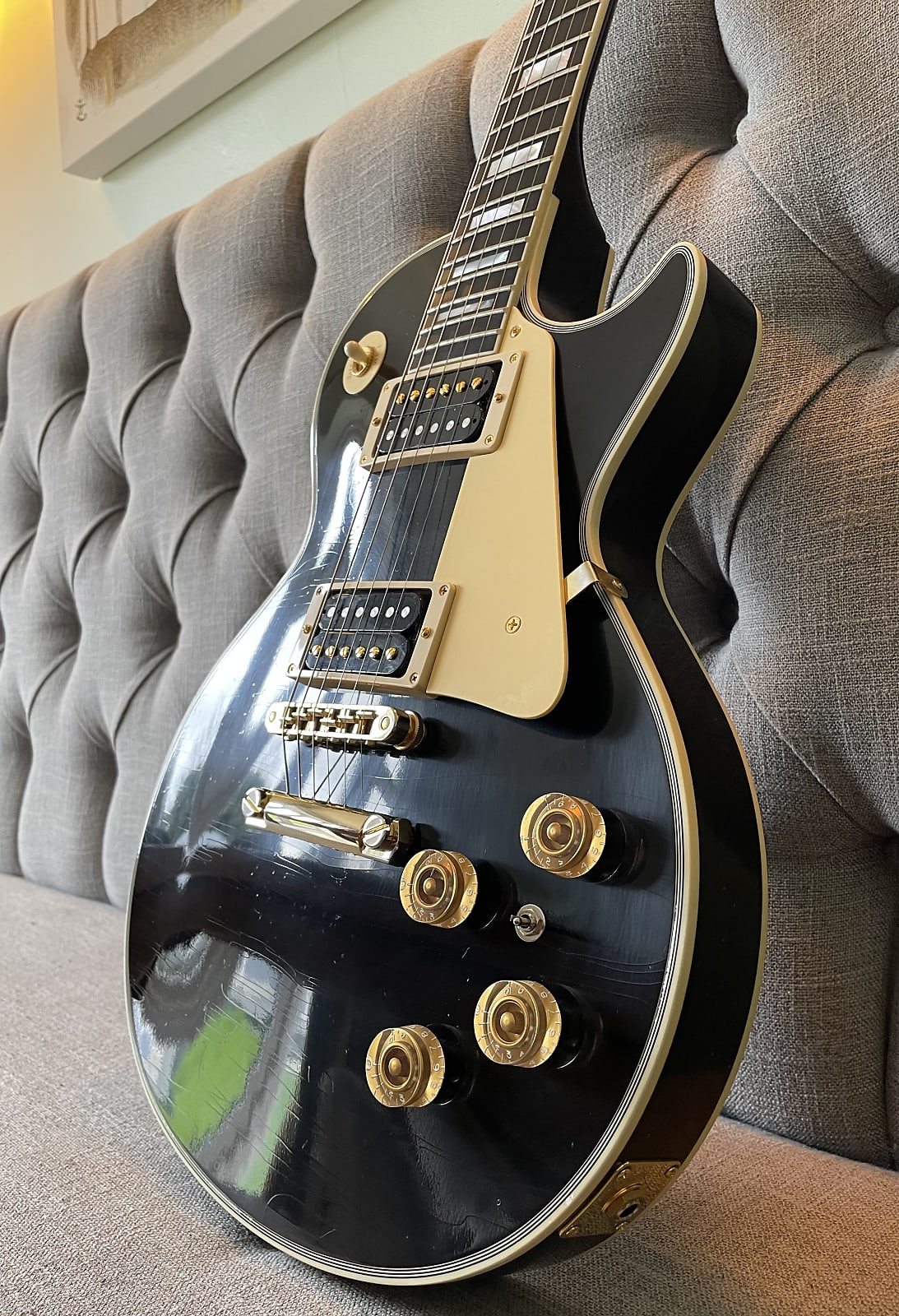
What did Gibson get wrong? Honestly, just a few minor details.
First of all, it seems that the 2024 replica is considerably lighter than most Les Pauls from the late ’70s. According to one owner, it weighs around 3.9 kg, while many LPs from that era could weigh up to 4.7 kg. As Noel stated, his 1978 Les Paul “is the fu**ing heaviest piece of equipment I’ve ever picked up in my life.“
The body shape also seems to be slightly different, as the lower horn was “pointier” in late ’70s and ’80s models.
The tuners on the back of the headstock are regular Grover tuners with rounded/kidney buttons, but the period-correct machine heads should be Gibson-branded Schaller M-6 with keystone buttons.
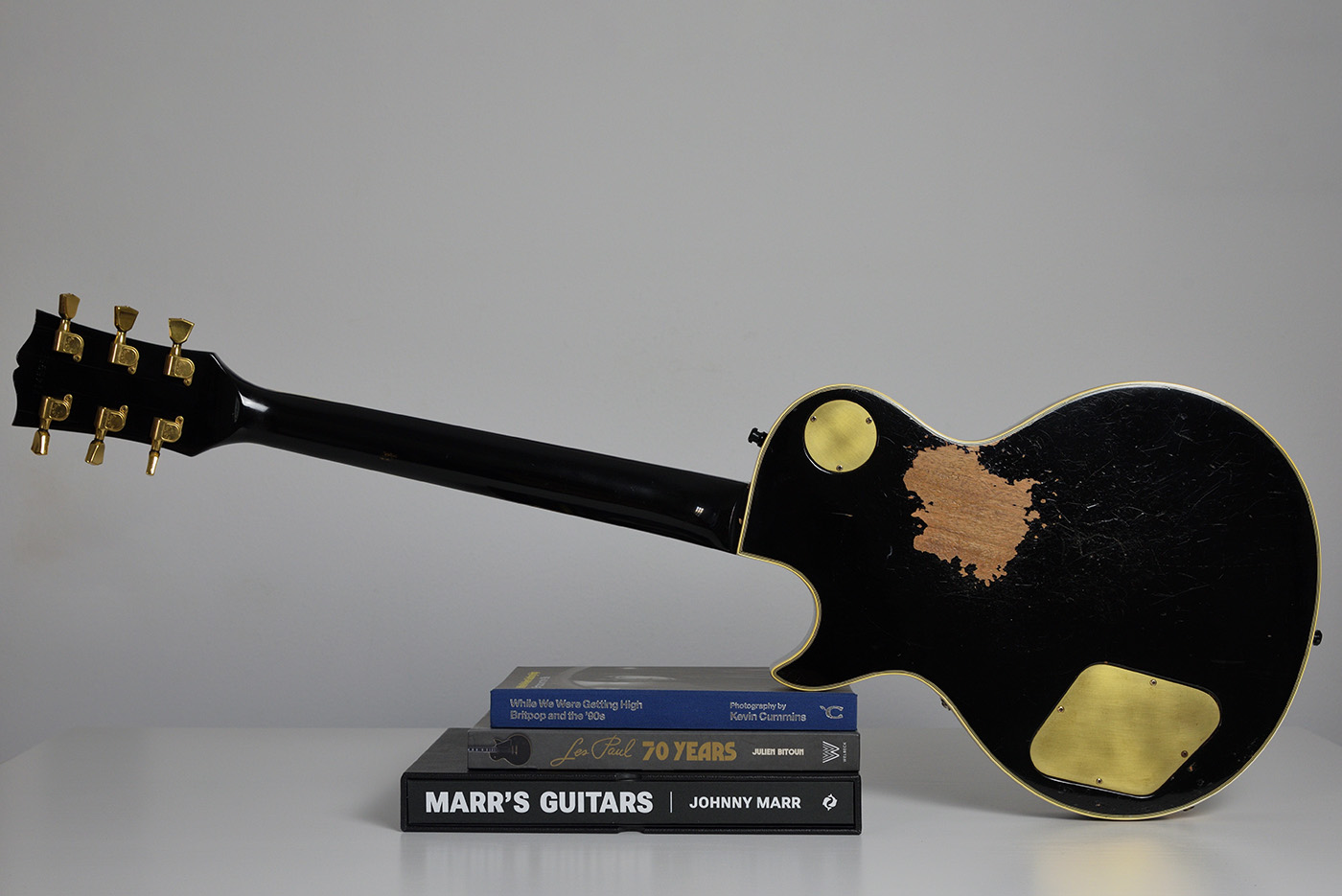
Finally, to conclude the list of petty things that Gibson got wrong, the rear control cover plates are regular Gibson pieces, but Noel’s 1978 LP had aftermarket polished brass/gold covers installed. Also, the pickguard bracket is nickel and not gold-coloured on Noel’s LP.
And… it’s also missing one essential feature: the black oasis sticker on the pickguard!
Recreating a vintage-correct replica
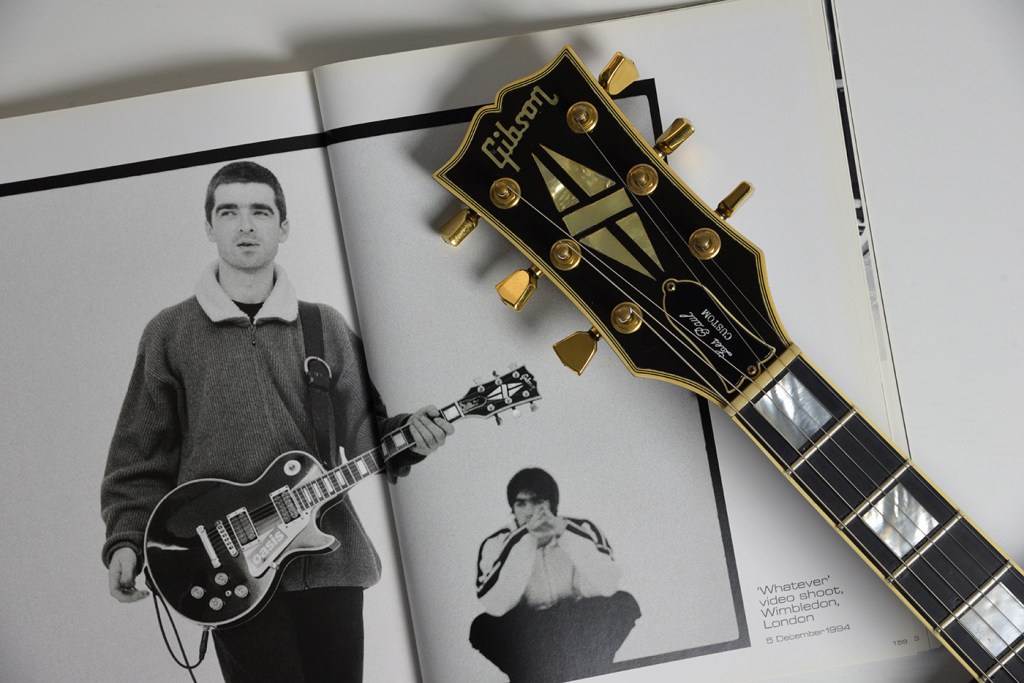
The Gibson Garage replica was the final push I needed to decide to recreate my own black “oasis” Les Paul. I searched through ads for a month until I found a real late ’70s black Les Paul Custom from a reputable German seller who deals with vintage guitars: it was an early 1979 model, built just a few months after Noel’s 1978 one. It wasn’t a case queen; it shows a few battle scars, but I like vintage guitars to appear well-lived. Also, guitars that are a bit worn often mean that they’re good ones!
I caved in and bought it, planning to modify it to look and function identically to Noel’s Les Paul. The first and most sacrilegious step was to drill a tiny hole in the body for the coil split toggle switch. I looked at dozens of pictures to find the perfect spot and carefully drilled a pilot hole, then enlarged it with a step cutter.
The original “T-Top” Gibson pickups sounded great, but since they weren’t suitable for coil splitting, they had to go. This might sound like another sacrilege to purists, but Noel’s Les Paul didn’t have its original pickups either. In the mid-’80s, Johnny Marr often put Seymour Duncan or DiMarzio pickups in his guitars, so I decided to follow his route.
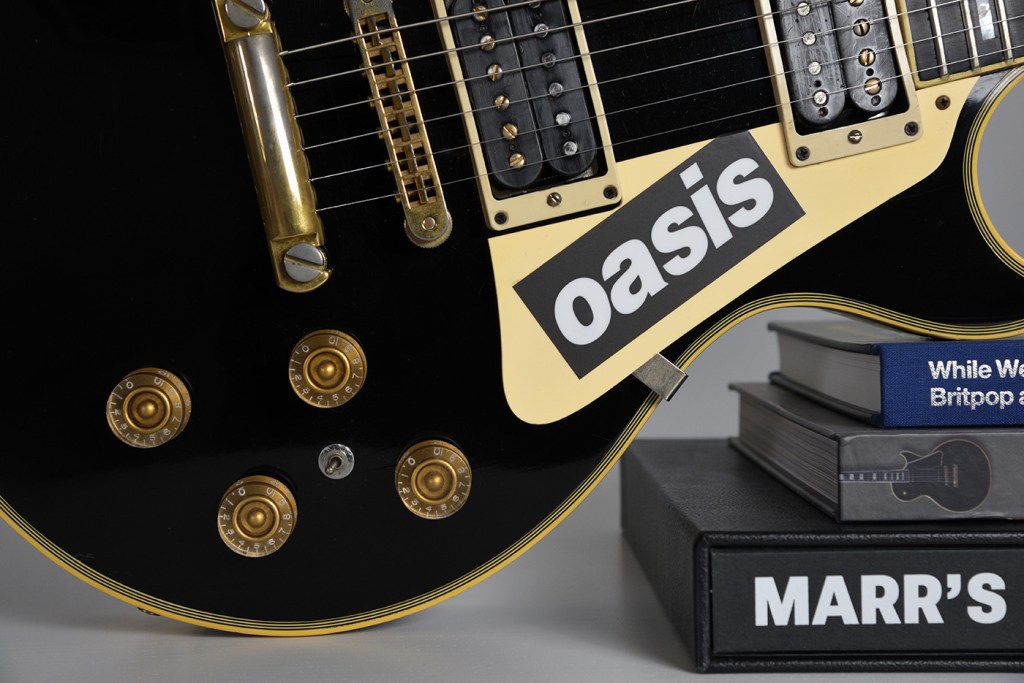
The neck pickup wasn’t a hard choice: I went for a Seymour Duncan Jazz Model. I can’t stand dark pickups in the neck position, but the Jazz Model adds the brightness that most humbuckers often lack. I rarely select the neck pickup anyway, but the Jazz Model makes it playable for me.
Choosing the bridge pickup was a more difficult task. I didn’t want a high-output ceramic pickup, so I initially installed a Seymour Duncan Pearly Gates in the guitar – a slightly hotter PAF-type humbucker. I chose it mainly because it’s what Noel had in his Gibson Firebird in 1994 when he recorded Some Might Say and Acquiesce. The thing is… I didn’t like how it sounded in this Les Paul. The highs were a bit shrill, and the lows were hollow. It did sound very good when coil-split, though.
I did more research for a different pickup and found a Seymour Duncan model that I’d never heard of before, the Saturday Night Special. Intrigued by the name, the unusual specs (like the Alnico IV magnet), and its description as “the bridge between vintage and modern humbuckers, perfect for late-70s arena rock tones,” I decided to give it a try. Once installed, it immediately sounded like the right pickup for this Les Paul Custom.
The coil split, operated via the tiny toggle switch, was another of Johnny Marr’s preferred mods in the mid-’80s. Both pickups sound good when split, and the middle position (with both pickups in parallel) almost creates a credible Stratocaster-like tone.
UPDATE (Sept 2025) – With the exact model of the original pickups now identified, the replica is more accurate than ever. The section above is now outdated — check out this in-depth article for details and updated photos of the replica!
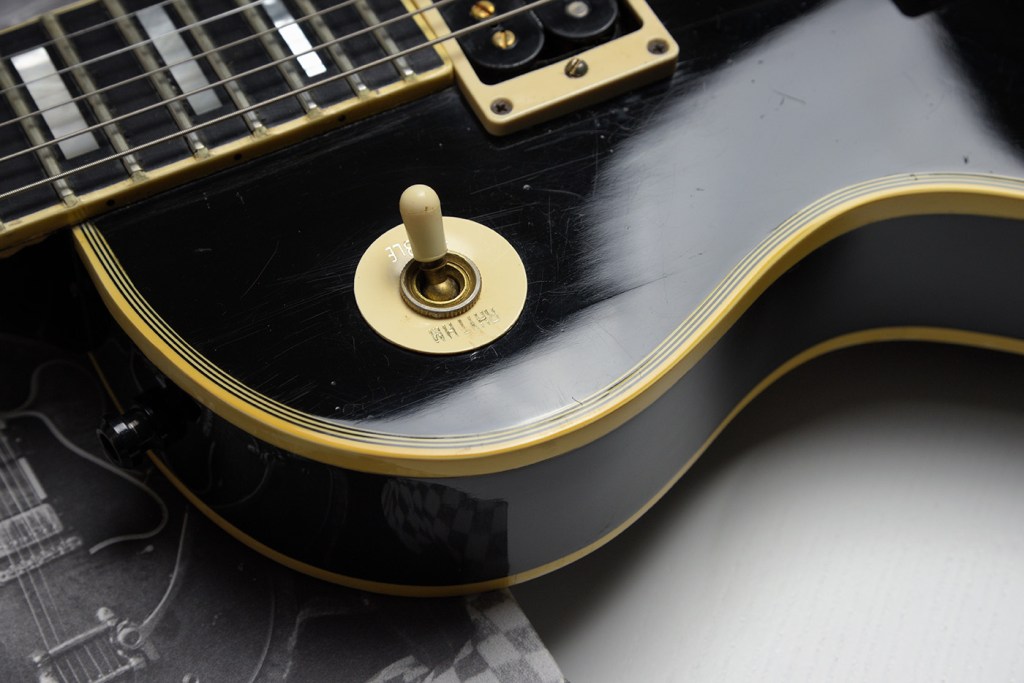
Cosmetically speaking, most of the black plastic parts had to be replaced with cream ones: the pickup mounting rings, the pickguard and the toggle switch “poker chip” are all artificially aged, vintage-correct parts. The black speed knobs were also replaced with lightly aged gold knobs of the same type.
The pickguard bracket is finished in aged nickel and the strap buttons are black Schaller S-Locks, as seen in some recent pictures of Noel’s Les Paul. Tiny, irrelevant details for over-fussy people!
Finally, the control cavity covers on the back had to be in gold or brass finish. Gibson did make official aftermarket gold covers in the late ’80s and early ’90s, but they’re impossibile to find: those where most likely the ones that Johnny (and then Noel) had in the LP Custom. An artisan in the US creates brass covers for Les Pauls in a gorgeous unpolished finish: they aren’t cheap but they look the part. They also add a bit more weight to this 4.5 Kg axe! In Johnny’s words, “if you get a really good swing on it, you’ll take some fu**er’s head off“.
Enjoy more pics of the finished guitar below!

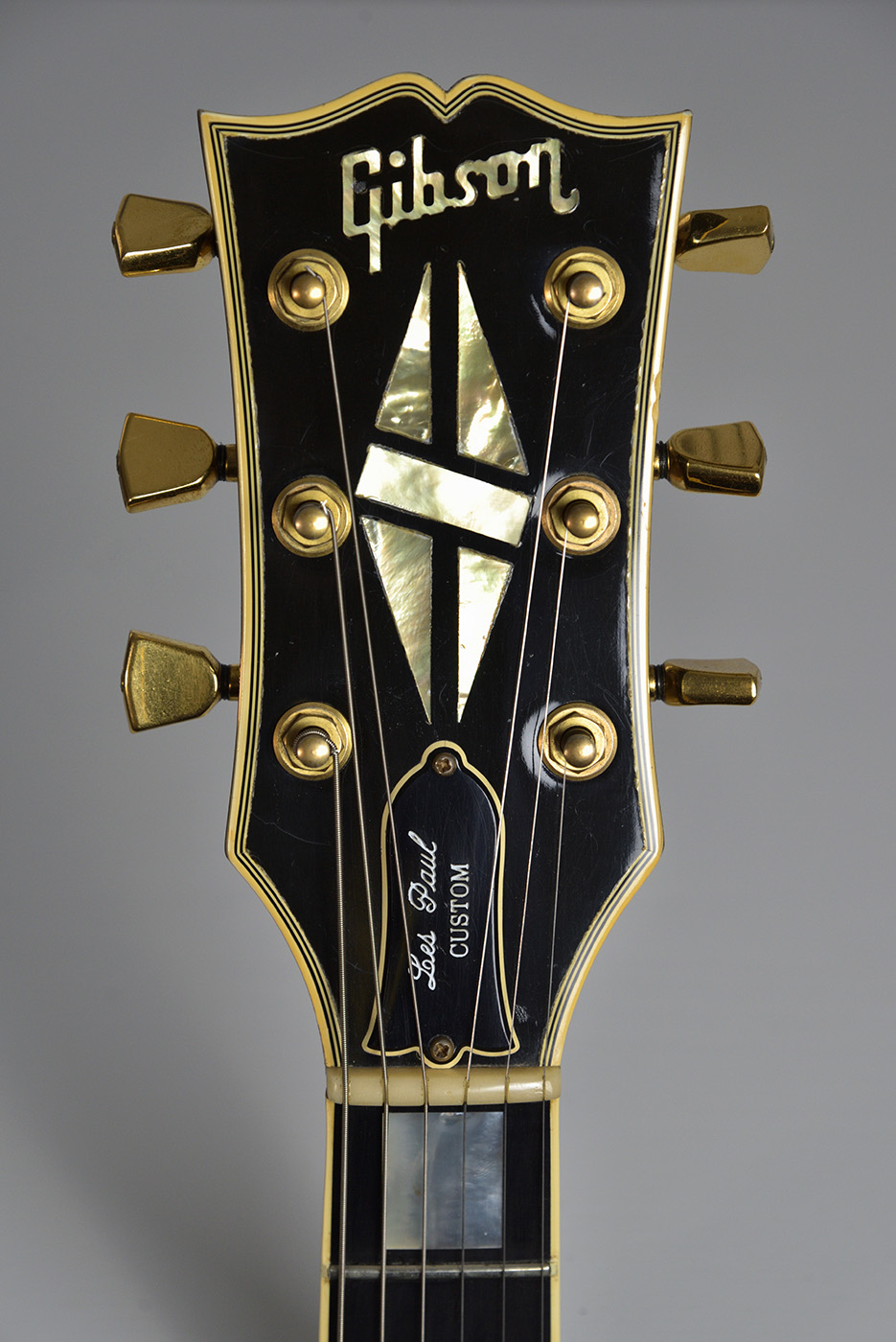
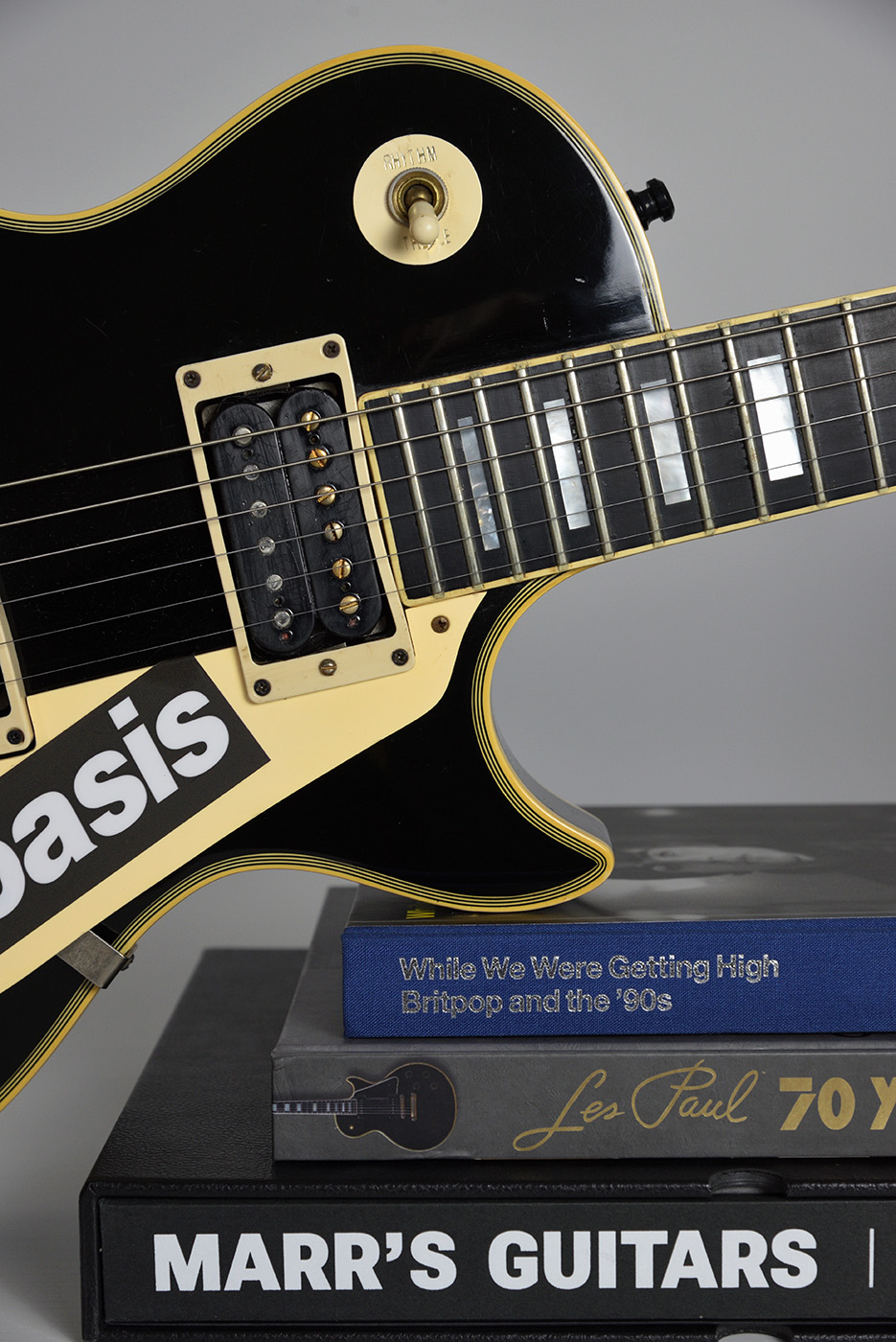
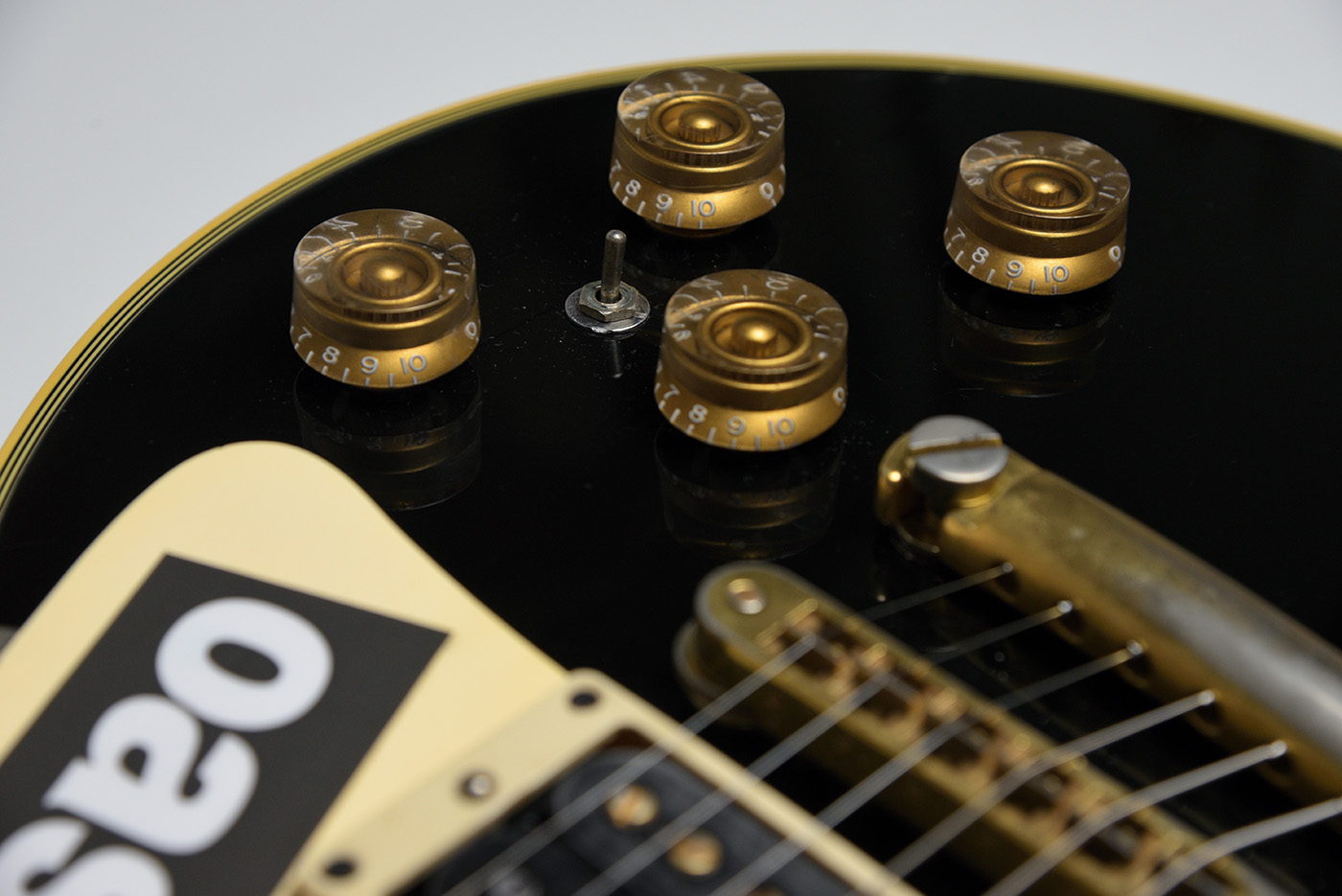

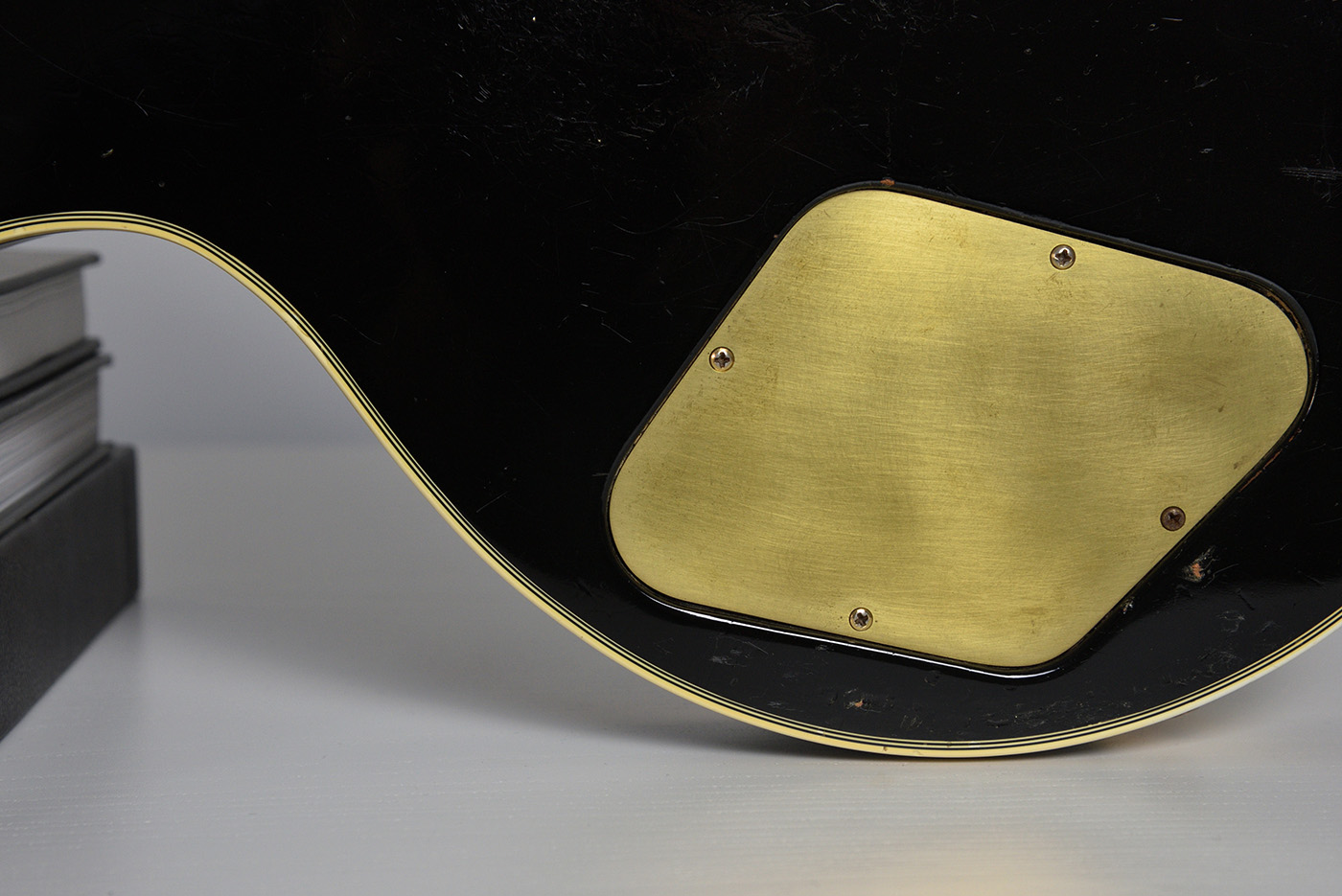
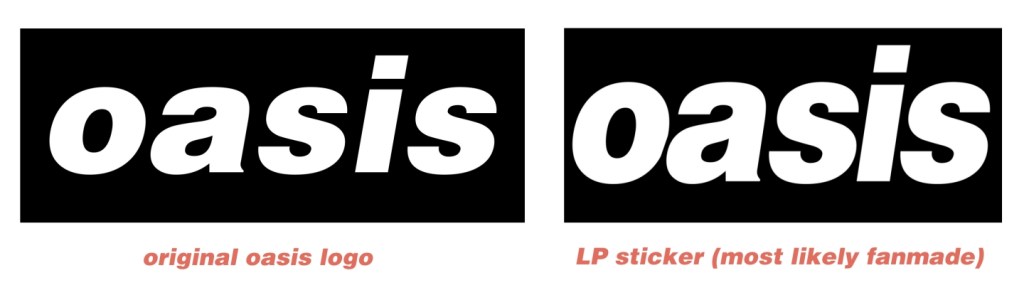
Last but not least… the oasis sticker on the pickguard.
When Noel got the guitar from Johnny in August 1994, he didn’t put the sticker on right away. It was added during the Japanese tour the following month. It isn’t the regular Oasis logo, as the letters are incorrectly spaced, leading me to believe that it was a fan-made sticker gifted to Noel in Tokyo.
I examined lots of pictures to replicate the correct size and spacing, then had it printed. Regular Oasis stickers you find online usually have the wrong spacing and are often too small or too large.
Recreating one of my favourite guitars was a dream come true and a lot of fun over the past few months. After years of waiting, 2024 felt like the right year to finally make it happen. The news of the Oasis reunion made it even more significant!
I hope you’ve enjoyed this piece. If you’re still reading at this point, chances are you’re a guitar nerd nearly as obsessed as I am!
 The Chief's Guitars - Noel Gallagher's guitars: a complete guide - Oasis and NGHFB
Great post. I am thinking of going the same route as you! I need to get rid of a bunch of guitars first. It is a pity the sticker is not the original logo with the white borders, which looks much better for me. Anyway, Ive got tickets for their very first performance in Cardiff. Cant wait!
Francisco
LikeLike
Another question. How do you know it is a 1978 model and not a e.g. 1976? I am asking mainly as the serial numbers / stamps changed between those years. I would love to see a picture of the back of the headstock.
LikeLike
The source for it being a 78 model is the book Marr’s Guitars – hopefully Johnny’s guitar dealer and tech – who deals with vintage LPs every day – knows more than we do. I’d love to see a quality pic of the back of the headstock but I managed to find only blurry ones so far. Good luck for your replica!
LikeLike