
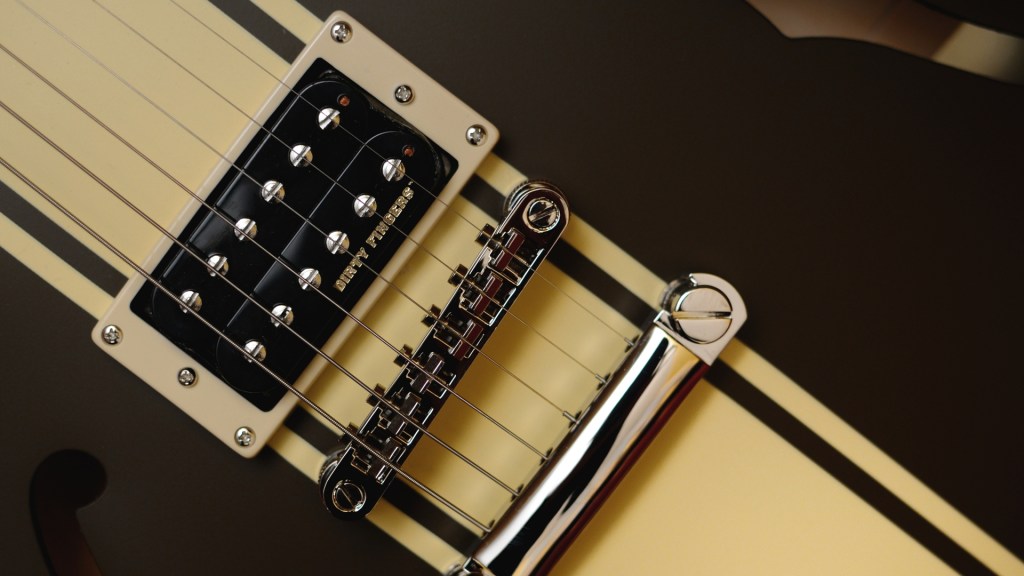
This post came about after a little epiphany I had last week. I decided to dust off a guitar I hadn’t played in years – probably not since before the 2020 lockdown. Thanks to my relentless gear acquisition syndrome, it had been pretty neglected. Nothing major, but it desperately needed new strings, some fretboard conditioning, fret polishing, and, of course, a solid setup.
Once I sorted all that out, I plugged it into the amp, dialed in a crunchy, very Brit-sounding tone, and started strumming some chords. And… holy smokes! My subpar playing had never sounded closer to Definitely Maybe. How is that?
Only then did I realize something that should have been obvious – the guitar I was holding was equipped with a Dirty Fingers humbucker, famously (or infamously) known as Gibson’s highest-output pickup. And guess what pickup Noel Gallagher had in the Gibson Les Paul “conversion” that Johnny Marr gave him? Yep, a rather obscure variation of a Dirty Fingers.
Keep reading after the break for the usual geekiness…
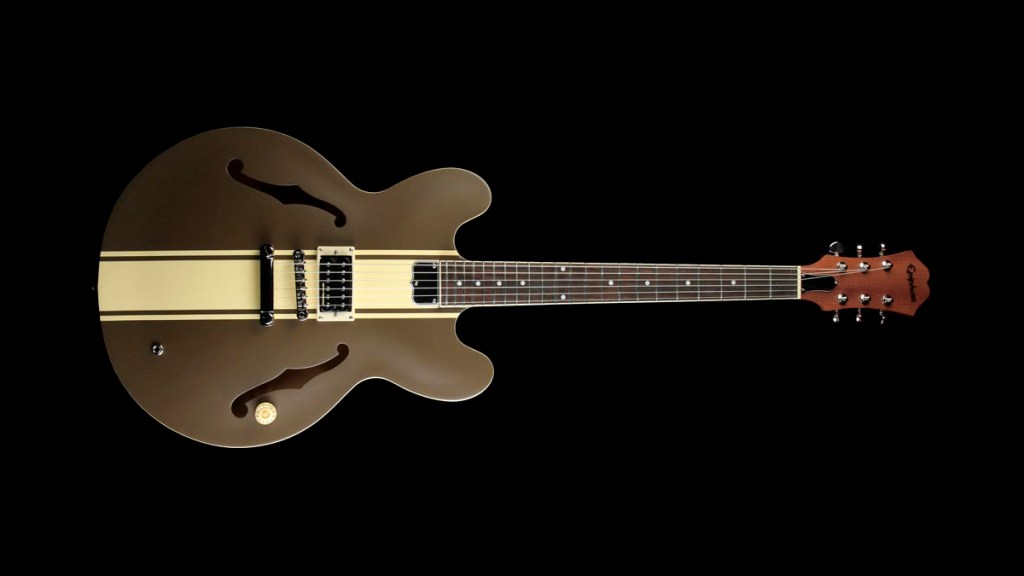
The guitar that was in need of some tender love & care was an Epiphone ES-333 Tom DeLonge Signature.1 It’s a raw, no-compromise punk rock machine – a semi-hollow, 335-style guitar with a single Dirty Fingers pickup in the bridge and just one volume control. No other pickups, no tone knob, nothing.
I bought it ten years ago, during a heavy Angels & Airwaves (and Blink-182) phase. I played it a bit, but through my cheap-ish amp it always sounded a little too overpowering. And with such limited controls, it wasn’t the most versatile guitar.
I never sold it – partly for sentimental reasons, but also because I’ve always loved the way it looks. That satin green-brown finish with the cream stripe, the bare wood neck and headstock – it’s just cool.
Then, as the years passed, other guitars came along (too many and too expensive), and the Tom DeLonge signature stayed in its case for years – until last week.
But now, let’s go back to the hot topic, the Gibson Dirty Fingers pickup.
First introduced in 1978, it was designed for players who wanted high output and aggressive tones with a strong midrange bite. Created by renowned pickup guru Tim Shaw, the original model featured two rows of adjustable pole pieces and three ceramic magnets. However, Gibson later switched to a single magnet in reissue versions.2
The Dirty Fingers pickup gained a cult following in the ’80s among hard rock and punk players, thanks to its high output and clarity – even under heavy distortion. The original version was produced until at least 1985 before disappearing for nearly two decades. It was eventually reissued in the early 2000s, when it became Tom DeLonge’s pickup of choice in his signature guitar. This association earned the pickup a fresh wave of fans – along with an equal number of detractors.

Ceramic pickups like the Dirty Fingers are often maligned – mostly due to misconceptions or personal tonal preferences. They tend to sound more compressed and have a sharper attack because of their stronger magnetic field, making them quite different from the warm, vintage character of a PAF pickup. Additionally, many budget guitars in the ’80s and ’90s were equipped with cheaply made ceramic pickups, which contributed to their sometimes poor reputation in the guitar world.
The thing is, high-quality ceramic pickups like the Dirty Fingers can sound incredible in the right setting. You wouldn’t use them for that bluesy, pseudo-jazzy garbage you keep hearing in guitar demos on YouTube – but if you want power and tightness, they deliver.
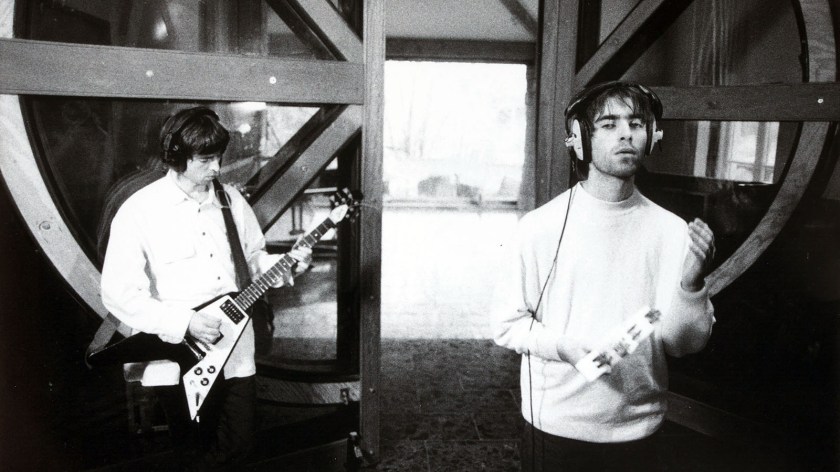
The DiMarzio Super Distortion is another great example of a high-quality ceramic pickup: it was installed in Johnny Marr’s Gibson Flying V, which Noel played during the Monnow Valley recording sessions in 1994 and was allegedly used on the version of Slide Away that ended up on Definitely Maybe.
I used to be one of those pickup snobs – convinced that ceramic humbuckers meant little more than muddiness and hair metal. Over the past couple of years, I’ve been chasing my ideal PAF-style pickup, trying out some quite expensive humbuckers. They do sound great, but none of them really has the midrange growl I seek. But when I plugged in the Tom DeLonge Epiphone, it was a revelation: that unmistakable early-Oasis crunch was right there.
I had written off the Dirty Fingers as shrill and one-dimensional. I was wrong. The real problem wasn’t the pickup – it was the gear (and the settings) I was using years ago!
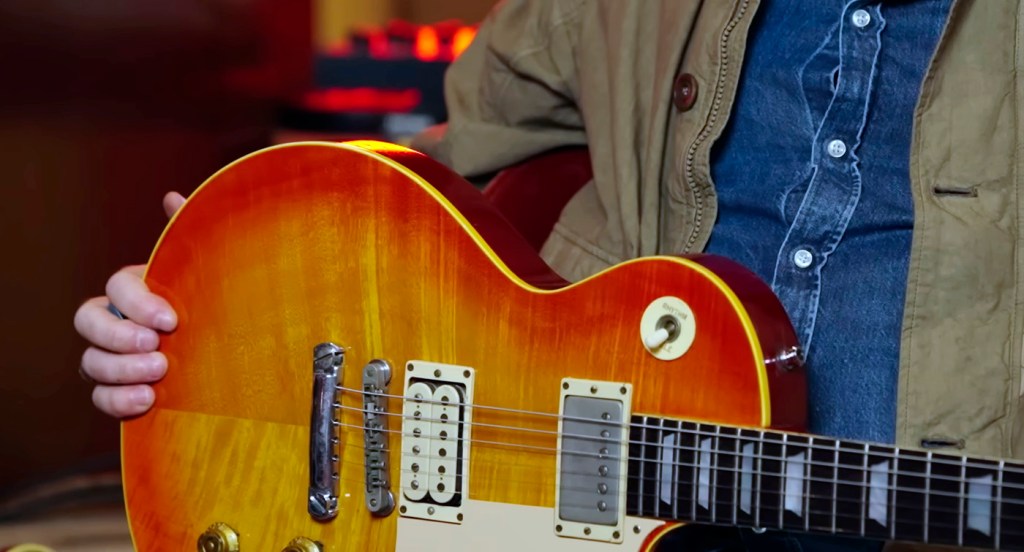
During the Meat Is Murder recording sessions, Johnny Marr started playing Gibson Les Pauls and experimenting with higher-output pickups. Of his three main Les Pauls, two now still belong to Noel Gallagher – the Sunburst conversion and the Black Custom. The third, the iconic “Red with Bigsby,” has been covered in detail throughout this article.
It’s now common knowledge that during the Definitely Maybe recording sessions at Monnow Valley studios, Johnny loaned to Noel a few of his guitars, including the aforementioned Flying V and the Les Paul “conversion.” Both guitars featured ceramic pickups: the Flying V was equipped with a DiMarzio Super Distortion, while the Les Paul had a mysterious variant of the Gibson Dirty Fingers – the Super Dirty Fingers.
From the outside, the pickup appears identical to a regular ’70s Gibson “T-Top” humbucker. However, it’s actually an early Dirty Fingers with the second row of polepiece screws having their heads sawn off. This modification might have been made to give it the appearance of a regular humbucker, or perhaps to fit a cover. Soldering traces on the bottom plate suggest that it originally had a nickel cover installed. According to a forum post, covered Super Dirty Fingers pickups were installed on some early ’80s Gibson ES-347 models – perhaps that’s where the one in Johnny’s guitar originally came from!3
I only discovered it was a Super Dirty Fingers recently, thanks to a picture posted by gh_guitars, who had the privilege of taking care of Noel’s Les Paul back in 2014.4 This discovery (and this post) wouldn’t have been possibile without him.
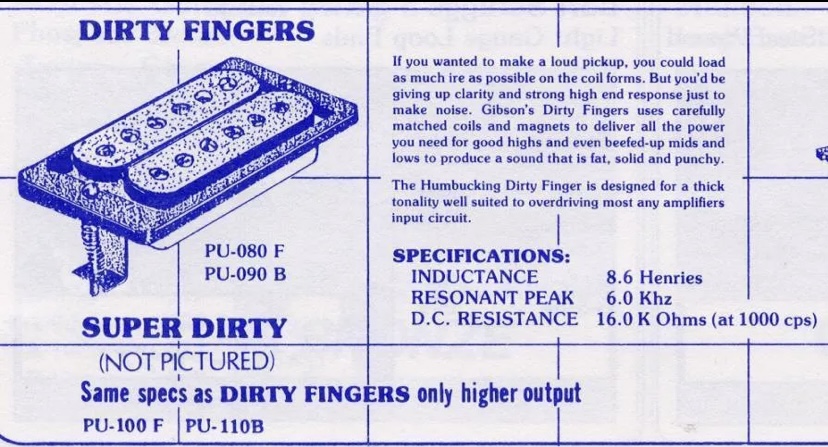
Finding information about the Super Dirty Fingers is nearly impossible. The only official source is a page from a Gibson brochure in the ’80s, which describes it as having “the same specs as the Dirty Fingers – only higher output.” This likely means it was slightly overwound.5
There are no official specs available, but given that the regular Dirty Fingers had a DC resistance of around 16.0 KOhms, I’d say that the overwound Super variant could be in the range of 17.0 to 17.5 KOhms.
Noel fell in love with Johnny’s Les Paul and its Dirty Fingers-powered growl. It immediately replaced the Epiphone Les Paul as Noel’s live instrument and became the main guitar used during the Monnow Valley and Sawmills sessions, helping shape the distinctive sound of Definitely Maybe.
The Dirty Fingers is a bit of a one-trick pony, but I believe it could be much more versatile if equipped with a coil-tap switch. Not that it sounds bad in front of a clean amp: it just doesn’t sound very “clean”! It’s not the right pickup for delicate jangly arpeggios or random jazzy noodling, but if you’re after a snarly, fat, and compressed sound, you’re in for a treat.
Some say that Definitely Maybe has a sort of punk-rock vibe: now we can safely reveal that the Gibson Dirty Fingers pickup was one of the secret ingredients.
- On some occasions Epiphone also called it the “Tom DeLonge Riviera” – using a name from its rich history instead of the Gibson-sounding “ES-333”. Here’s a shameless link to the page of Noel’s Wine Red Riviera, if you haven’t read it already. ↩︎
- https://www.mylespaul.com/threads/when-were-the-original-dirty-fingers-made.109027/ ↩︎
- https://www.lespaulforum.com/index.php?threads/gibson-superdirt-pickup.53422/ ↩︎
- Check out his work at his Instagram page: link! ↩︎
- https://forum.gibson.com/topic/127393-pickups-super-dirt/ ↩︎
 The Chief's Guitars - Noel Gallagher's guitars: a complete guide - Oasis and NGHFB
Great detailed article, as usual! Many thanks for your work full of passion!!
LikeLike