
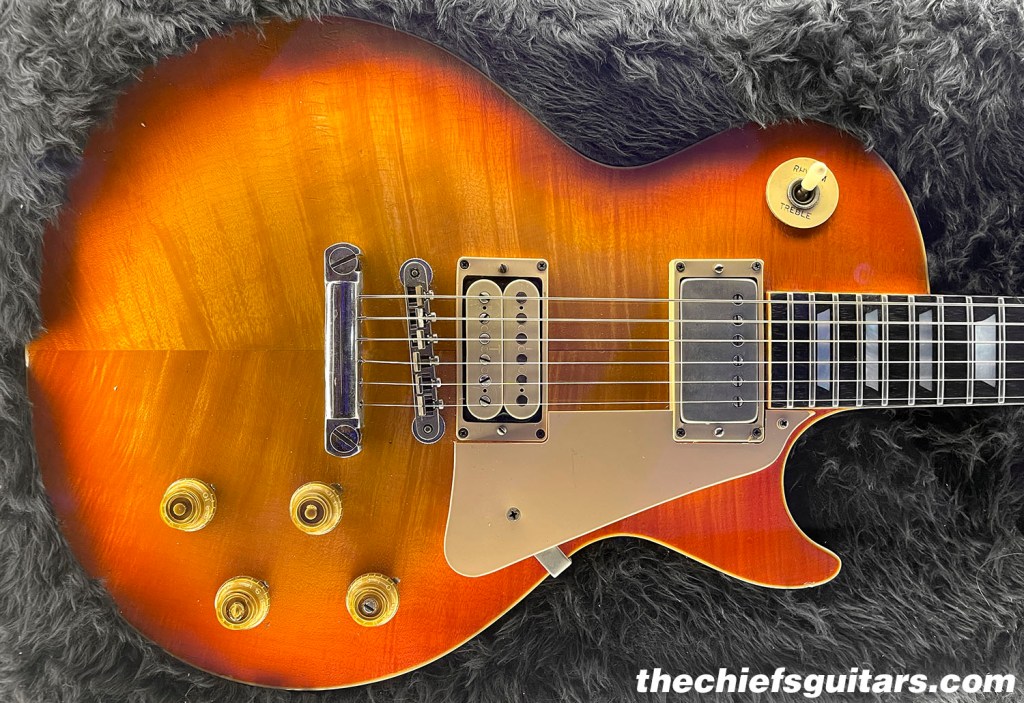
Model: Gibson Les Paul "conversion"
Color: Cherry Sunburst
Year: 1953 (no serial number is present)1
For informational and non-commercial use only. Please do NOT publish this content elsewhere.
If you share or use this information, please provide proper credit and link to the website.
I appreciate your respect for the years of dedicated, freely available research! Thanks.
Used in...

- 1994-1996

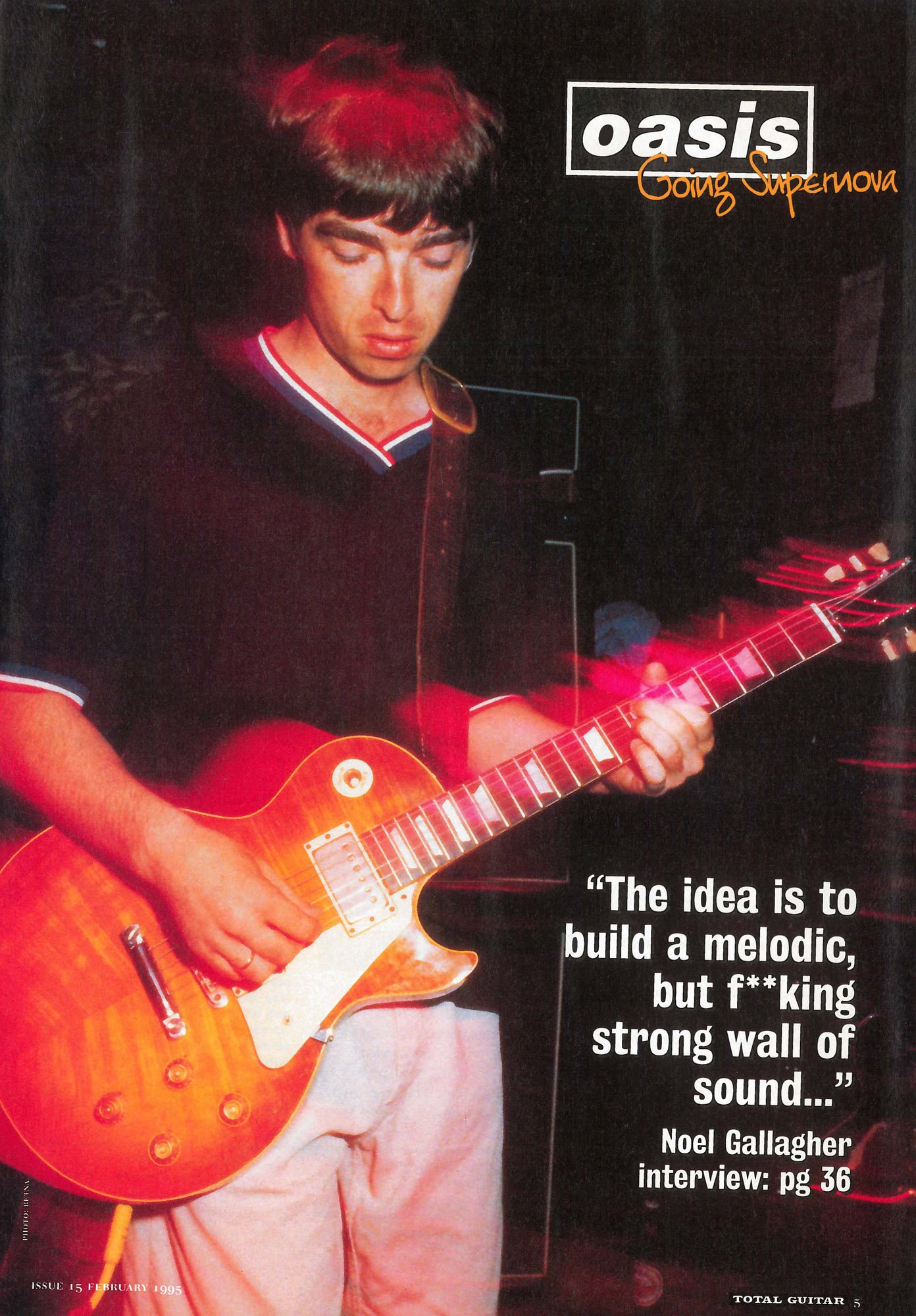
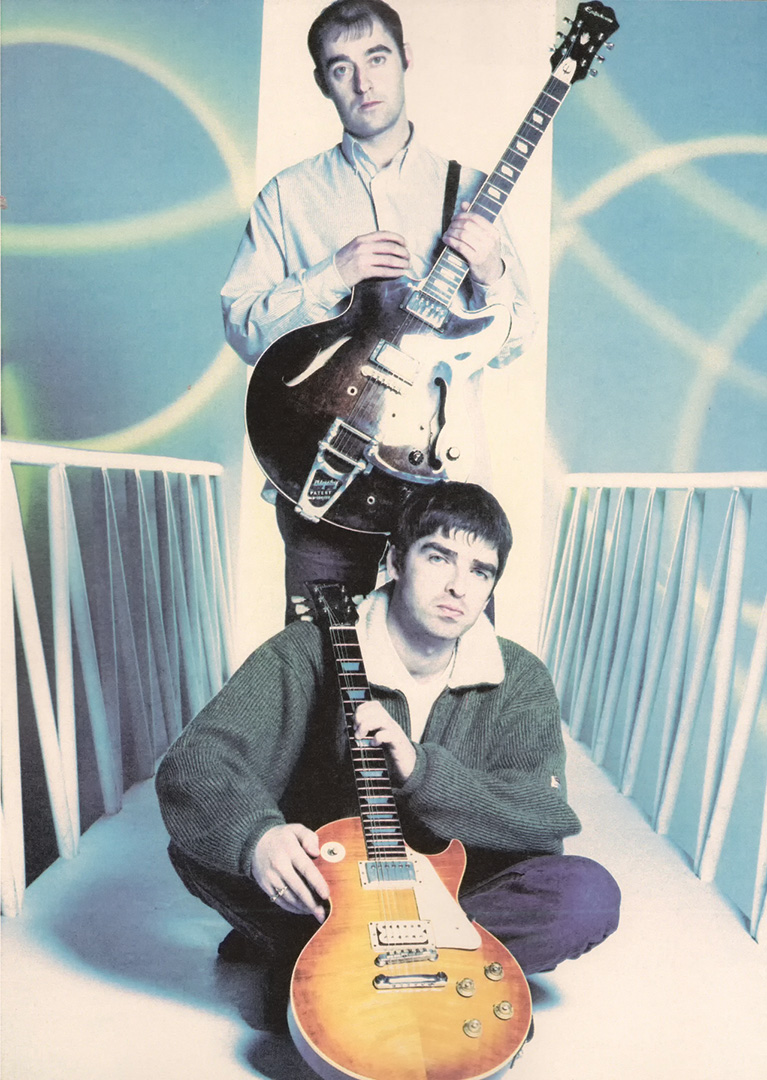
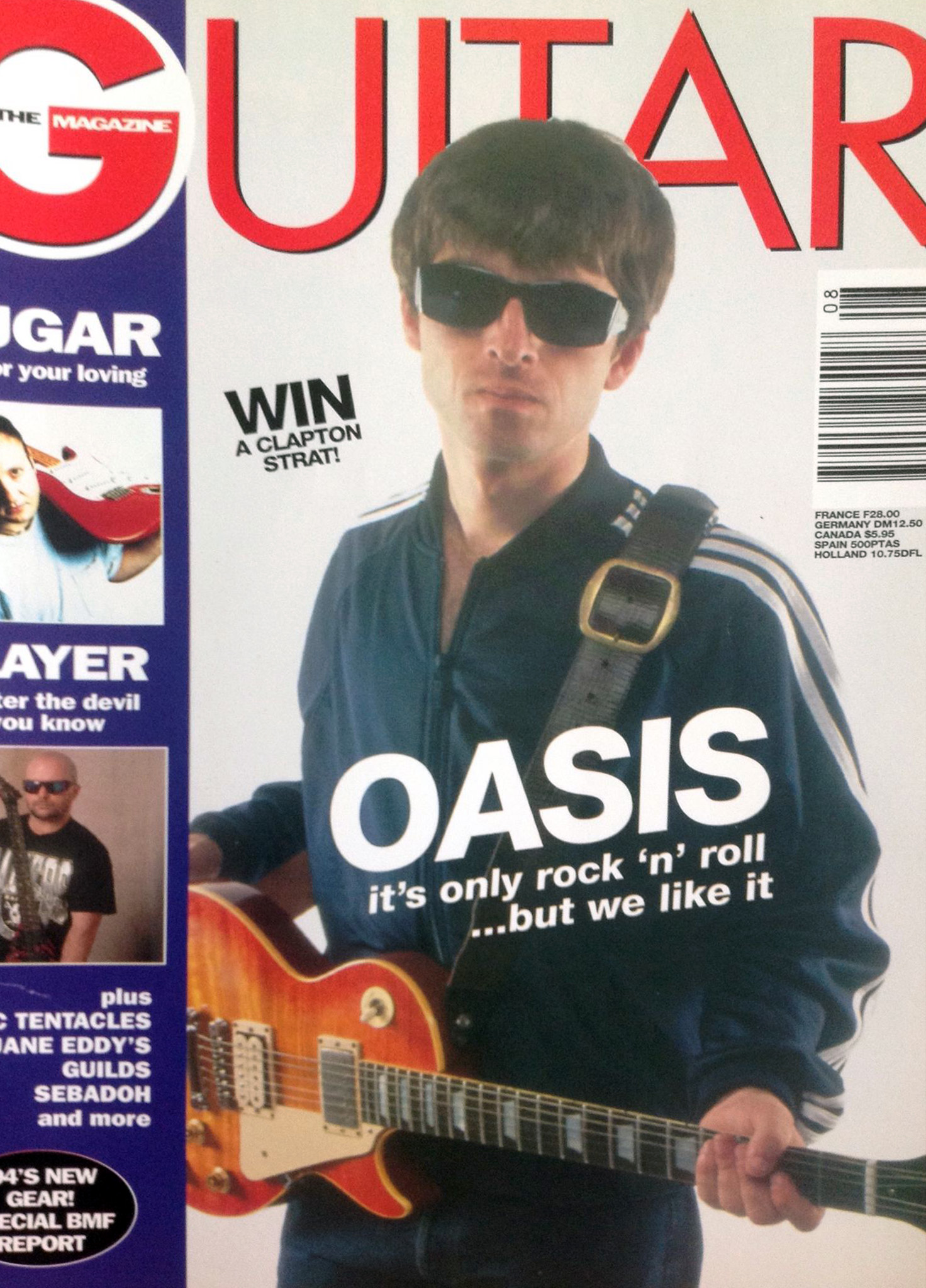
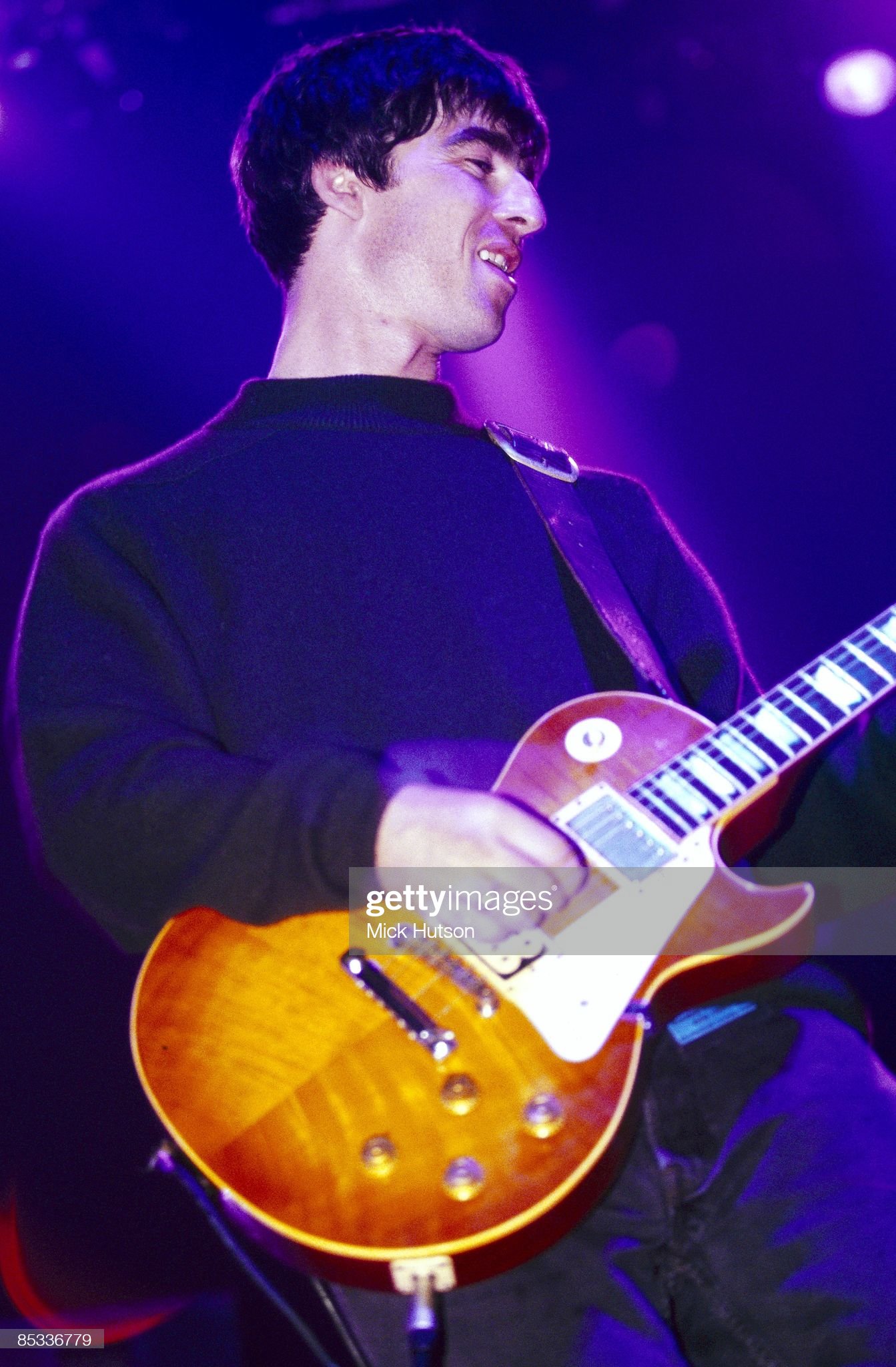
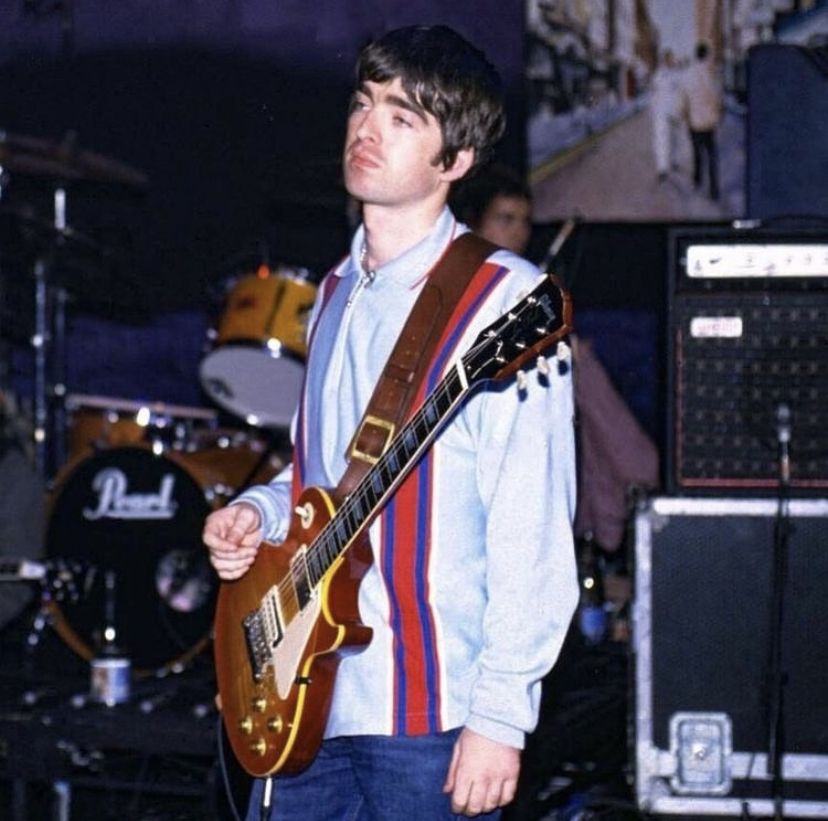
- Noel's main live guitar between March and August 1994

- subsequently played live in 1995 and as a backup in 1996

- the main guitar played during the Definitely Maybe recording sessions

- featured in the videos of Live Forever, Supersonic (US Version), Whatever and Some Might Say
Details

The iconic Sunburst Gibson Les Paul has quite a bit of background.

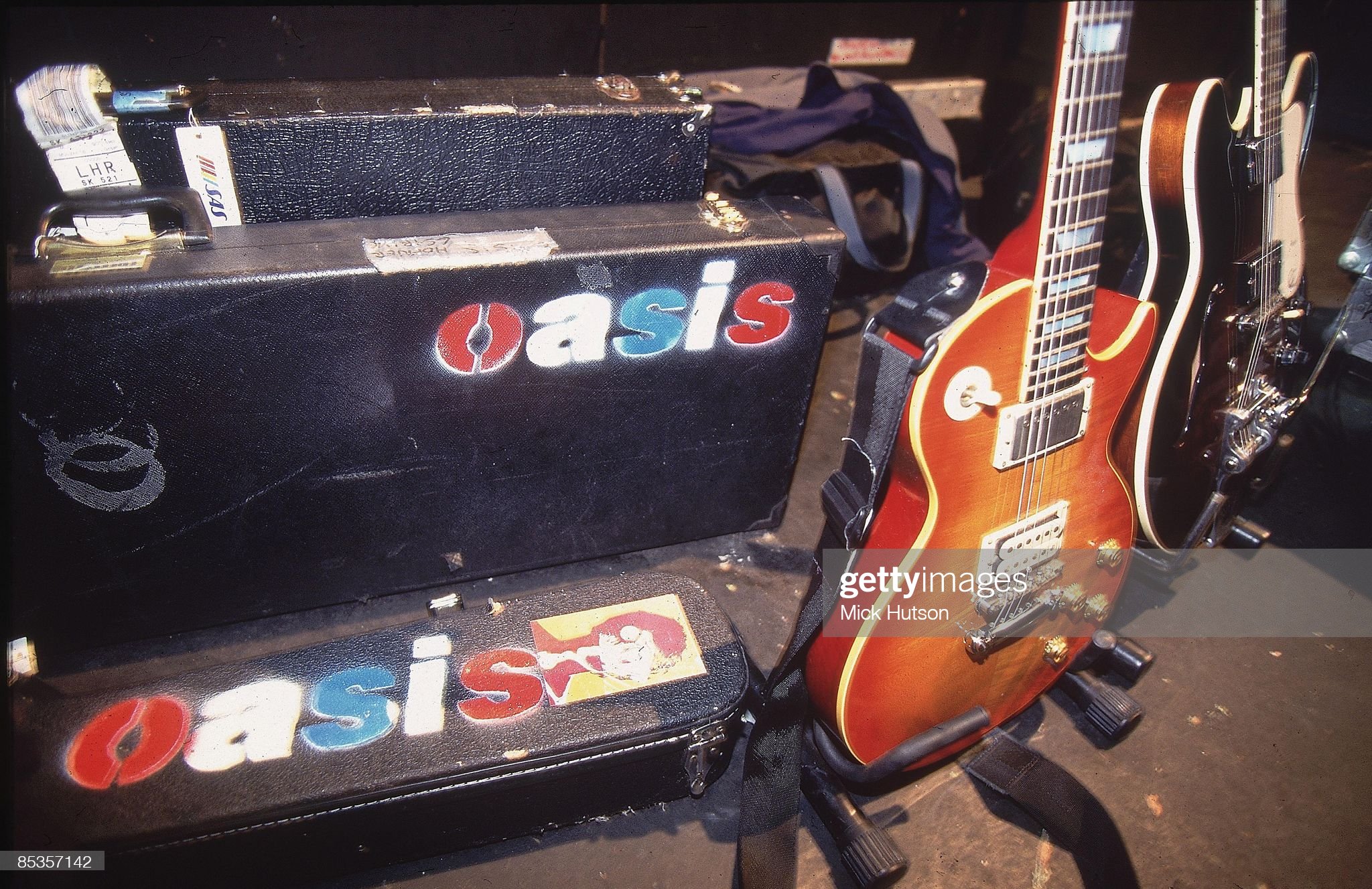
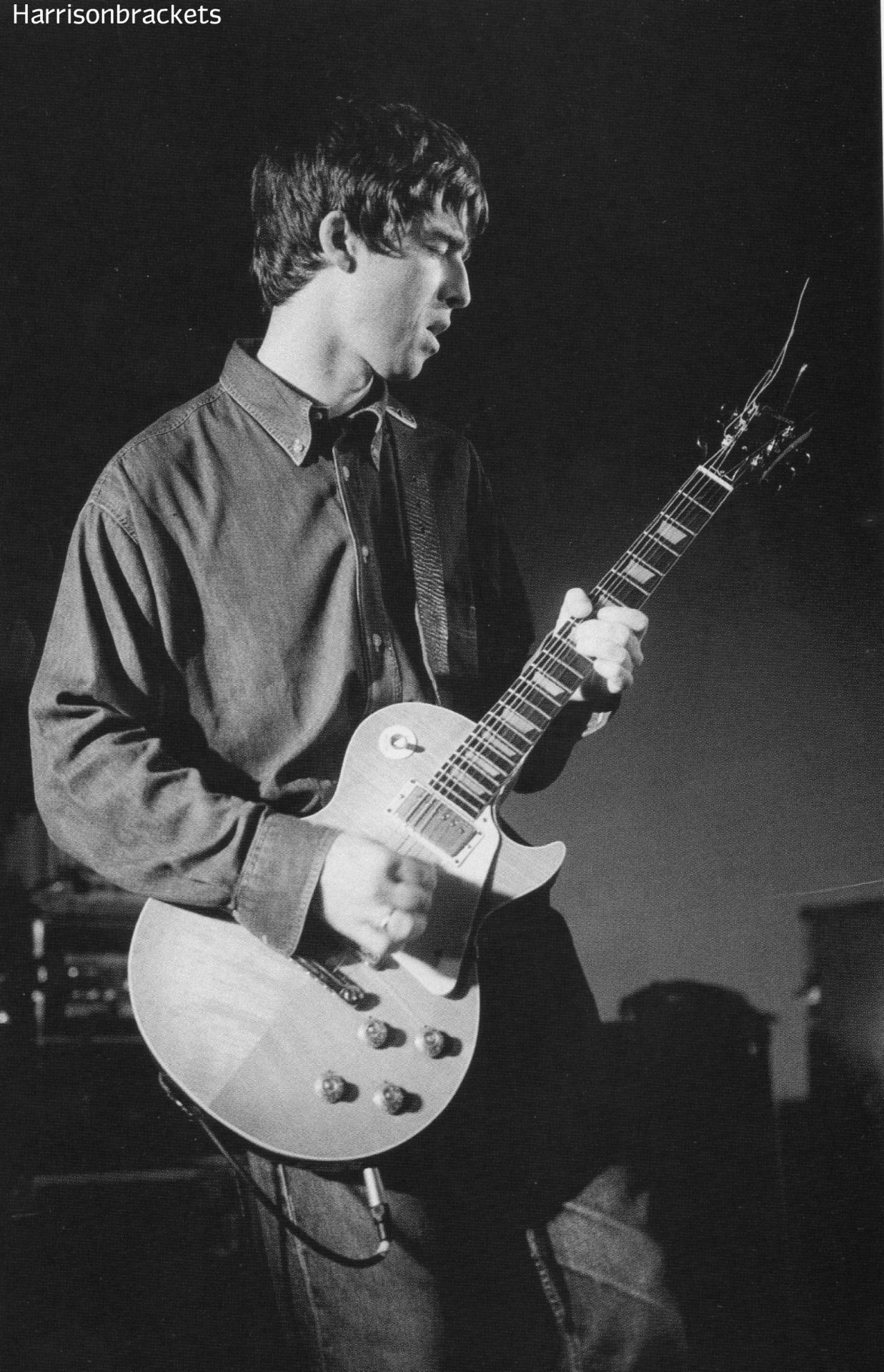
The guitar started life as a 1953 Goldtop, with a trapeze or wrap-around tailpiece and P90 pickups: at a later date it was converted to the coveted 1958-1960 "Burst" specs. This means that it was stripped of the Gold paint and repainted in Cherry Sunburst, the tailpiece was replaced with a stopbar, a tune-o-matic bridge was added and the pickup cavities were rerouted to make space to two full-size humbuckers. This seems almost a sacrilege now, but it happened a lot with early Les Pauls.

The guitar bears no serial number and it has a unusually thin neck, a feature that Noel loves on electric guitars.2

The humbucker pickups are probably Gibson models from the late '70s or early '80s. If you're into geeky details (and if you're reading this, you probably are!), there's an entire section below dedicated to pickup identification and speculation.

Sometime after the conversion, it was bought by Pete Townshend, The Who's guitarist, who is also notorious for the countless guitars he has smashed on stage!
Then, possibly in 1985, Johnny Marr bought it - among other guitars - from Townshend's guitar tech Alan Rogan. It was one of Johnny's main live guitars in 1986, during the gigs of The Queen is Dead tour.3

According to Johnny, he used it to write and record The Smiths songs Panic, London and Sweet and Tender Hooligan.4

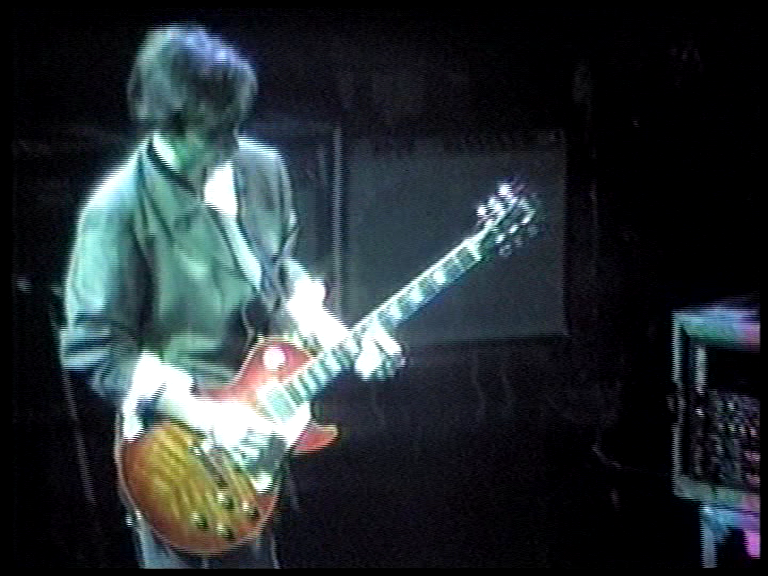

In late May 1993, Noel met his guitar hero Johnny Marr. The former Smiths guitarist immediately showed interest in Oasis and watched a few of their early live gigs. When they were about to record Definitely Maybe at Monnow Valley, he sent a few of his guitars to the studio.
Among them were the legendary The Smiths Rickenbacker, a 1980 Gibson Flying V and this very Les Paul:5

“I opened the other case, which contained the Les Paul: it was a moment not unlike Vincent Vega opening Marsellus Wallace's briefcase in Pulp Fiction... Having never actually seen a real [Gibson] Les Paul before, I kinda stared at it for ages. I remember making a cup of tea, taking it to my room upstairs and taking it out of the case. I literally wrote Slide Away in about twenty minutes. It was a pretty freakishly magic moment. One I'll never forget.”

So, Slide Away was written on this guitar one night in January 1994 - and Noel credits the Les Paul for the inspiration:6

"The first thing that I've played in the bedroom was what became Slide Away. […] Not the words obviously, but the entire kind of structure of it. […] I’m one of those people who thinks that there’s music inside of these things: Slide Away was in there."
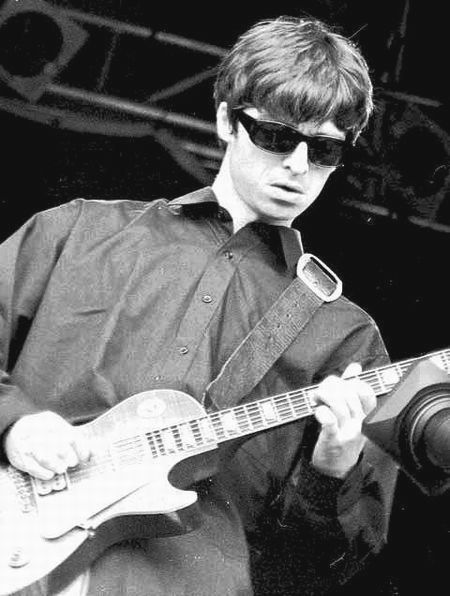

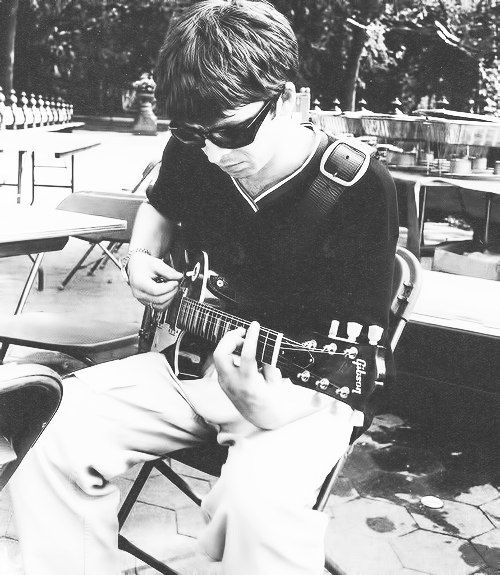
Noel instantly fell in love with Johnny's Les Paul. Not only it was used throughout the recording sessions of Definitely Maybe at Monnow Valley and at Sawmills studios: it also replaced the Epiphone Les Paul as Noel's live guitar since March 1994.

"So I’m like… I fall in love with this guitar, and I love the way it looked… so he [Johnny Marr] said ‘You can have it’. […] He wrote Panic on this guitar. This is a Smiths guitar. And at that point I was like: ‘He fu**ing ain’t getting that back’ […] It’s the best looking Les Paul I think I’ve ever seen. […] There’s not a day that goes by that I don’t give thanks and praise to Johnny for giving me this guitar. I used it on all of the Definitely Maybe recordings, and I used it for years."7

The first recorded appearance of the Sunburst Gibson Les Paul coincides with Oasis's TV debut on 18 March 1994: a live performance of their first single Supersonic, filmed at Teddington Studios for Channel 4's late-night entertainment show 'The Word'.8

By the way, Johnny never had his guitar back:9

"I got it from Pete Townshend… So I thought, I’ll lend him that, it’s all right. […] I said to him: ‘You can borrow this guitar for a bit till you get some money’. Anyway, he fell in love with that guitar and I really didn’t have the heart to ask for it back!"

On 9 August 1994, during a gig at The Riverside in Newcastle, the Les Paul was damaged:10

"We were about thirty minutes into a gig in Newcastle when some lad got up onto the stage and started a minor fracas that turned into a brawl. During the ensuing chaos, he might have got himself clattered on the head with what has now become a very famous guitar! He should be very proud. I'm not exactly sure how, but the Sunburst Les Paul got damaged at that gig in Newcastle... clearly, it wasn't designed to be wielded like an axe!"

The amount of damage is unknown, but it was severe enough to require a delicate repair. Noel had it fixed in New York (probably in October 1994), where he uncovered some interesting tidbits about the guitar's past:11

"Something got damaged and I took it to a guitar shop in New York, and they had to take the neck off. When I went back to pick it up one of the guys said: ‘Where did you get that guitar? The neck doesn’t belong to the body’. And I was like, thinking… Townshend smashed it up probably, d'you know what I mean? It's a Frankenstein of a guitar!"

After the Newcastle gig, Johnny Marr gave Noel another Les Paul as a temporary replacement for the damaged Sunburst: it was the black 1978 Les Paul Custom that was used on The Queen is Dead.
Needless to say, Noel ended up keeping that one too!

The Sunburst reappared - repaired! - at the Whatever video shoot on 5 December 1994: it can be seen in the background right in front of the amps, alongside other Oasis guitars including Noel's Antique Sunburst Riviera, the Firebird, and the Hofner.12

It had also appeared in other videos before: most famously, Live Forever (filmed in New York on 24 July 1994) and the US version of Supersonic (filmed in California in October 1994).13

With the release of Tom Sheehan's brilliant book14 in 2025, we found out that the Les Paul was used for the Some Might Say recording sessions at Loco Studios in late February 1995. B-sides Acquiesce and Headshrinker were recorded during the same session, in which Noel also played the Gibson Firebird and the recently acquired goldtop Les Paul.

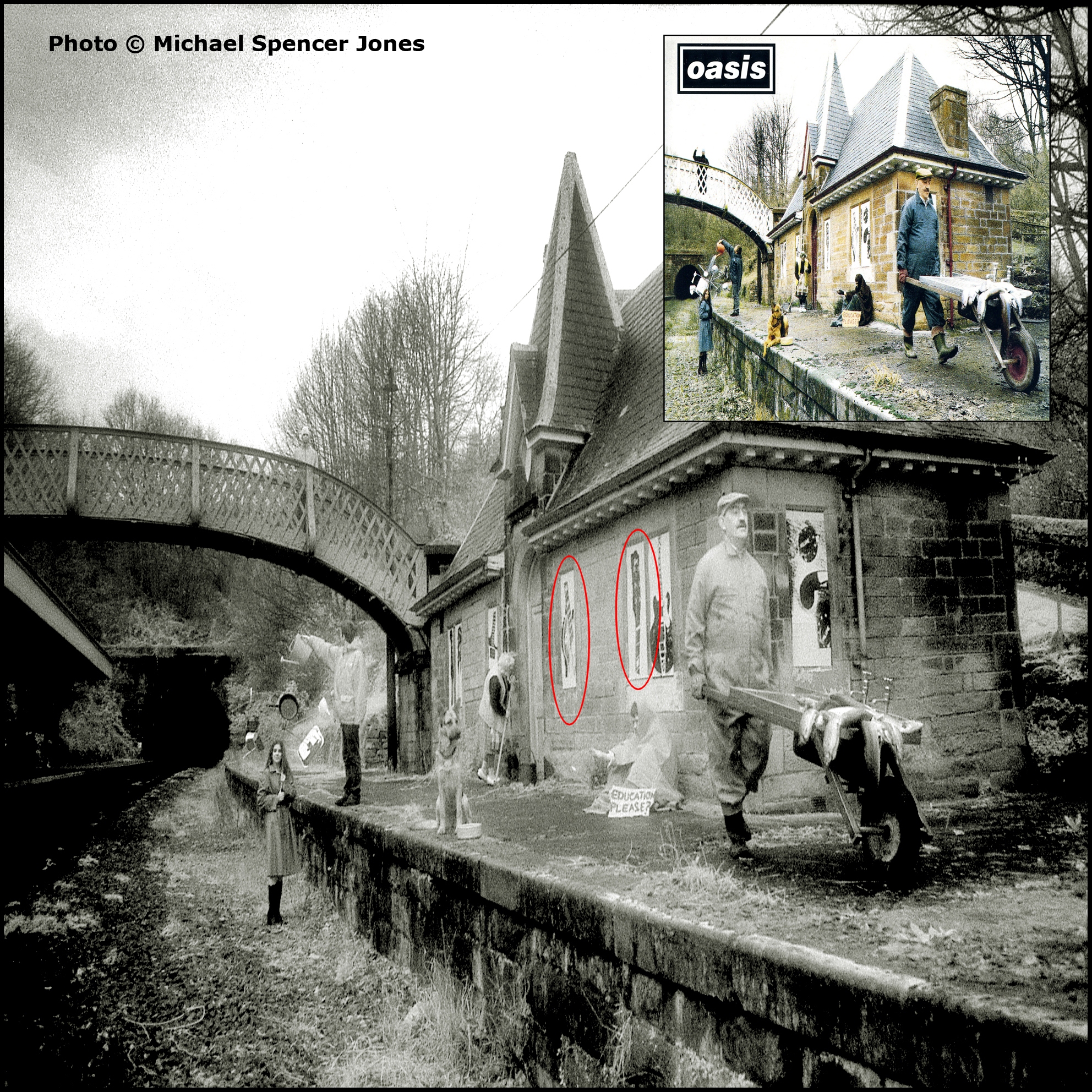
There is a peculiar easter egg on the sleeve of the Some Might Say single: a couple of shots of the LP "conversion" can be seen covering the windows of Cromford Station. The sleeve photo and the guitar pictures were taken by Michael Spencer Jones.15
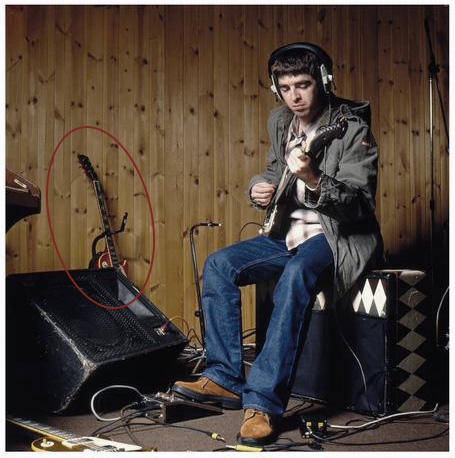
One of the last appearances of the Sunburst Les Paul was on 22 December 1995, when Oasis recorded five songs for the New Year Special of Channel 4's 'The White Room': Noel played it for Round Are Way.16 His main guitar at the time was the Wine Red Matsumoku Riviera.

Apparently, the Les Paul was brought on tour as a spare at least until the U.S. leg of the tour in spring 1996. At the Fairfax show in early March, Noel switched to the Les Paul after playing the Riviera for the first seven songs.17

The guitar reappeared after almost two decades at the Chasing the Sun exhibitions in Tokyo, London and Manchester between 2014 and 2016, where it was put on display together with Noel's and Bonehead's Antique Sunburst Matsumoku Rivieras.

In 2023, Noel played it during the episode of 'The Pedal Show' featuring him and his gear. The interview is a goldmine of information for this website: check it out if you haven't already (the link is in the footnotes).
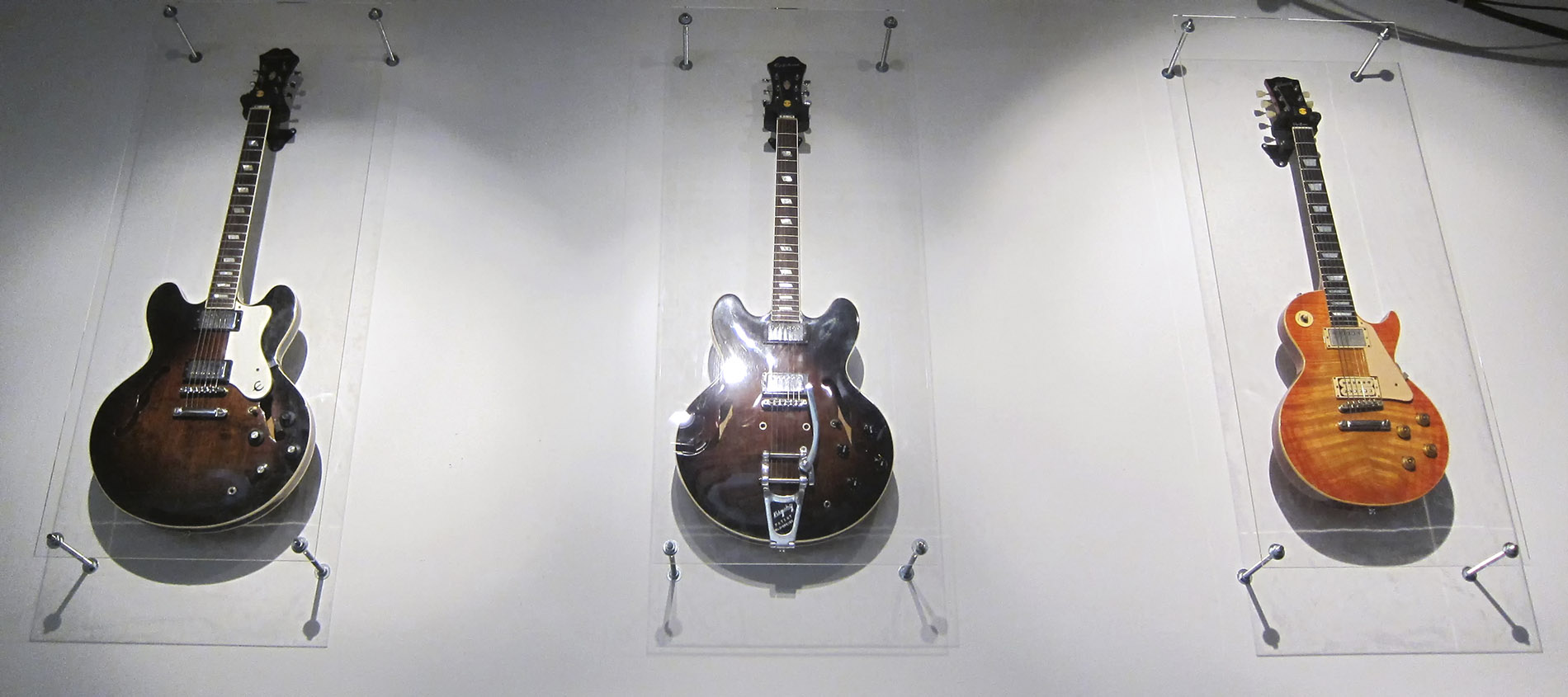
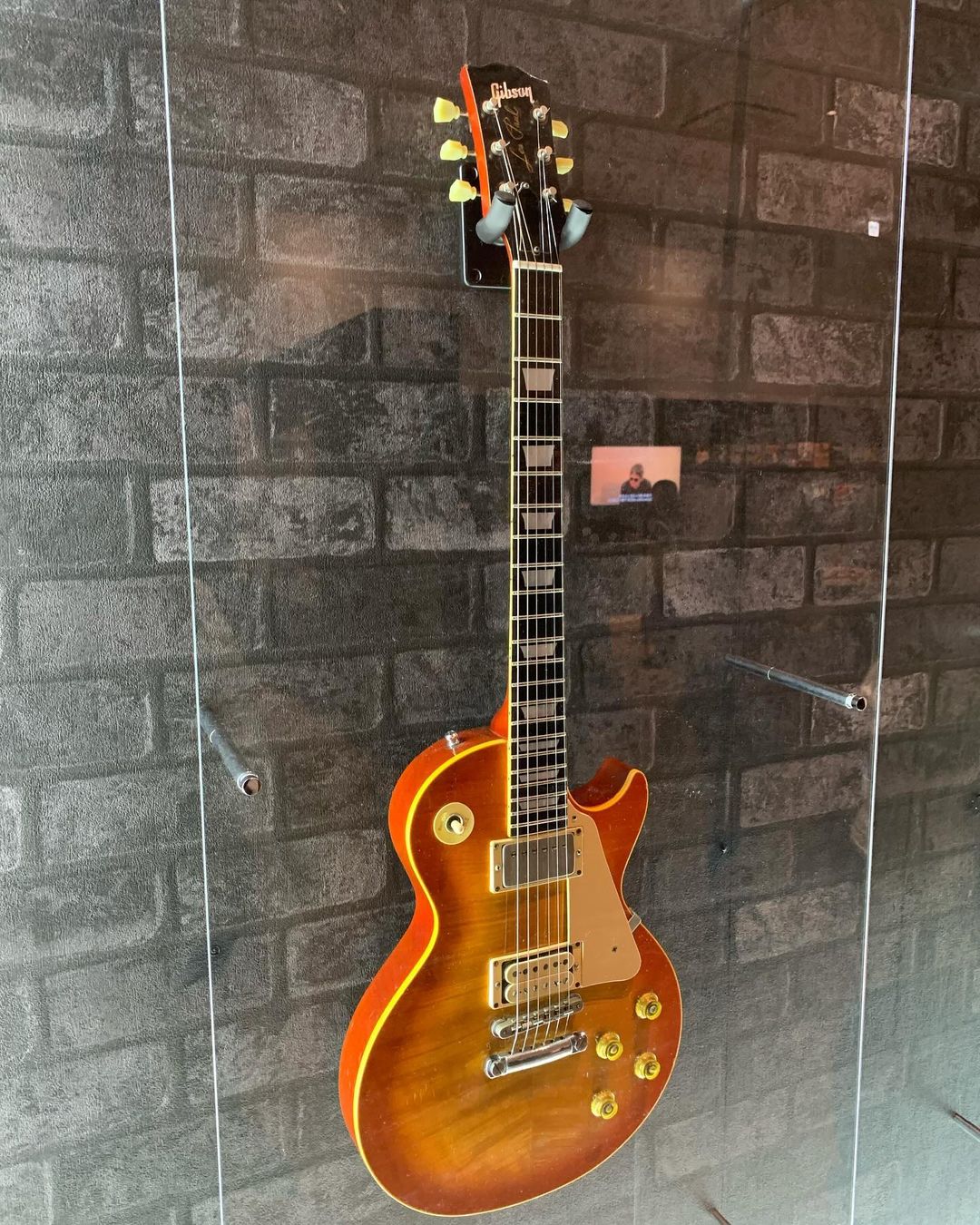

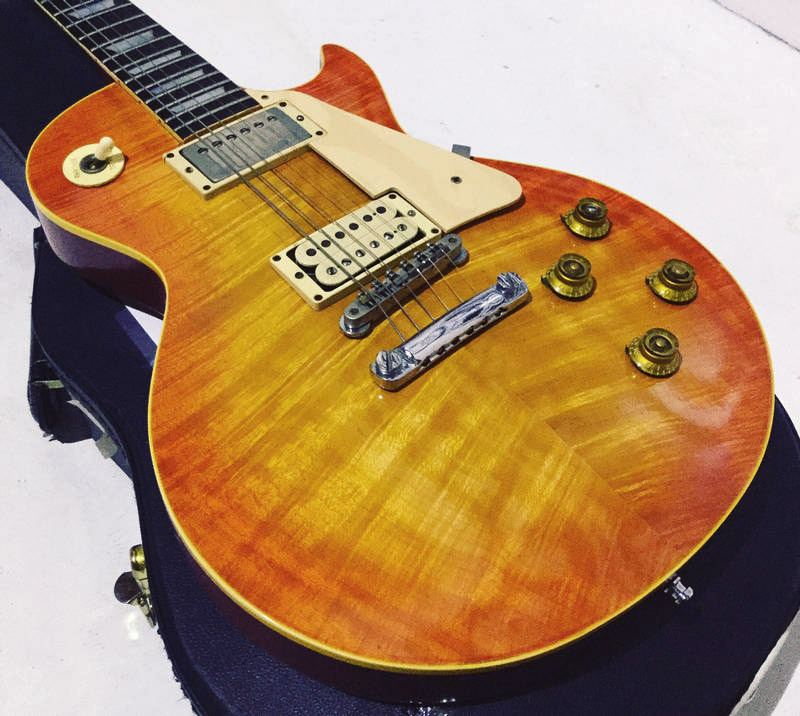
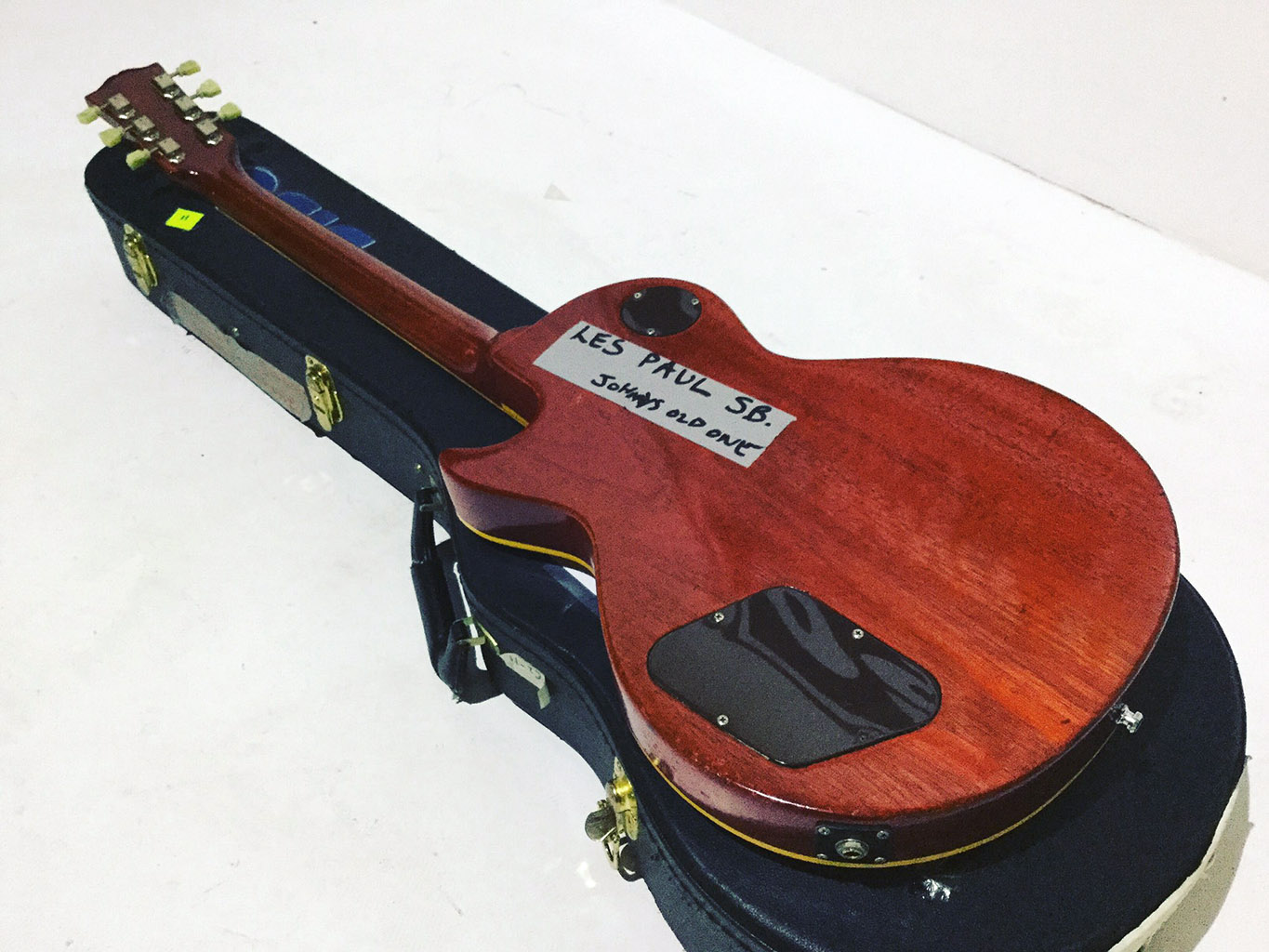
Many detailed pictures of the Les Paul, taken by the amazing Pat Graham, can be found in Johnny Marr's book 'Marr's Guitars' - also released in 2023.

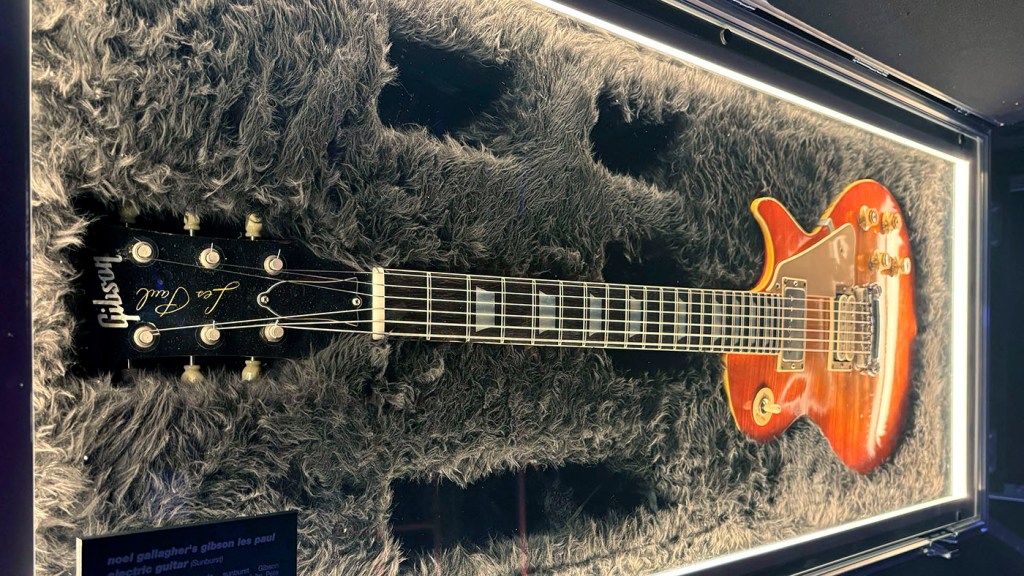
In November 2024, the guitar was displayed at the "Live Forever: Oasis 30th Anniversary Exhibition" at the Roppongi Museum, Tokyo.

During the Live '25 tour, the LP "conversion" is featured in a special exhibition available to holders of a limited fan ticket package. Also on display is the iconic Union Jack Sheraton.
Pickups

The bridge humbucker pickup is uncovered with cream bobbins. What model is it? Is it a Gibson, a Seymour Duncan or a DiMarzio? The mystery persisted for decades.
After many long sessions of pixel-peeping over the years, I was fairly certain it was a Gibson "T-Top" pickup from the late '70s, which I assumed was likely the period when the 1953 Goldtop was converted to Burst specs.

I was almost correct: it has all the external T-Top features, but the bottom tells a different story. It shows two rows of screw-type pole pieces, similar to those on Gibson "Dirty Fingers" pickups, a "Pat. No." engraving, and a revealing sticker that reads "Super Dirt".18
That's the one!

So, what's a "Super Dirty"? Information is scarce, to say the least. According to a Gibson leaflet from the period, it is an even hotter version of the "Dirty Fingers", which is already a very hot pickup due to its high DC resistance and ceramic magnet.

Of the 12 adjustable screw-type pole pieces, the heads of the top six were likely sawn off to make it resemble a regular T-Top or a genuine 1959 "P.A.F." From the outside, it is actually indistinguishable from a T-Top.
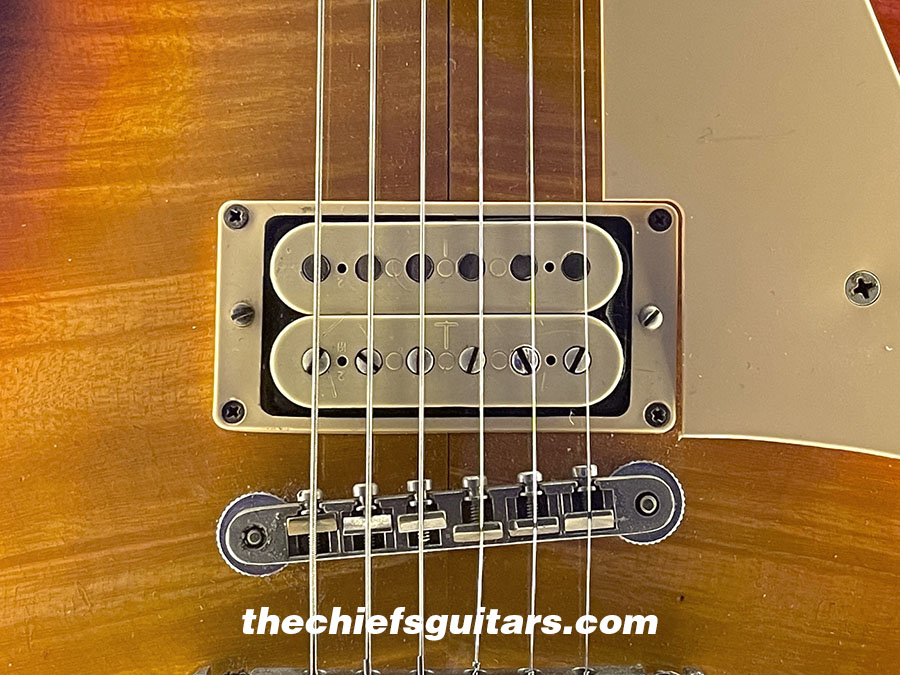

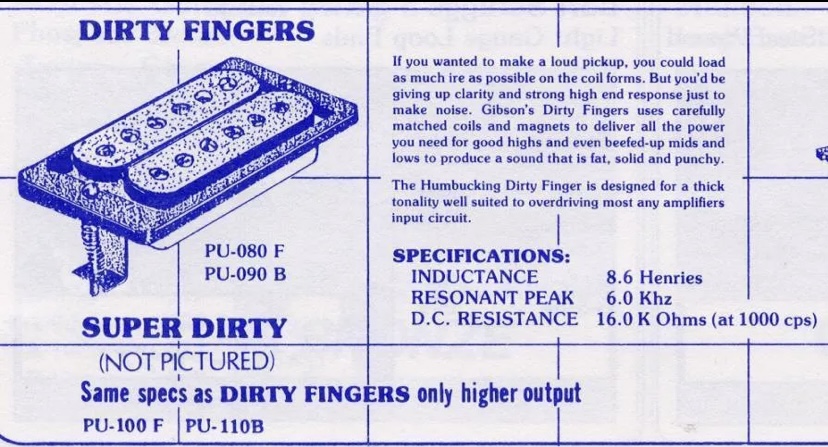
Apparently, the Super Dirty was quickly discontinued and was made only between late 1979 and early 1981. The production date was ink-stamped on the bottom plate: I seem to read an "M" and something that looks like traces of an "80", so the Super Dirty in Noel's Les Paul may have been made in March or May 1980.

I covered the whole Dirty Fingers topic in a dedicated blog post: I truly believe it's one of the key ingredients behind the garagey, in-your-face sound of Definitely Maybe.

By the way, inside the pickup cavity, you can still see the original gold finish from 1953!

The neck pickup might be a regular Gibson T-Top with the nickel cover, or a matched Super Dirty. Noel always favored the bridge pickup anyway.
DISCLAIMER
This is a fansite. It is not affiliated with Noel Gallagher, his management or his record label.
For informational and non-commercial use only. Please do NOT publish this content elsewhere.
If you share or use this information, please provide proper credit and link to the website.
I appreciate your respect for the years of dedicated, freely available research!
Visit the “Info & About” page for contact details and more.
Thanks!
- Marr’s Guitars – Johnny Marr, 2023 ↩︎
- That Pedal Show, 2023 ↩︎
- http://www.smithsonguitar.com/2008/12/johnny-marrs-gear.html ↩︎
- Marr’s Guitars – Johnny Marr, 2023 ↩︎
- Marr’s Guitars – Johnny Marr, 2023 ↩︎
- That Pedal Show, 2023 ↩︎
- That Pedal Show, 2023 ↩︎
- http://www.oasis-recordinginfo.co.uk/?page_id=455 ↩︎
- https://www.youtube.com/watch?v=vkW1QsSIqGQ ↩︎
- Marr’s Guitars – Johnny Marr, 2023 ↩︎
- That Pedal Show, 2023 ↩︎
- Oasis: A Year on the Road – Paul Slattery, 2008 ↩︎
- https://www.oasis-timeline.com/#/timeline ↩︎
- Roll With It: Oasis in Photographs 1994–2002 – Tom Sheehan, 2025 ↩︎
- https://www.michaelspencerjones.com/ ↩︎
- http://www.oasis-recordinginfo.co.uk/?page_id=455 ↩︎
- Thanks to Basti in the comments section! Here’s the YouTube link. ↩︎
- The definitive identification would never have been possible without a photo posted by gh_guitars on Instagram. Huge thanks to Chris – be sure to check out his superb work! ↩︎
 The Chief's Guitars - Noel Gallagher's guitars: a complete guide - Oasis and NGHFB
Hey! Huge fan of your work. I just wanted to mention that I don’t think the White Room performance was the last time he used that guitar. I found a gig in Fairfax in 1996 where he used the Epiphone Riviera for the first seven songs, then switched to the Les Paul.
the gig: https://youtu.be/yvKzoC20i1Q?si=4i-mZXHIw6ua4jIx
LikeLike
Nicely spotted! I think I noticed it years ago but I assumed it was the Goldtop – which was brought on tour as a spare. The page will be updated soon!
LikeLike
This guitar’s always bothered me as it’s never quite looked ‘right’. Isn’t the body too flat to be a Gibson?
Apparently there’s a photo in Marr’s guitar book that shows a small piece of binding blued onto the binding where the neck meets the body.
LikeLike