
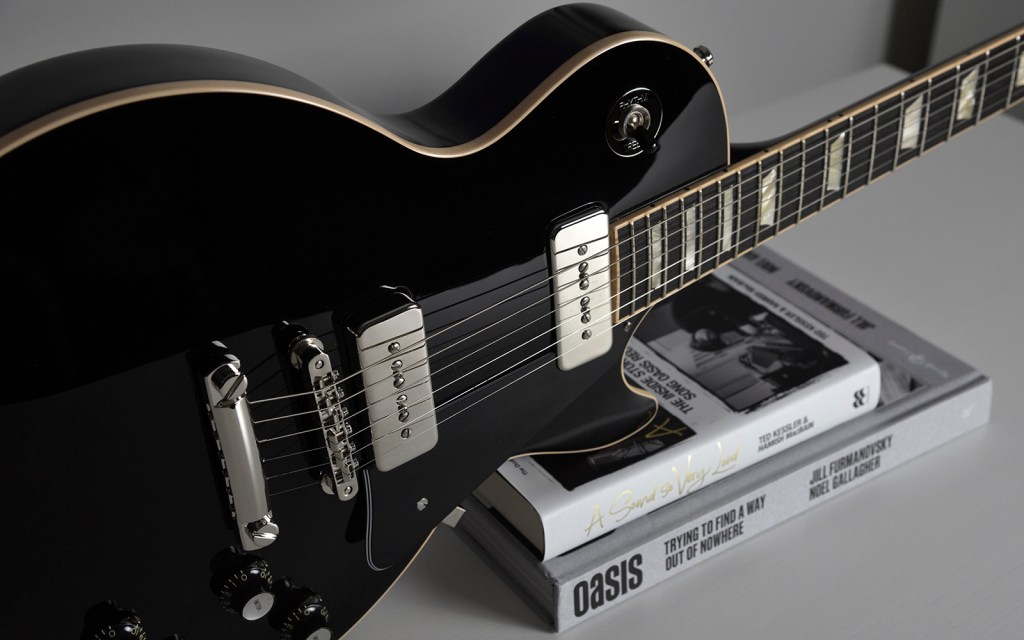
While we wait for the official announcement of the regular-production version of Noel’s Les Paul with P-90s, let’s take a moment to understand what makes these pickups so special, and why guitarists still rave about this decades-old design nearly eighty years later.
I’ll admit, I’ve always been more of a humbucker person. But few things sound as glorious as a P-90 in the bridge position of a Les Paul running straight into a crunchy amp. That’s pure rock ’n’ roll!
And for the record, the one pictured above is my own replica of Noel’s recent Les Paul. More on that after the break!
The P-90: a short history
Gibson introduced the P-90 pickup in 1947 as a replacement for the earlier “Charlie Christian” design. It’s a single-coil pickup with a wide, flat coil and two bar-shaped Alnico magnets, featuring individually adjustable screw pole pieces for each string.
Originally used on archtops and lap steels, the P-90 found its way onto the very first Les Paul Model in 1952. That guitar featured two P-90s with distinctive rectangular plastic covers (soon nicknamed “soapbars”). Two years later, the Les Paul Custom arrived with a single P-90 in the bridge position and the short-lived Alnico “staple” pickup in the neck.
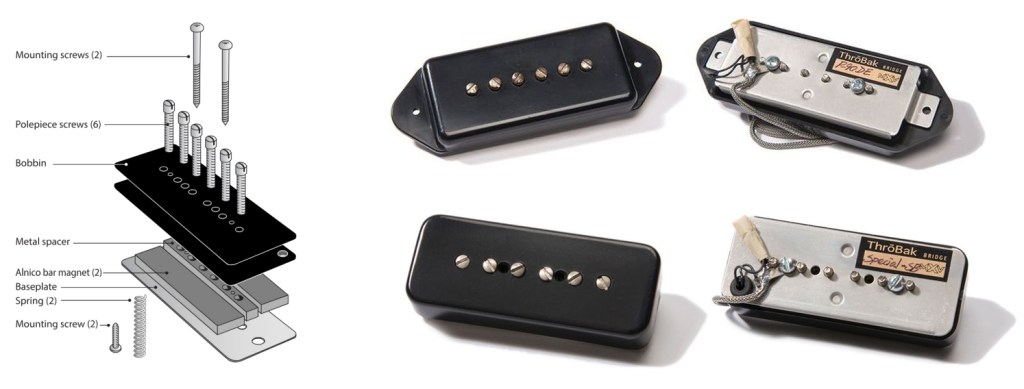
That same year, Gibson introduced the Les Paul Junior: a stripped-down, affordable model fitted with a single bridge-position P-90 housed in a cover with mounting flanges (nicknamed the “dog-ear”). Then, in 1955, came the Les Paul Special: a slightly more upmarket version featuring two P-90s, one in the bridge and one in the neck position, offering a wider range of tones.
By 1957, Gibson had replaced the P-90 with the new “P.A.F.” humbucker on Standard and Custom models. Still, the P-90 lived on in the Junior and Special, becoming a classic for its gritty, articulate sound that would shape early rock ’n’ roll and, a couple of decades later, punk rock.
For more details about P-90s and Les Paul, you should check out this very informative video by five watt world on YouTube.
That P-90 sound
Sonically, the P-90 sits somewhere between a single-coil and a humbucker: it’s fuller than your usual Fender-style single-coil, yet cleaner and grittier than a humbucker. Its unique construction, with a wide coil and two bar magnets, makes it quite different in design and response from a traditional Fender pickup.
Before getting this Les Paul, I had only experienced P-90s in a Casino — a hollow-body guitar known for its woody tone and resonance (and tendency to feed back at higher volumes). In a solid mahogany Les Paul, though, P-90s sound thicker and darker, with incredible sustain but still that crisp and bitey tone. The bridge pickup, in particular, has a mid-rich growl, the kind of sound Noel Gallagher seems to love.
Honestly, a Les Paul with P-90s is just a joy to play.
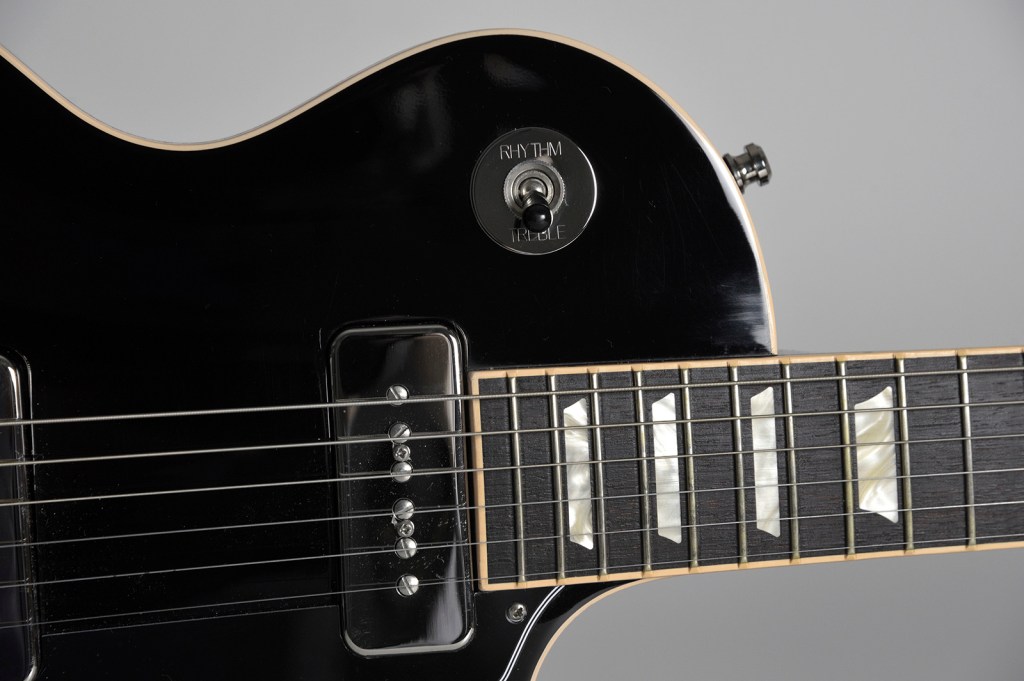
P-90s seem to be particularly sensitive to pickup height: if you look online, you’ll find wildly different opinions about how close they should sit to the strings. When I first got the guitar, the pickups were set very low (quite far from the strings). The bridge sounded good, with a hint of Telecaster-like twang, but it lacked a bit of bite and punch. The neck, on the other hand, was flat and a little lifeless. Raise them too high, though, and the tone becomes harsh and compressed. Personally, I like them just a touch lower than I’d set a humbucker, but it’s all down to taste.
And here we come to the main drawback: noise. The P-90 is a single-coil pickup, so it’s naturally prone to electromagnetic interference — that familiar 60 Hz hum. This is exactly what humbuckers were designed to eliminate, with their two coils wired out of phase to cancel the noise. Unlike typical single-coils, the P-90’s wider and shorter coil gives it higher output and a stronger midrange, which can make the hum more prominent, especially when overdriven. In short, they can be very noisy. Sometimes the hum even changes depending on your position or orientation. If you can’t stand noise, or if you like to play with heavy drive and distortion, a P-90-equipped guitar might not be your cup of tea.
Could noise be the reason why Noel hasn’t been using his P-90 Les Paul at recent gigs, switching instead to his usual humbucker-equipped Cherry Sunbursts? Possibly.
Re-creating the oasis Live ’25 black Les Paul
This project actually started before there were any strong hints that a regular Gibson USA replica would be coming. Am I disappointed now that an official version is on the way? Not at all: assembling my own version was such a fun project, and I might have even saved a bit of money in the process!
In truth, I began hunting for a black LP with P-90s right after the first Live ’25 gig in Cardiff. Seeing that guitar in Noel’s hands triggered my gear acquisition syndrome to an insane level.
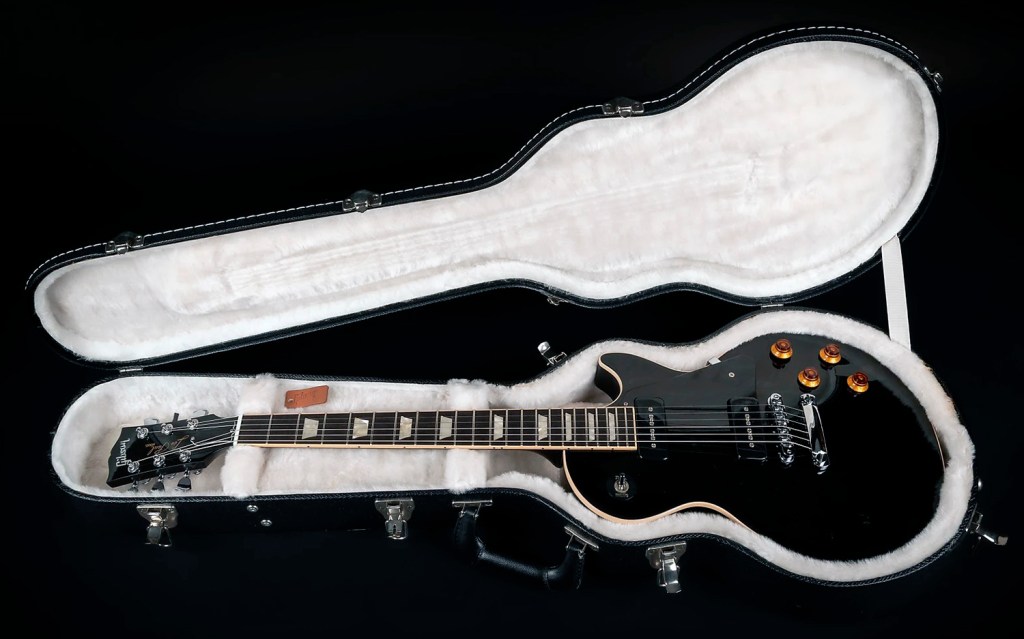
After a few weeks of searching, I finally found a model that would serve as the perfect base: a 2011 Gibson Les Paul Traditional Pro – specifically a rare variant with P-90 pickups made as a special run for Guitar Center. I’d never seen one like it before; some sources suggest that around 200 were made (roughly half in Black/Ebony and half with a Goldtop finish).
Information online about this particular model is scarce, and it rarely appears for sale. Forum posts from 2011 and 2012 indicated that this was an excellent run of Les Pauls, so I decided to bite the bullet.
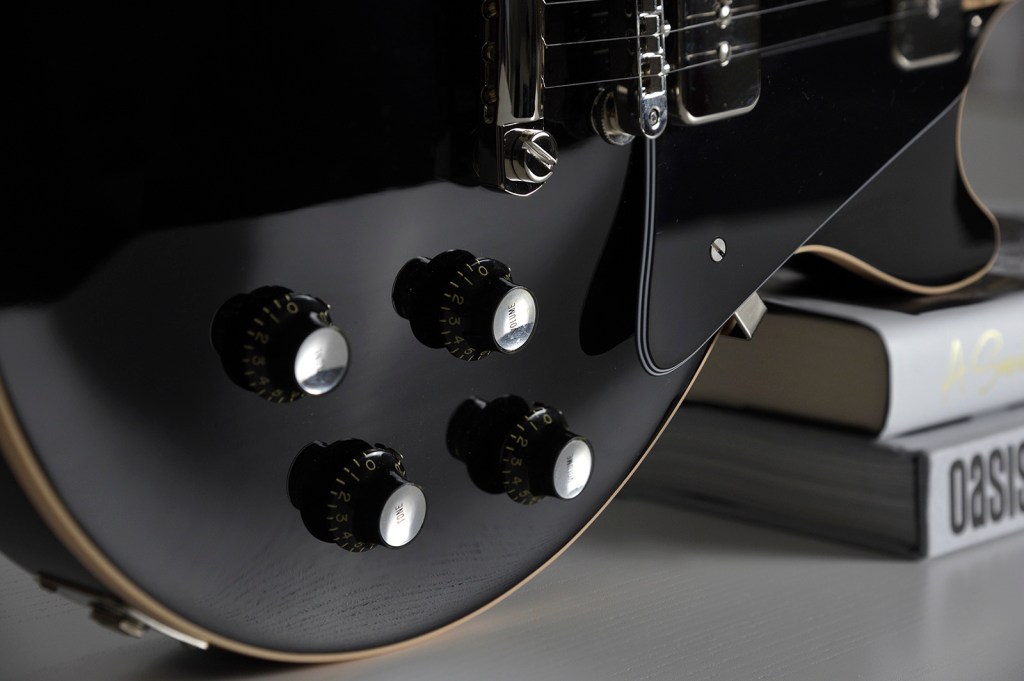
As an added bonus, the P-90s in this 2011 Traditional Pro version are coil-tapped: they feature a “tap wire” that eliminates a portion of the coil. In full mode each pickup is a traditional P-90 (with a DC resistance of approximately 7.0 kOhm in the neck position and 8.6 kOhm in the bridge), but lifting the push-pull switch on each pickup’s volume control activates the coil-tap for a thinner sound (resistance drops to 5.0 kOhm and 6.0 kOhm respectively).
When I first picked up the guitar, I was shocked by its weight: it’s the heaviest Les Paul I’ve ever held, tipping the scales at nearly 4.9 kg (almost 11 pounds for those still loyal to Imperial units). Even unplugged, it feels incredibly resonant, and the neck is a very comfortable ’60s “slim taper” — coincidentally, very similar to Noel’s original.
After a quick adjustment of the pickup height, the sound was absolutely glorious. I dialed in a very Noel-ish tone and started strumming the chords of Acquiesce… gotta love that P-90 snarl!
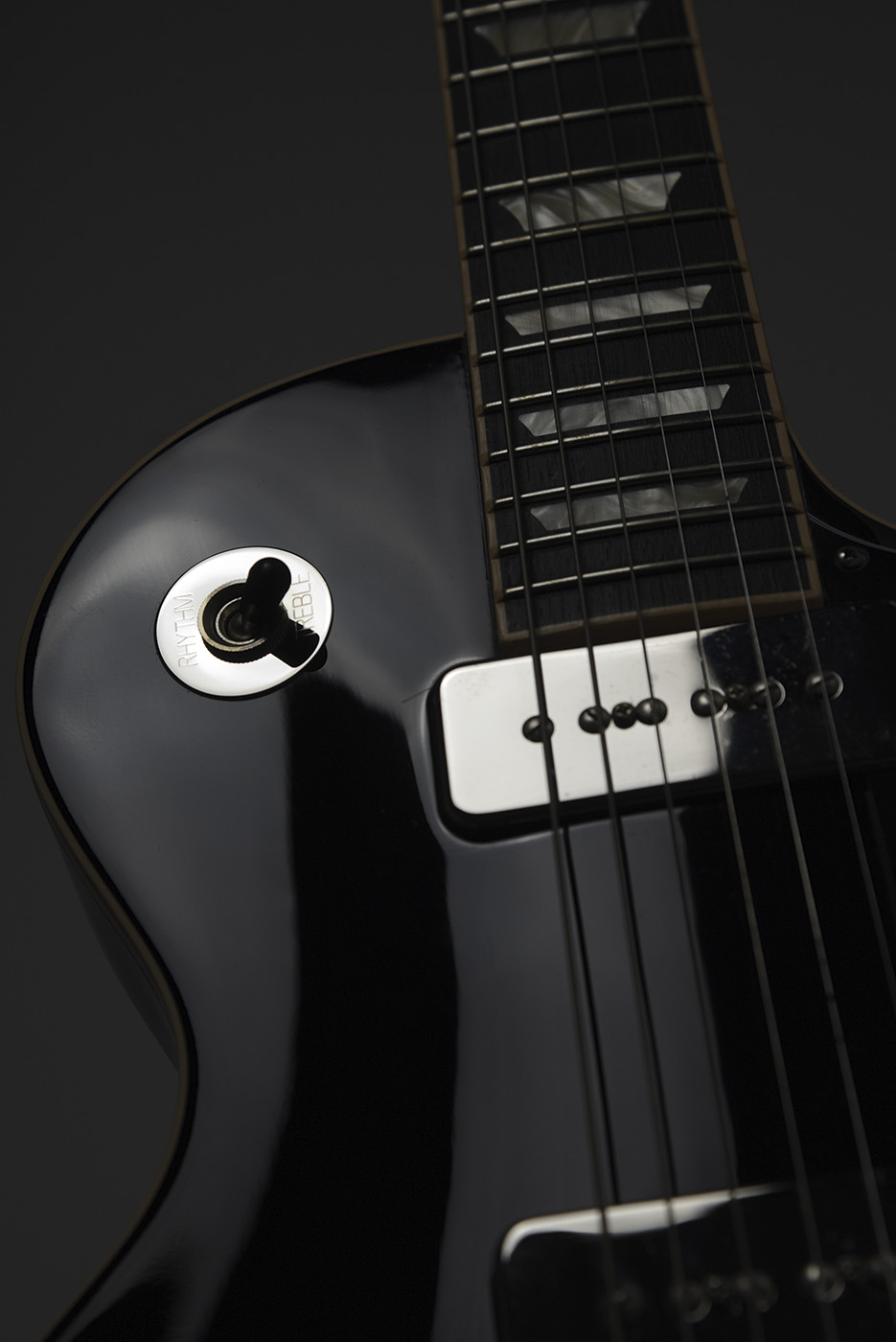
Once I had the guitar, it was time to track down all the parts needed to make it look like Noel’s. The trickiest items were the metal soapbar covers and the nickel toggle switch ring: both were sourced from a major U.S. luthier supplier, which I suspect is where Gibson gets theirs. There are other versions online, but none match the ones Gibson has been using for Noel’s guitar, the limited “Gibson Garage” run, or the upcoming Gibson USA production model.
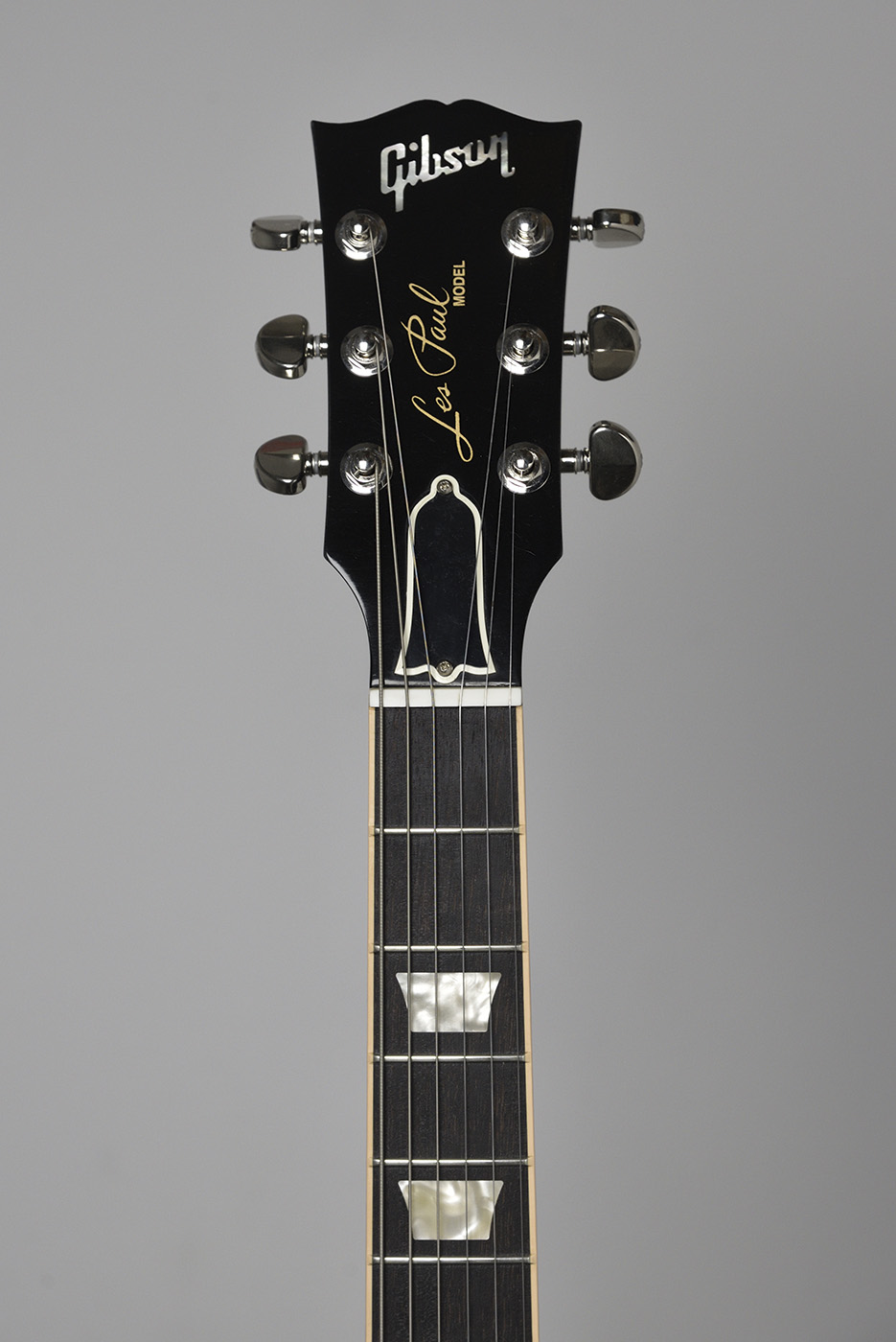
All the chrome hardware was swapped for nickel hardware: I’m a bit picky about mixing nickel and chrome parts, even if most people wouldn’t notice. I installed the correct Grover locking tuners (model 502 with kidney buttons) and replaced the Nashville bridge with an ABR-style bridge made by TonePros.
The 5-ply pickguard matches the specs of 1954 reissue Les Paul Customs: it needed a little sanding to fit perfectly, which happens all the time with aftermarket pickguards. The knobs are black “reflectors” with silver inserts, and the truss rod cover is a historic-style version — both coming from a Gibson Custom Shop guitar. And finally, the tiniest detail: a slotted screw for the pickguard!
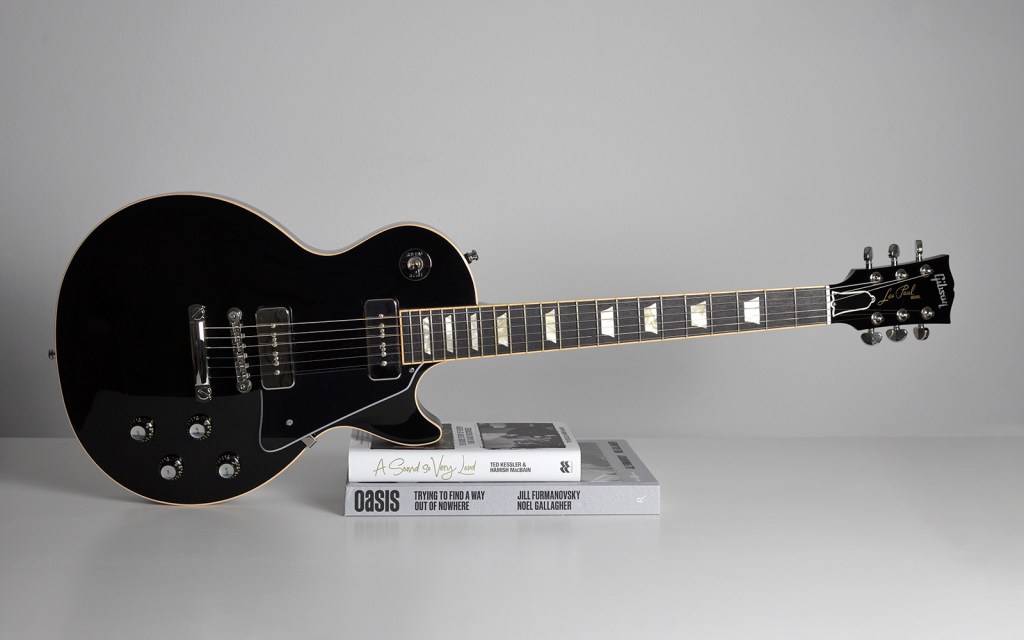
Of course, there are a few minor details that can’t be replicated unless you start from a Made-to-Measure Custom Shop guitar, but I’m confident my replica will be very close to the Gibson USA model that’s about to be released — the official announcement might come later this week.
If you’re a Gibson fan, a Les Paul with P-90s is a fantastic addition to any collection. I’m having a blast with mine right now… even though I’ve already started working on another guitar project. Stay tuned!
 The Chief's Guitars - Noel Gallagher's guitars: a complete guide - Oasis and NGHFB