
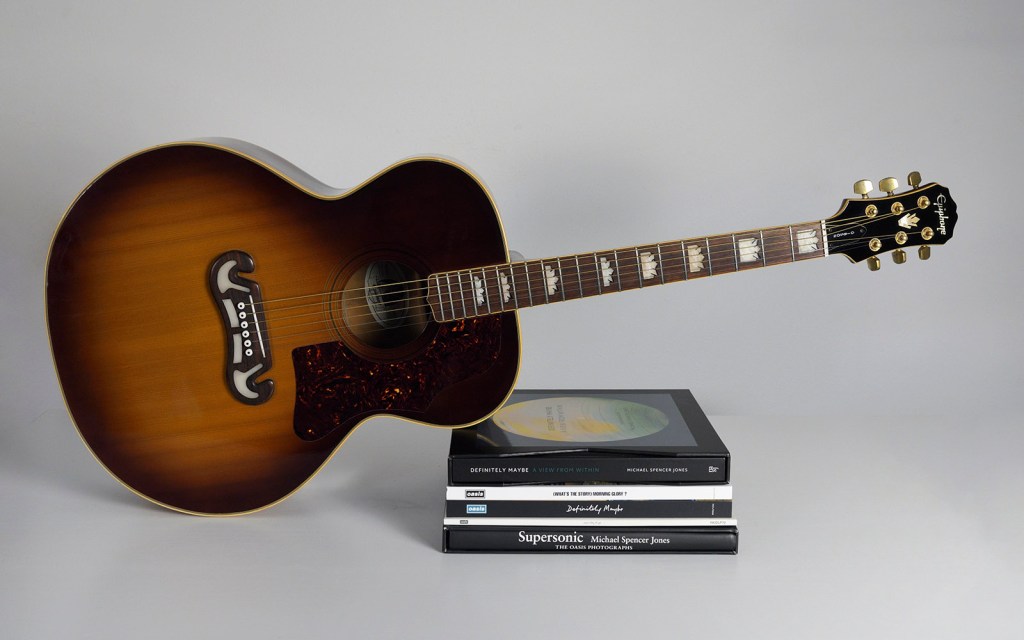
If you Google “Noel Gallagher acoustic guitar“, you’ll find countless photos and articles about his beloved Gibson J-150. It’s certainly the acoustic guitar he’s most commonly associated with, and Gibson even released a replica of it back in 2021. However, the J-150 didn’t enter the picture until 2001.
There’s another, much humbler guitar that, at least to me, represents the true Oasis acoustic sound. Think of Talk Tonight, Whatever, or Half the World Away. Yes, that’s the sound I’m talking about.
In this post, we’ll take a deep dive into Noel Gallagher’s Epiphone EJ-200, the very guitar he’s seen playing on the Definitely Maybe artwork. As it turns out, there may be an obscure backstory behind this cheap Korean-made Epiphone, something that nobody seems to have ever researched before.
Keep reading as we focus on the guitar that defined the Oasis acoustic sound.
As a newbie hardcore Oasis fan two decades ago, back when YouTube was still in its infancy, one performance always stood out to me: the MTV Most Wanted acoustic session from August 1994. In fact, Live Forever from that session is still one of my favorite versions of the song. The guitar Noel is playing is a Vintage Sunburst Epiphone EJ-200, something that looked surprisingly attainable to a penniless guitar anorak like me at the time.
Over the years, though, something about that guitar has always puzzled me. For starters, the pickguard lacks the distinctive floral pattern that’s usually one of the defining features of an EJ-200. Sure, it could have been replaced, but that seems unlikely on such a new guitar. After all, production of the EJ-200 only officially began in 1993 or 1994, depending on the source. So why was that?
Over the years, I became determined to track down a very early EJ-200, hoping to find a model that was as close to Noel’s as possible. I came across various mid-’90s examples and a handful of 1994 models, but they all shared the same features: the floral pickguard was there, the bridge was different and something about the sunburst finish just didn’t look right. Noel’s guitar seemed to belong to a different batch.
Then, one day, I got incredibly lucky.
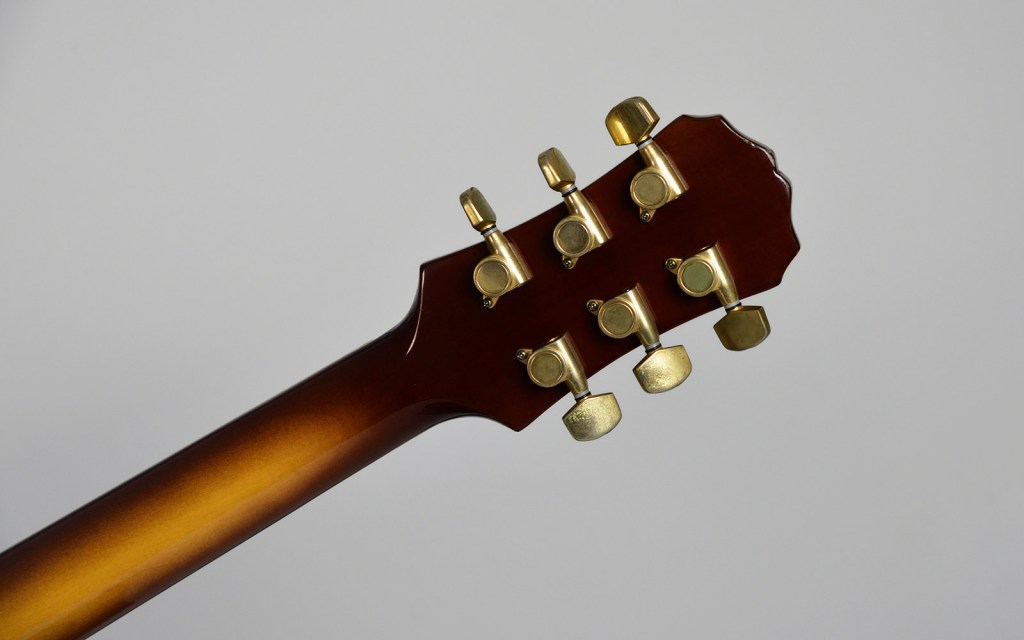
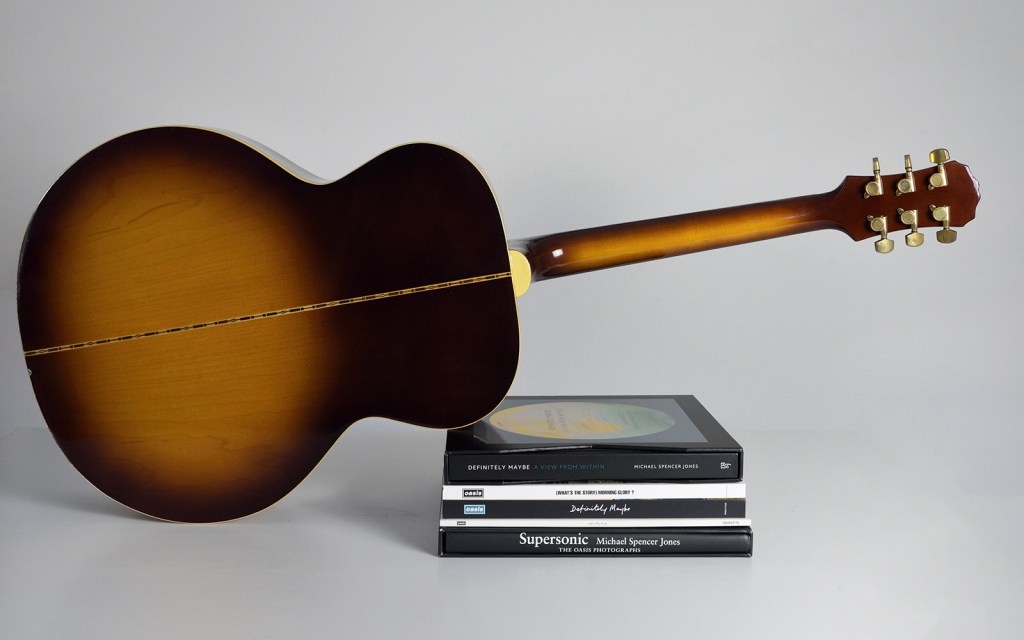
I stumbled across a local listing for a Epiphone EJ-200, located absurdly close to where I live. It belonged to a drummer who had decided to get into guitars. He bought it from a shop in France, played it for a while, and then left it tucked away for years. It wasn’t in mint condition, but it had every single feature I was looking for: the plain tortoise-shell pickguard, the tuners, that specific “moustache” bridge, the truss rod cover with the Gibson logo, and the oval “lady” label inside the soundhole. This was it. Even the seller told me he had never seen another one quite like it. I got in the car and picked it up the very next day. Once I had the guitar in my hands, a closer inspection revealed what makes it peculiar.
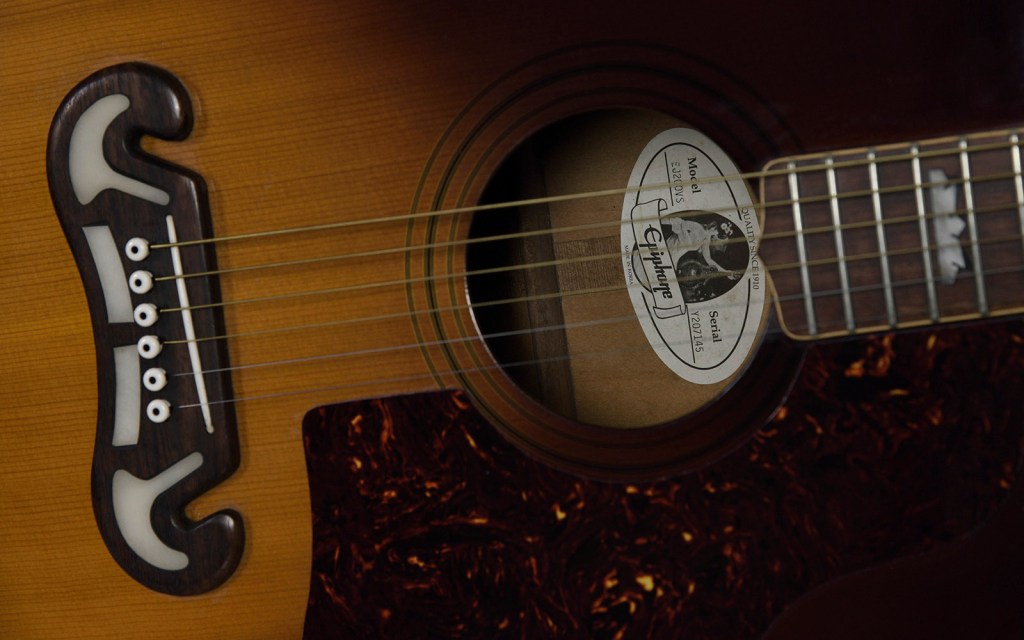
First of all, there’s the serial number. Mine starts with Y207. The “2” almost certainly stands for 1992, while “07” should indicate July. That dating is further supported by a hidden production stamp inside the body, just below the neck joint, which reads 92.8.28 (most likely August 28, 1992).
There are two odd things about this. First, serial numbers beginning with “Y” don’t seem to belong to any known Epiphone production from that period. Second, EJ-200 production officially didn’t begin until the following year, at the very earliest.1
Then there are the crown-shaped fretboard inlays. Frankly, the workmanship is pretty rough. A couple of the inlays aren’t perfectly aligned with the frets, and there’s lots (and I mean lots) of dark wood filler visible around the edges. It’s the sort of thing that certainly wouldn’t pass quality control nowadays.
Despite all that, after a thorough clean, a fresh set of strings, and a truss rod adjustment, the EJ played beautifully. And believe me when I say that simply strumming an Em chord sounds exactly like the opening of Talk Tonight. Fabulous.
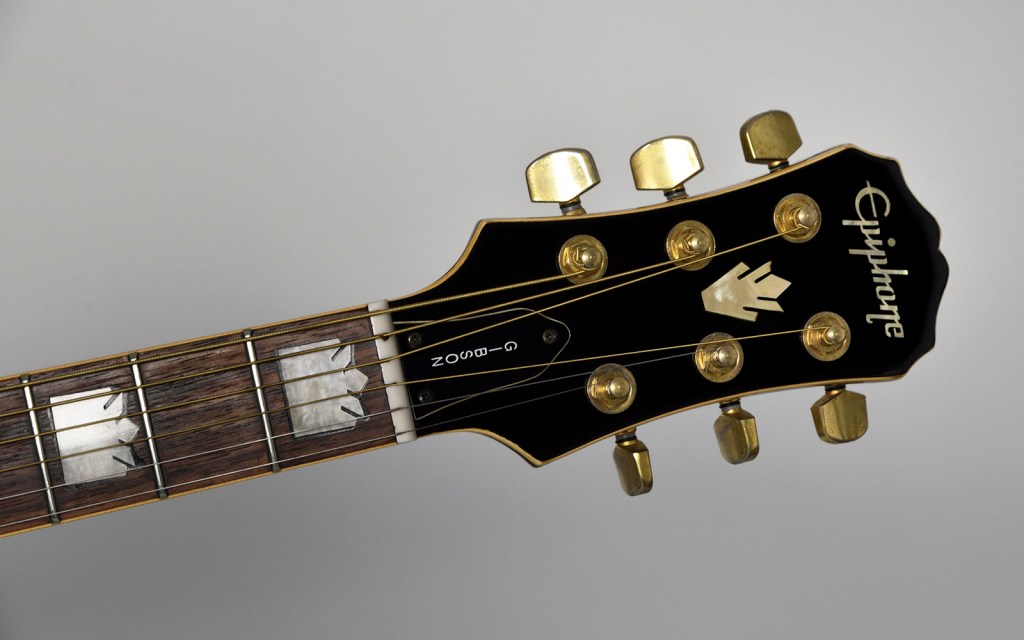
However, the mystery still remained: what exactly is this guitar, and why is it different? I started digging and eventually came across what sounds like a fairly reasonable explanation.
I believe the “Y” in the serial number may stand for Yoojin, a factory based in South Korea that, as far as I can tell, is no longer active. Between the late ’80s and the mid ’90s, it produced guitars for Ibanez and various smaller brands. Its acoustic production was based in Yangju, just north of Seoul.2
Most Korean Epiphones from the early to mid ’90s (like Noel’s Les Paul) were made at the Samick factory and carry serial numbers starting with “S”.
Officially, Yoojin was never listed as a manufacturer for Epiphone guitars: however, it seems reasonable to assume that, at some point in 1992, Epiphone may have commissioned them to build a small test run of instruments, including these short-lived EJ-200 models. Ibanez is also believed to have done something similar in the ’80s, before later assigning Yoojin to produce several of its main-line guitars.3
This would explain why the “Y” serial appears only on a handful of instruments, and only between late 1992 and 1993. It would also make sense of the inconsistent inlay work on my guitar. In particular, my Summer 1992 example could belong to an early pre-production batch. Later examples, such as an identical November 1992 model owned by reader Cameron, appear to show cleaner inlay work. According to reliable sources,4 Noel’s EJ-200 has a March 1993 serial number.
We can reasonably assume that Epiphone’s quality control team wasn’t entirely satisfied. As a result, most likely in early at the end of 1993, they may have shifted acoustic production to Samick, a more reliable company that was already producing solid-body electrics for the brand. Samick-made EJ-200s with the “S” serial number effectively began appearing in 1994.
Update: I had previously believed that production of these had stopped in the first half of 1993, but reader Matt shared with me pics of his Natural EJ with a Y-serial dating to November 1993 and a February 1994 production stamp. Perhaps it was part of a batch that had been set aside earlier in the year and only completed later on? I haven’t come across any others that late!
Samick EJ-200s from the ’90s do show up relatively often on the used market, but the early Y-serial EJ-200s in Sunburst like Noel’s feel like real unicorns. Since I acquired mine almost three years ago, I’ve only ever seen one other for sale anywhere in the world. It makes you wonder how many were actually produced and how many have survived.
But how does it play? The neck has a fairly rounded profile and is on the thicker side, but still comfortable. The tuners are surprisingly solid and stable; they don’t feel cheap at all. There are no markings on them, but they look suspiciously like the unbranded tuners made by Gotoh that Ibanez used in the same era. Another small clue pointing towards the Yoojin factory theory, perhaps.
And the sound? Absolutely flawless early Oasis acoustic: exactly like the recordings we love. There’s something about the resonance and that slightly percussive character that fits perfectly with Noel’s strumming style.
And now let’s go back to early 1993. That’s when Noel Gallagher bought his Y-serial EJ-200 from A1 Music in Manchester for £279. This has been confirmed multiple times by the tech who sold him the guitar, who also stated that the pickguard didn’t have the floral pattern from the factory.5
From that moment on, it became Noel’s main (if not his only) acoustic guitar at the time. Who knows how many songs he wrote and recorded with it! It remained his primary recording acoustic until he later acquired a vintage Epiphone Frontier, just before the Morning Glory era.6
After the various demo sessions, the EJ-200 was taken to Monnow Valley Studios in January 1994 for the first attempt at recording Definitely Maybe. It can even be seen on the Supersonic single sleeve, leaning against Noel’s WEM amplifier, alongside other guitars such as his EA-250 and Les Paul Standard. It was also likely used at Sawmills Studios in the months that followed.
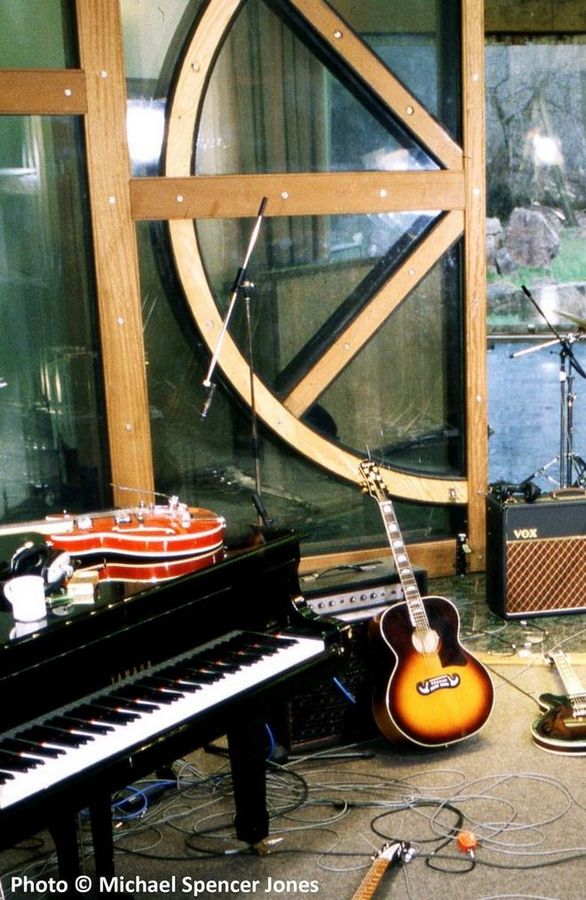
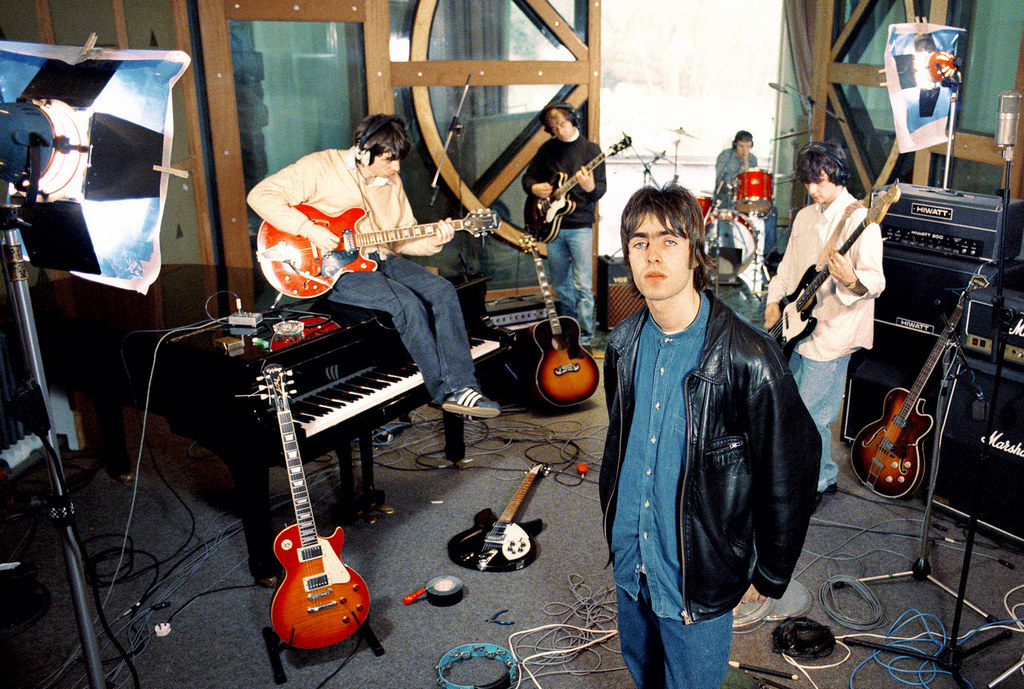
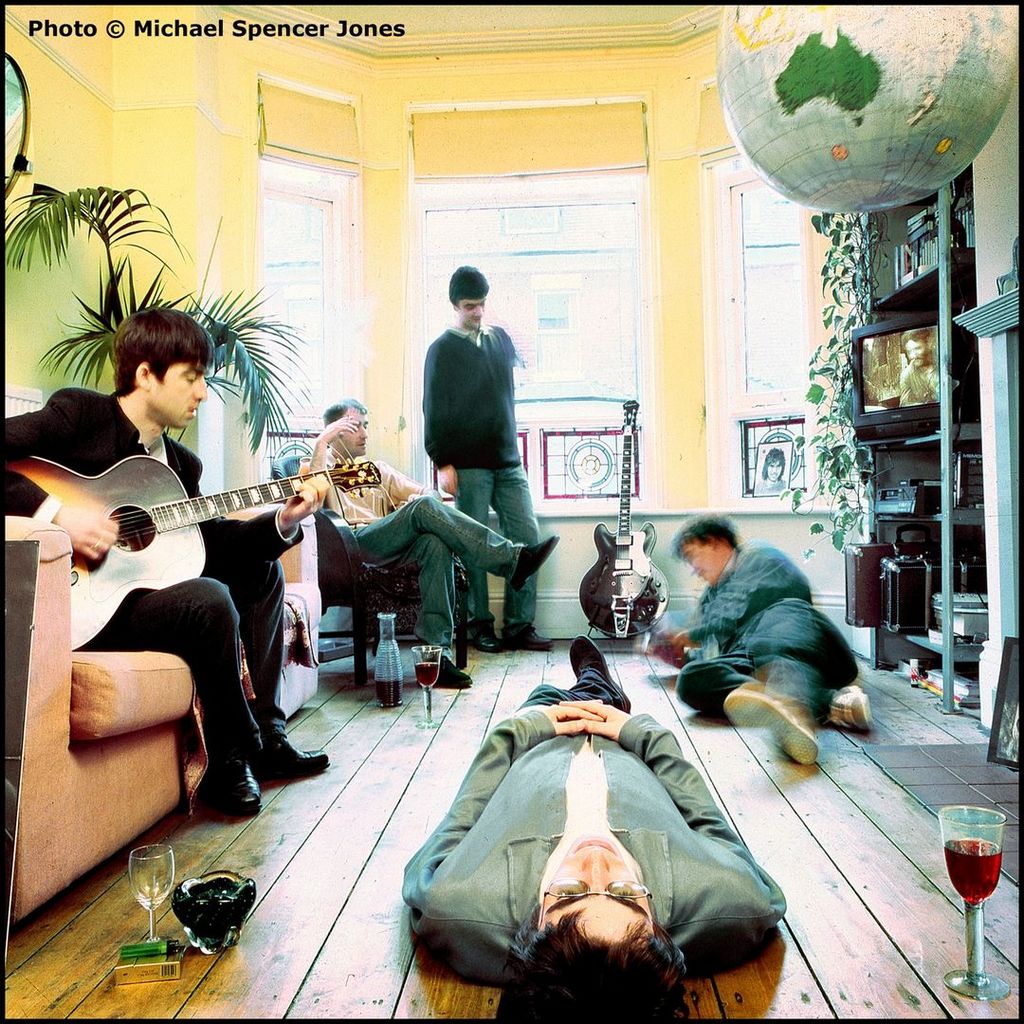
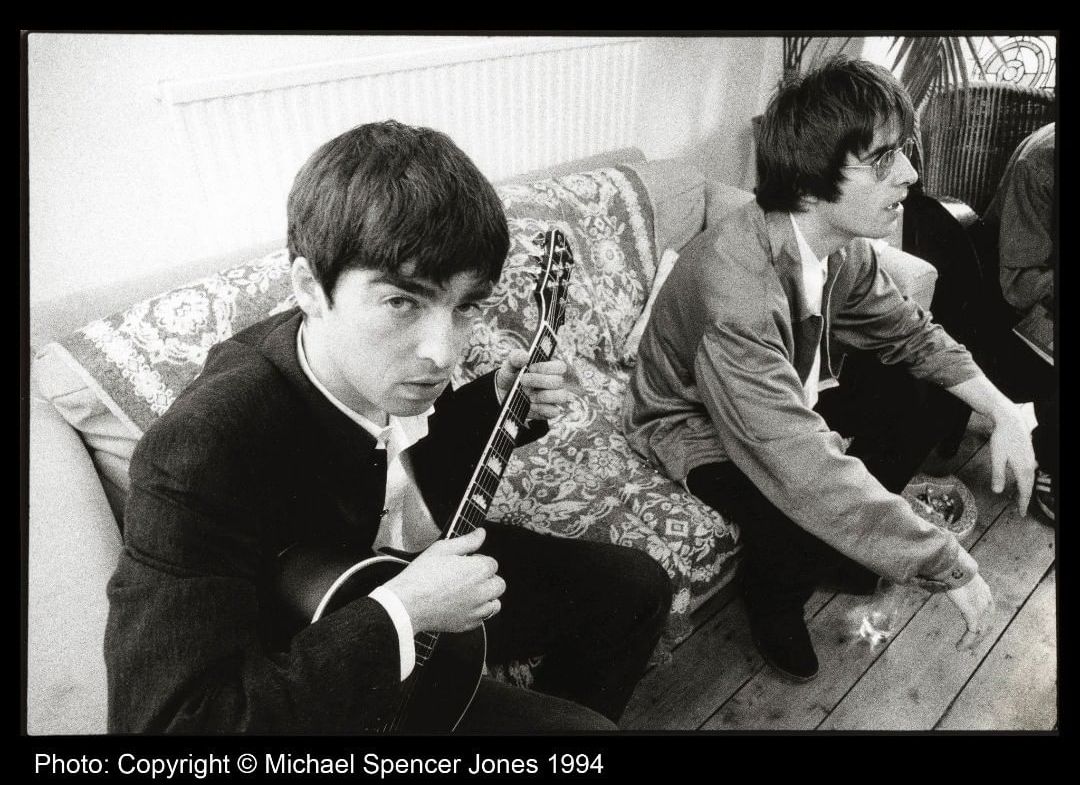
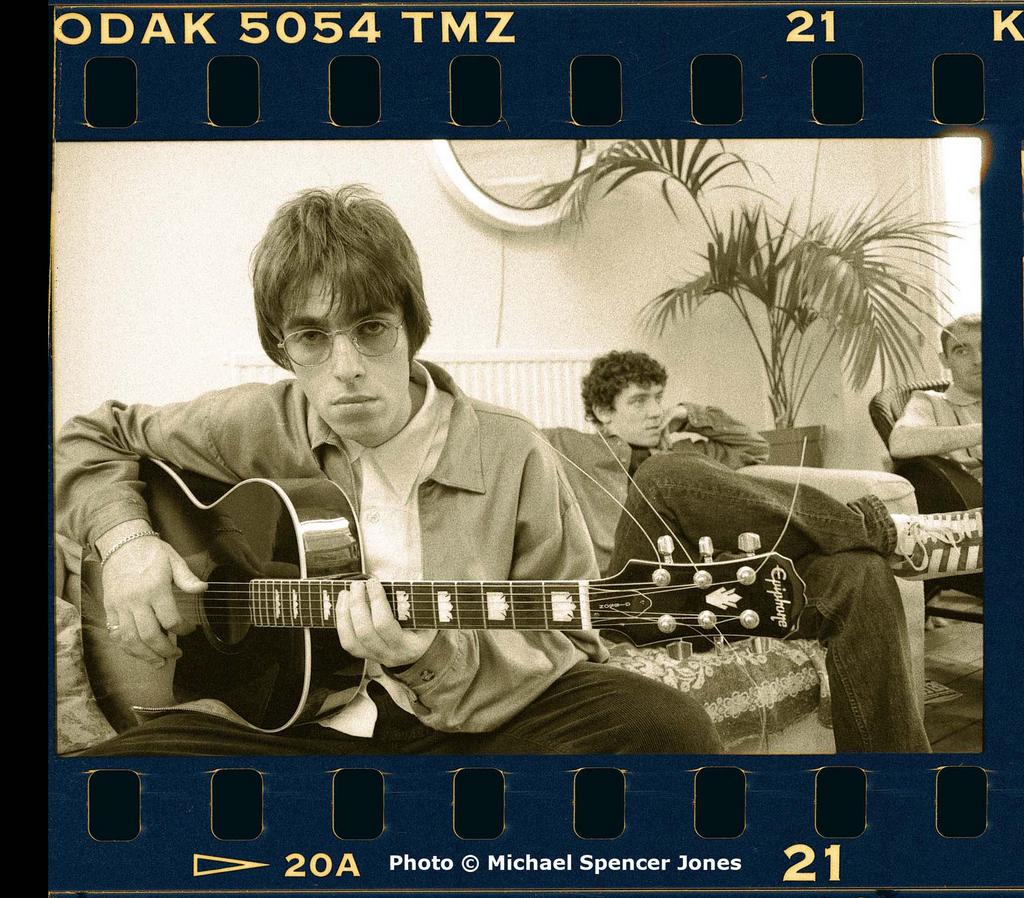
On 30 May 1994, the band gathered at Bonehead’s house in West Didsbury for the Definitely Maybe album cover photo shoot. Noel is seen there strumming his EJ-200.
All the photos, of course, were taken by the great Michael Spencer Jones: his most recent book, “Definitely Maybe: A View From Within”, includes several previously unseen outtakes from this period.7 In some of those shots, Bonehead, Liam, and even Guigsy can be seen with the guitar. By the way, the electric semi-hollow in the background is the Antique Sunburst “Matsumoku” Riviera.
The following week, Oasis relocated to Maison Rouge Studios in Fulham to record Whatever, Listen Up, Fade Away, and the demo of Some Might Say. It’s quite likely that the EJ-200 was used to record the main acoustic guitar track on Whatever.
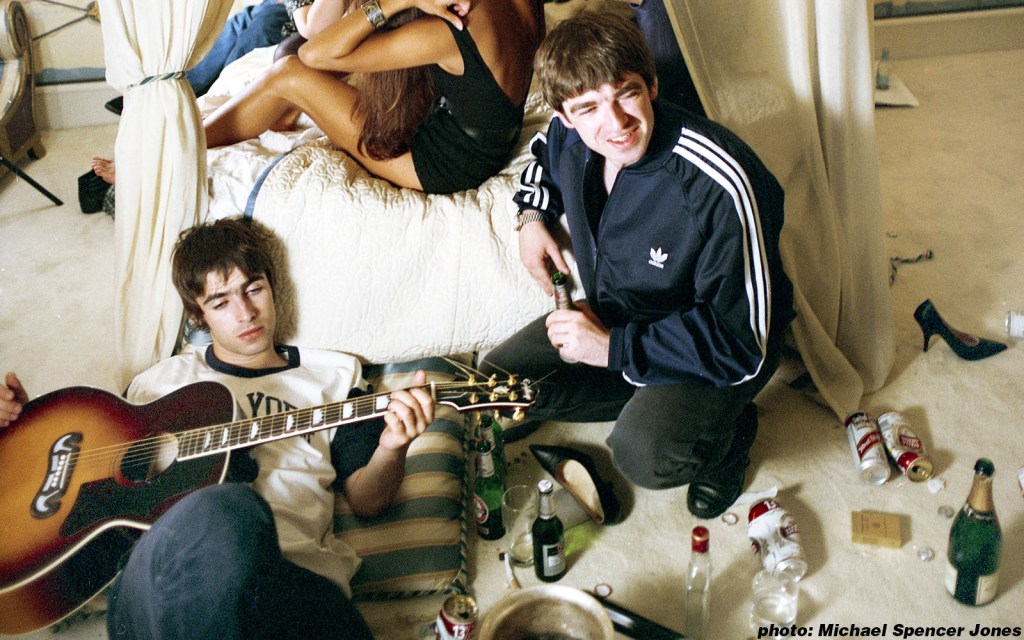
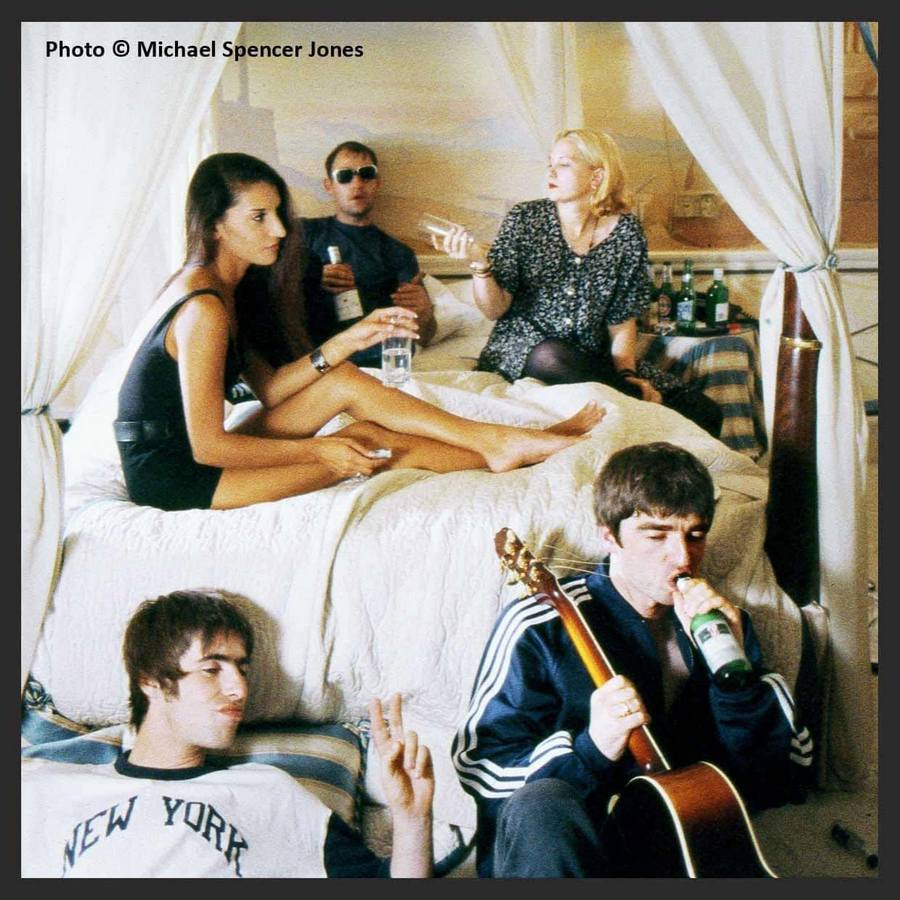
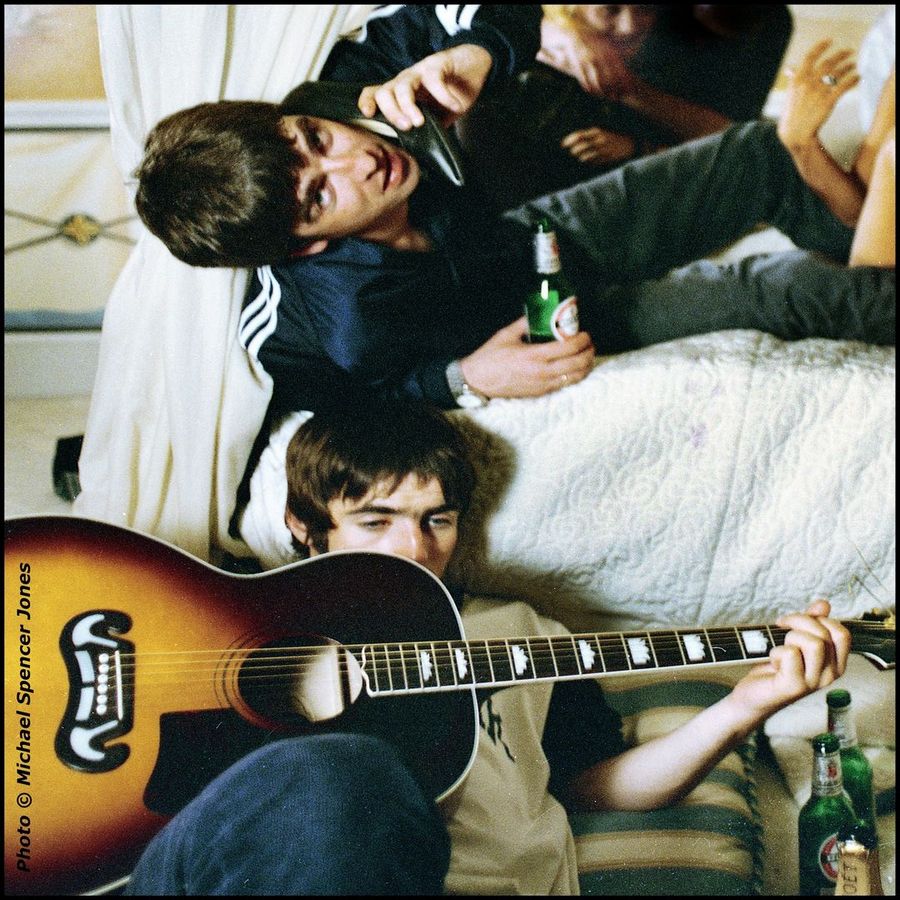
On 14 August, the day after the infamous Swedish incident (where members of the band reportedly got drunk at a hotel bar and were subsequently deported back to the UK), the now-famous Halcyon Hotel photoshoot took place.8 From that session came the artwork for the Cigarettes & Alcohol single. The EJ-200 features in the main image and in other outtakes, once again captured by the great Michael Spencer Jones. In my opinion, this might be the most iconic Oasis photoshoot ever.
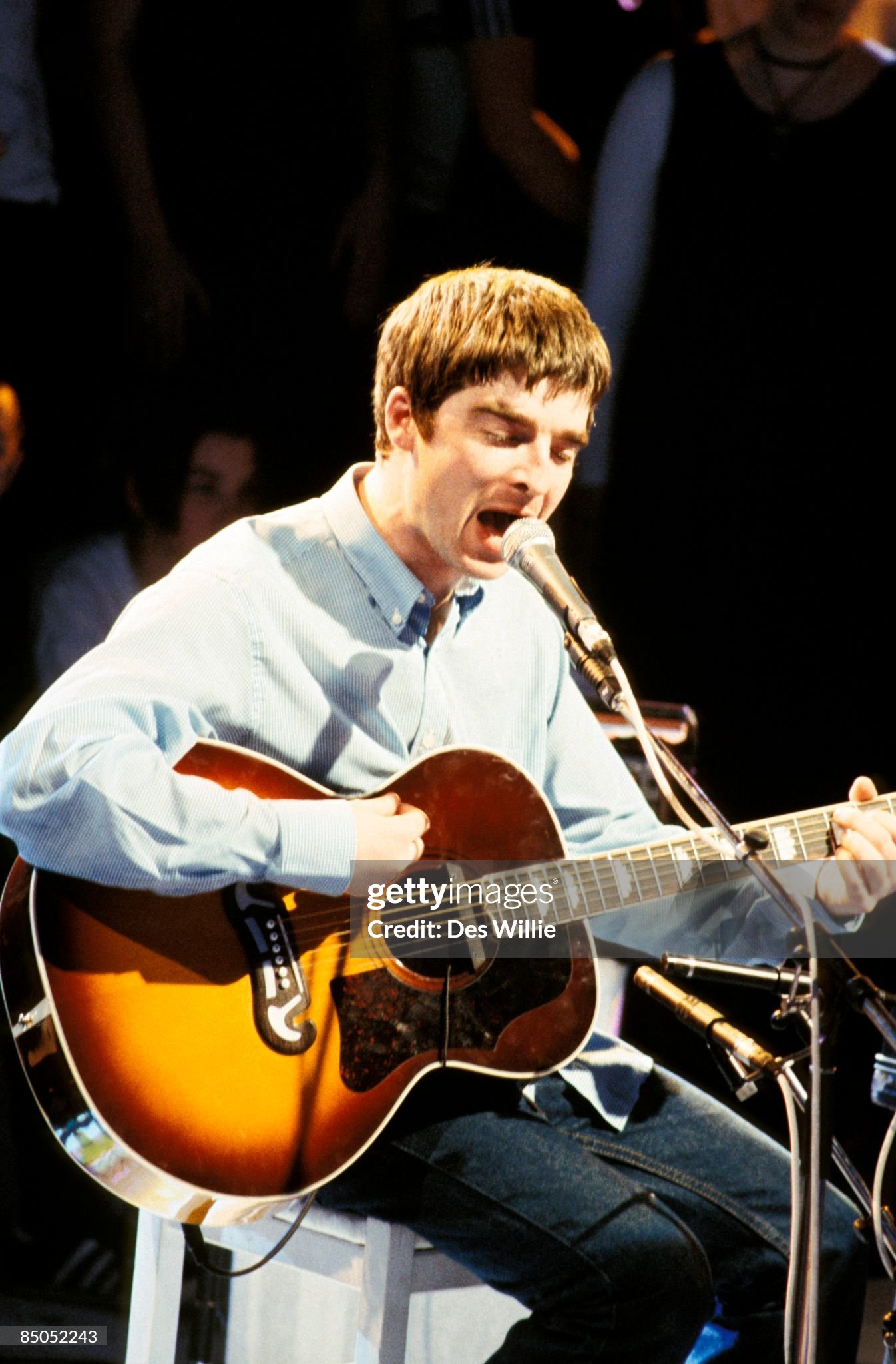
Four days later, on 18 August, came the MTV Most Wanted performance.9 With Bonehead handling piano duties, Noel and Liam delivered legendary acoustic versions of Whatever and Live Forever.
Then, on 30 August, the band played a short acoustic set at the Virgin Megastore in London as a promo for Definitely Maybe on release day:10 both Noel and Bonehead are seen playing Takamine acoustic guitars, possibly recent acquisitions at the time.
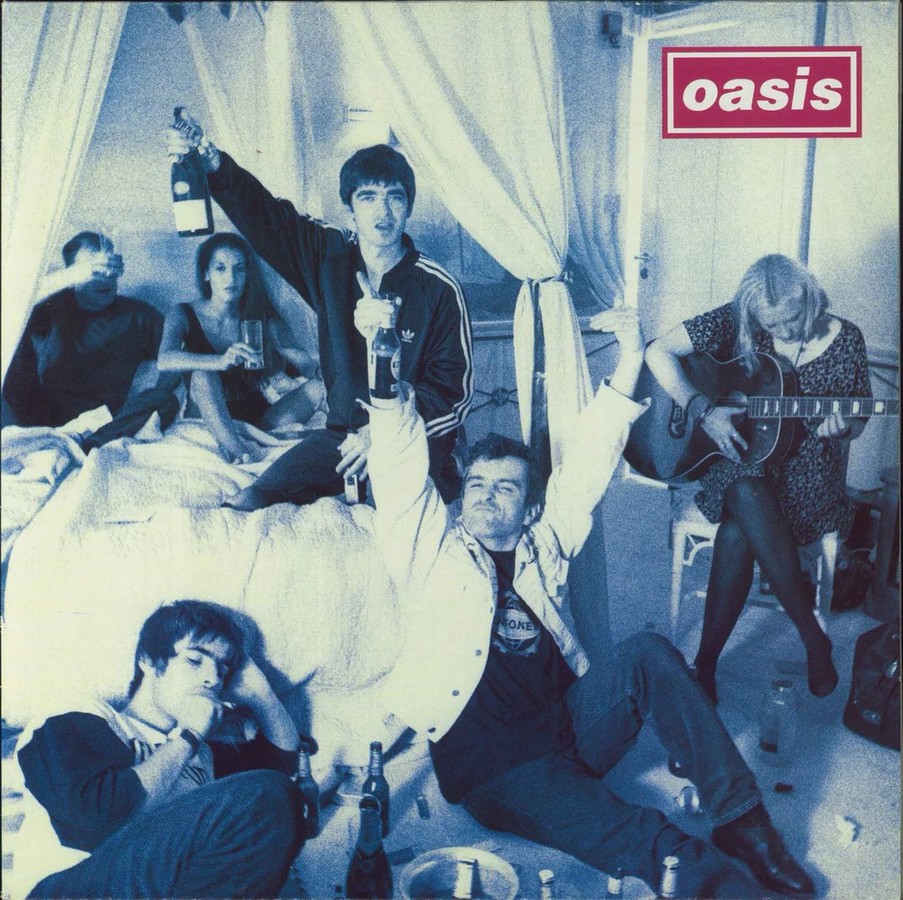
The Takamines were often used for live performances, but the EJ-200 allegedly remained Noel’s main recording acoustic guitar until he acquired the vintage Epiphone Frontier in the first months of 1995. As such, the EJ may well be the guitar we hear on Talk Tonight and Half the World Away, both recorded at Congress House Studio in Austin, Texas in October 1994. The sound is a perfect match.
Even after Noel acquired the Frontier, the EJ-200 continued to be used during the (What’s the Story) Morning Glory? recording sessions at Rockfield Studios in early 1995, as seen in various pictures and footage.
On 14 April 1995, it was also played by Noel during the now-famous performance of Talk Tonight with Paul Weller on piano, filmed for Channel 4’s The White Room.11 For that appearance, a mic/pickup system (likely a Fishman unit12) was fitted inside the soundhole. The same setup was later used for the iconic Maine Road shows in April 1996, which marked the last important outing of the EJ-200.
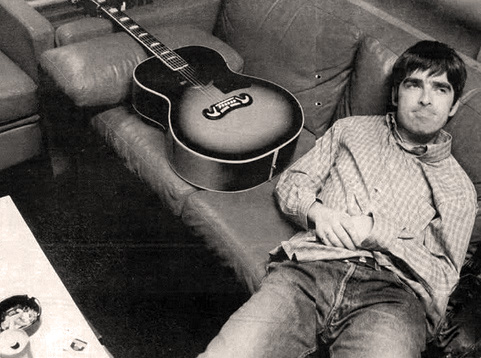
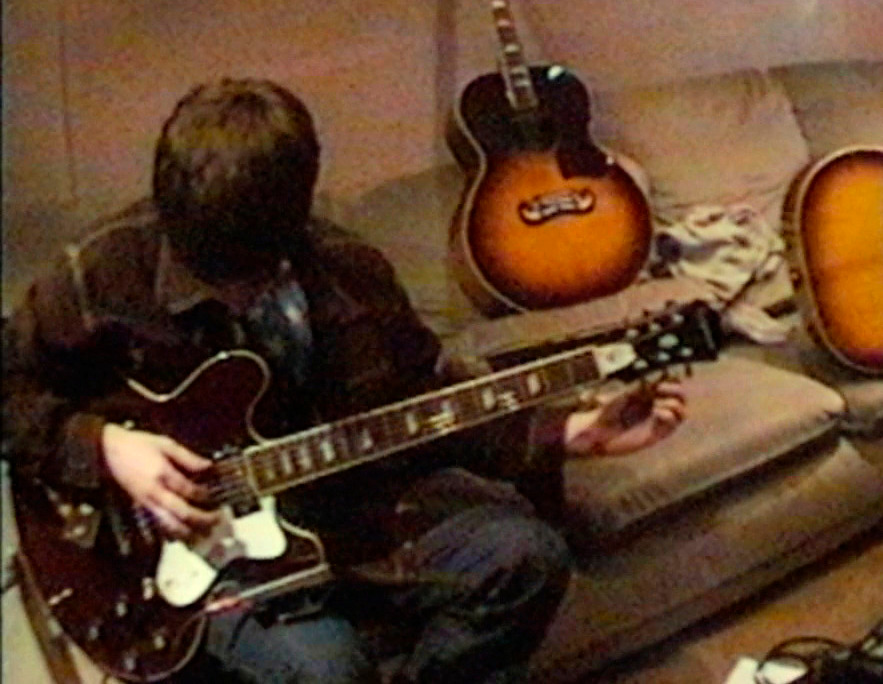
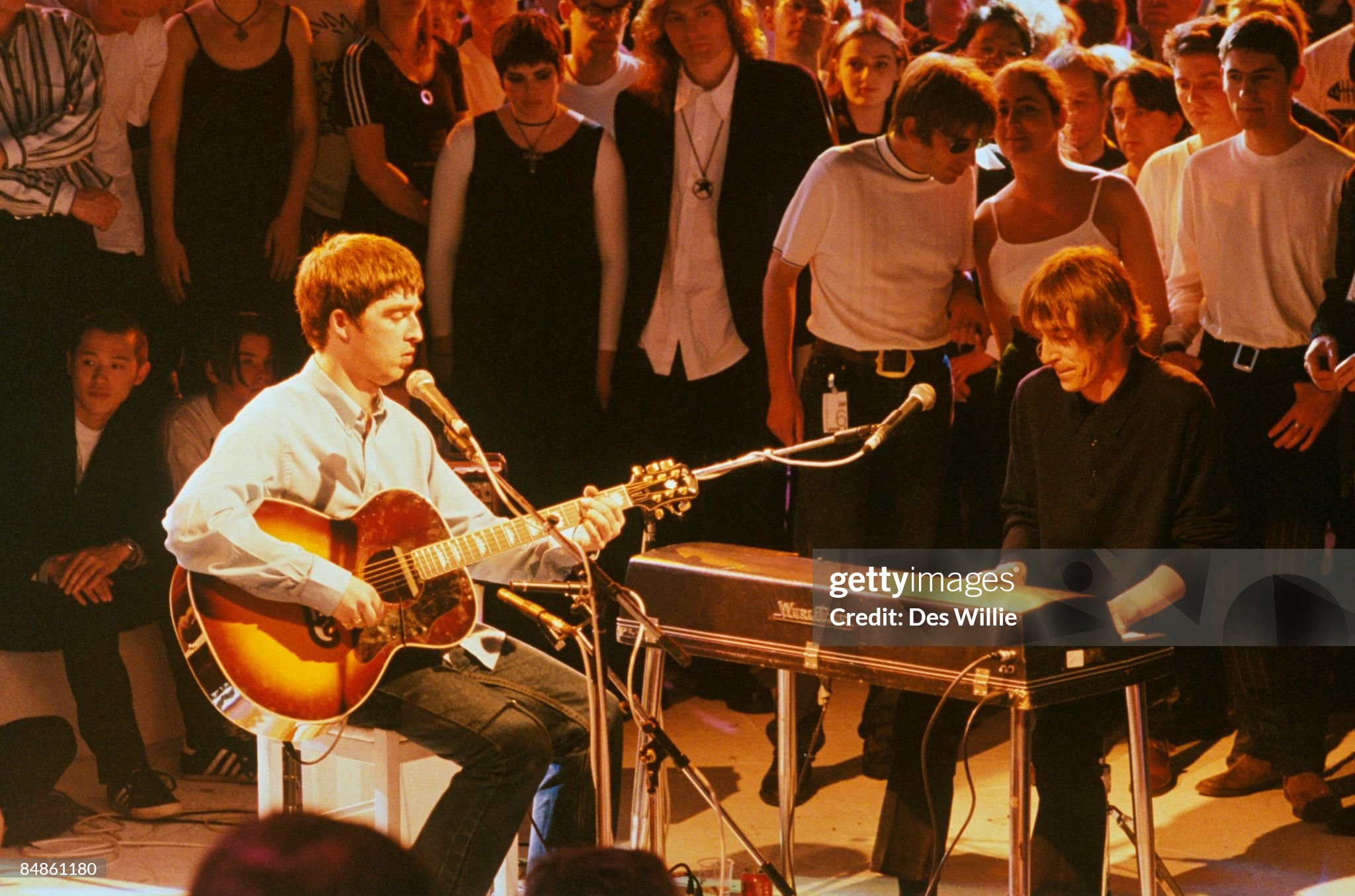
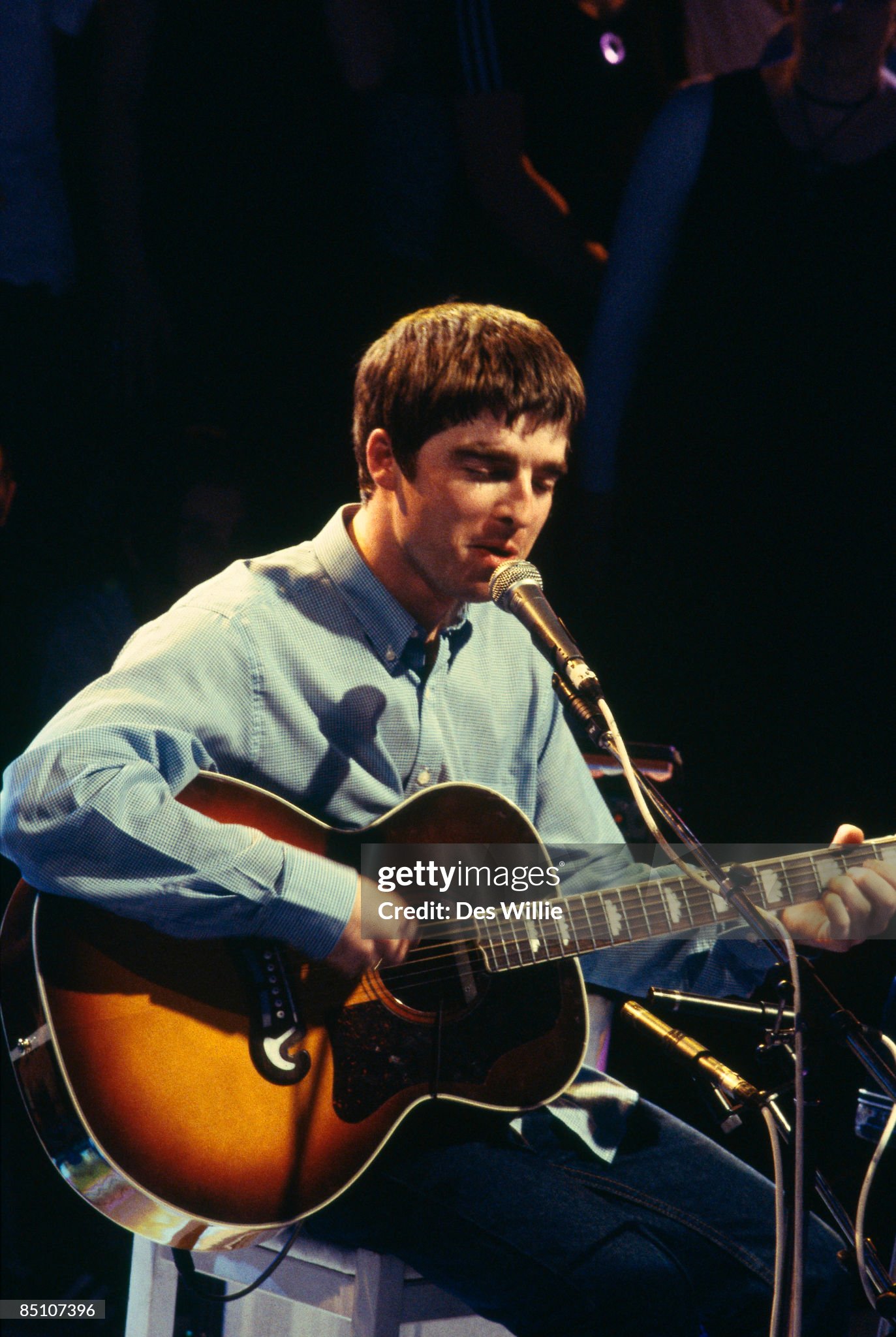
I may have missed a few later appearances, but the question that often comes up is: where is Noel’s EJ-200 now?
In the mid-2000s, it was still in Noel’s possession, according to reliable sources.13 However, it hasn’t been seen in nearly three decades, and one can’t help but wonder whether it was lost or stolen – like the Epiphone Sheraton from the Be Here Now tour.
Recently, another Epiphone EJ-200 that once belonged to Noel surfaced: a regular, Samick-made 1994 model in a natural finish, signed by Noel on the front.
Despite what the description on the Sotheby’s website claims,14 I don’t believe it was used in the Wonderwall video. Those were different guitars altogether (but that’s a topic for another blog post). According to the accompanying letter, this guitar was used by Noel “when he was writing songs” for Morning Glory, before being given away in August 1996. The style of Noel’s signature certainly matches the period.
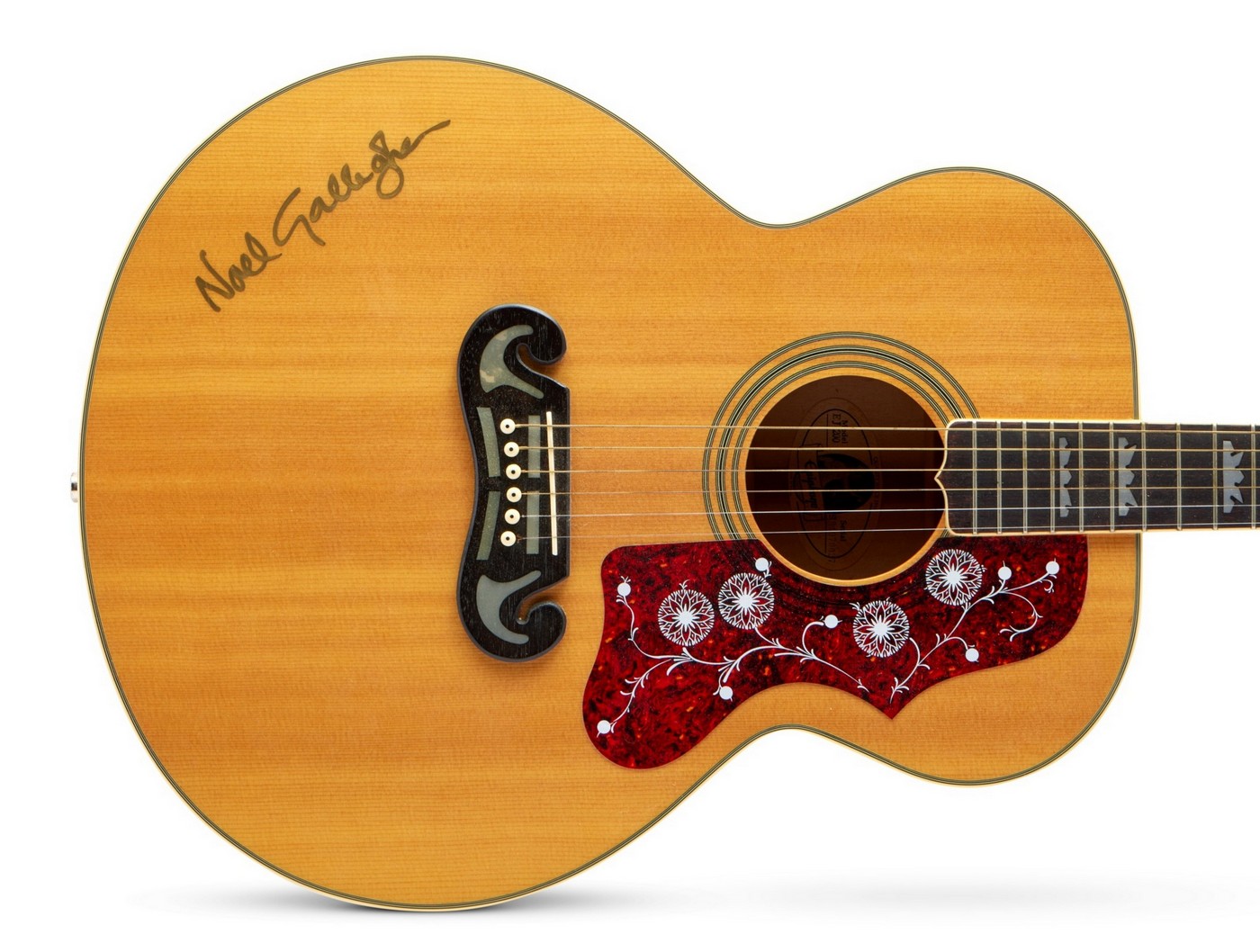
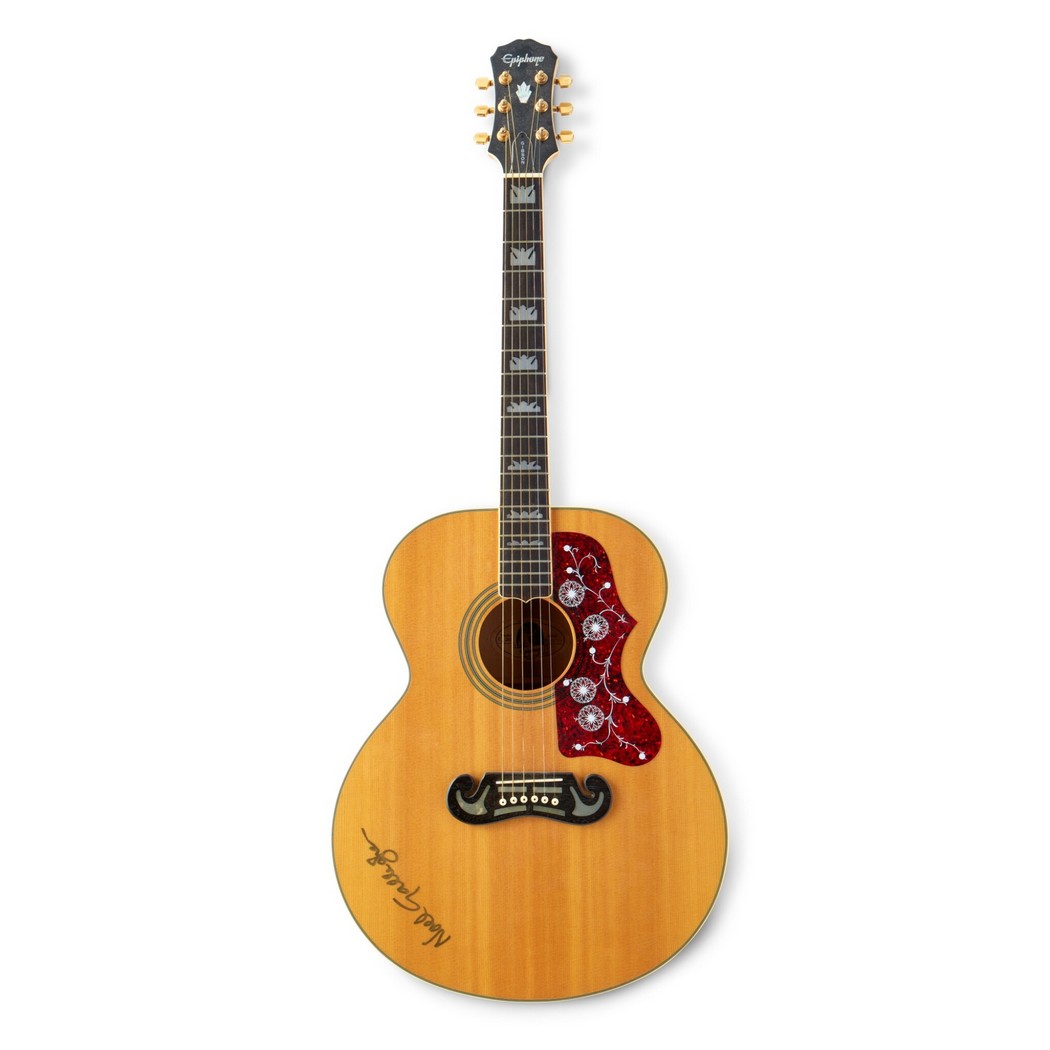
As far as I know, Noel has never been pictured with it, and I doubt he actually used it during any recording sessions. Coincidentally, as fellow anorak Rob has pointed out, an identical guitar appeared during Noel’s cameo in the 1998 TV show The Young Person’s Guide to Becoming a Rock Star.15 However, the timelines don’t quite match, so it must be a different instrument.
Despite being insignificant among all the guitars owned by Noel, the natural-finish Samick EJ-200 still sold for an almost unbelievable $96k in April 2026. That makes the $170k price tag for the Supersonic Epiphone Les Paul sound almost like a bargain.
And that’s it. I hope you enjoyed the read. Take this as a teaser for a future acoustic section of the website. It’s going to be a long wait (time is limited!) but it will happen somewhere down the line.
As always, if you have any hints, tips, or corrections, please get in touch!
- The Epiphone Guitar Book – Walter Carter ↩︎
- forum thread on Boards.ie (link) ↩︎
- forum thread on Ibanez Collectors (link) ↩︎
- The source prefers to stay anonymous – thanks! ↩︎
- Richard Henry Guitars (link) ↩︎
- Noel Gallagher’s Epiphone guitars showcased at the BME – Gibson Gazette ↩︎
- You can buy the book and support Michael Spencer Jones at his website: https://www.spellboundgalleries.com/ ↩︎
- Definitely Maybe: A View From Within – Michael Spencer Jones ↩︎
- https://www.oasis-live.net/shows/1994/1994-08-18a ↩︎
- https://www.oasis-live.net/shows/1994/1994-08-30 ↩︎
- https://www.oasis-live.net/shows/1995/1995-04-14 ↩︎
- It looks like an early version of this one: link! ↩︎
- See footnote #4 above ↩︎
- https://www.sothebys.com/en/buy/auction/2026/rock-pop-2/noel-gallagher-oasis ↩︎
- https://www.youtube.com/watch?v=03ZZSsxnEh8 ↩︎


Thanks for that post, and everything you do, I check that website almost all the time, and I was currently wondering what kind of acoustic the Chief used to play. It was a lovely read, filled with details. Lots of love ❤
LikeLike