

Model: Gibson ES-355 TDSV
Color: Cherry Red
Year: 1960
For informational and non-commercial use only. Please do NOT publish this content elsewhere.
If you share or use this information, please provide proper credit and link to the website.
I appreciate your respect for the years of dedicated, freely available research! Thanks.
Used in...

- 1997 - 2025

- Noel's main live electric guitar since late 2001

- used during every Oasis and Noel Gallagher's High Flying Birds recording session since the late '90s

- featured in the videos of Stand By Me, Where Did It All Go Wrong?, Stop Crying Your Heart Out, Lyla and Lock All The Doors
Details

So, this is the one.
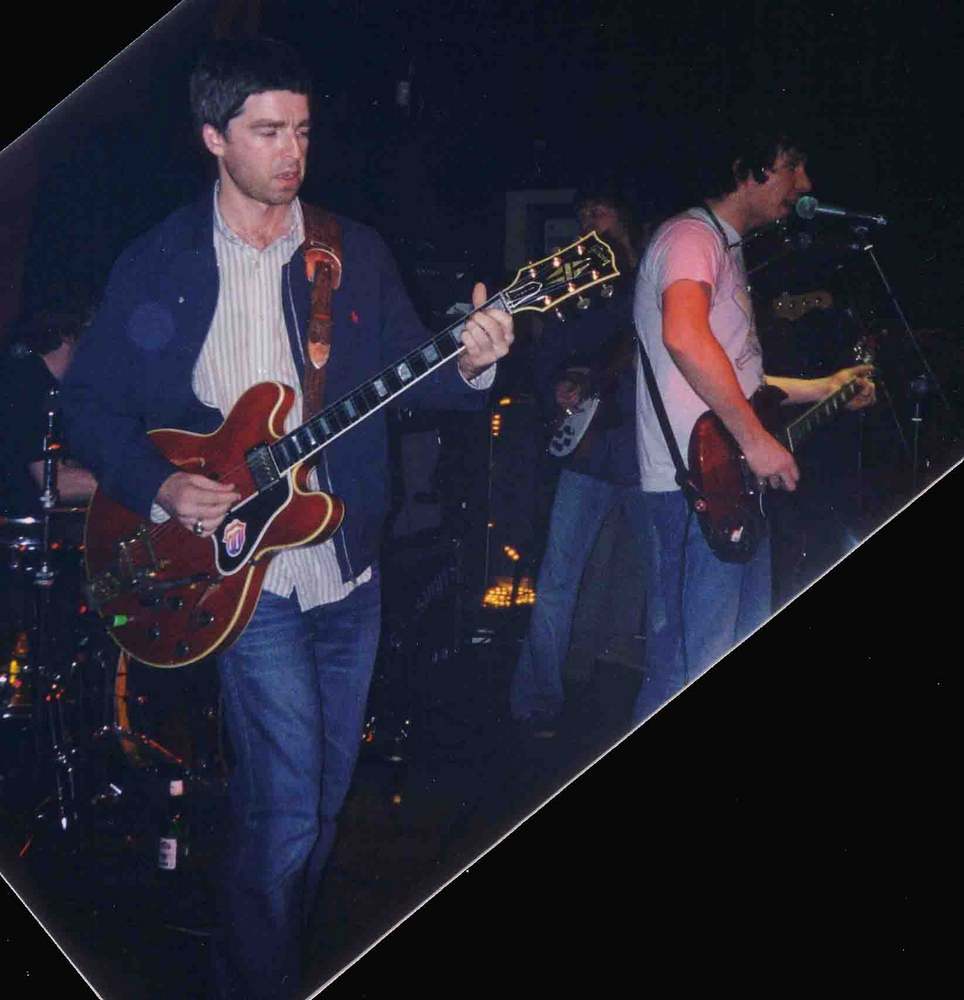
The guitar that is probably more closely associated with Noel Gallagher than any other: his iconic Cherry Red Gibson ES-355 #1. The "#1" here is used to distinguish it from the other ones he owned (here's #2).

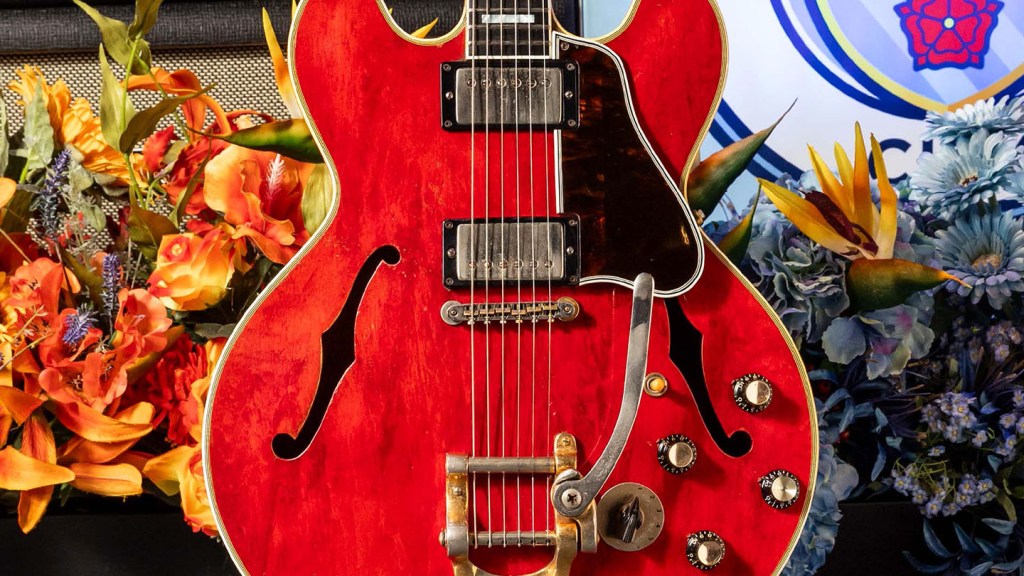
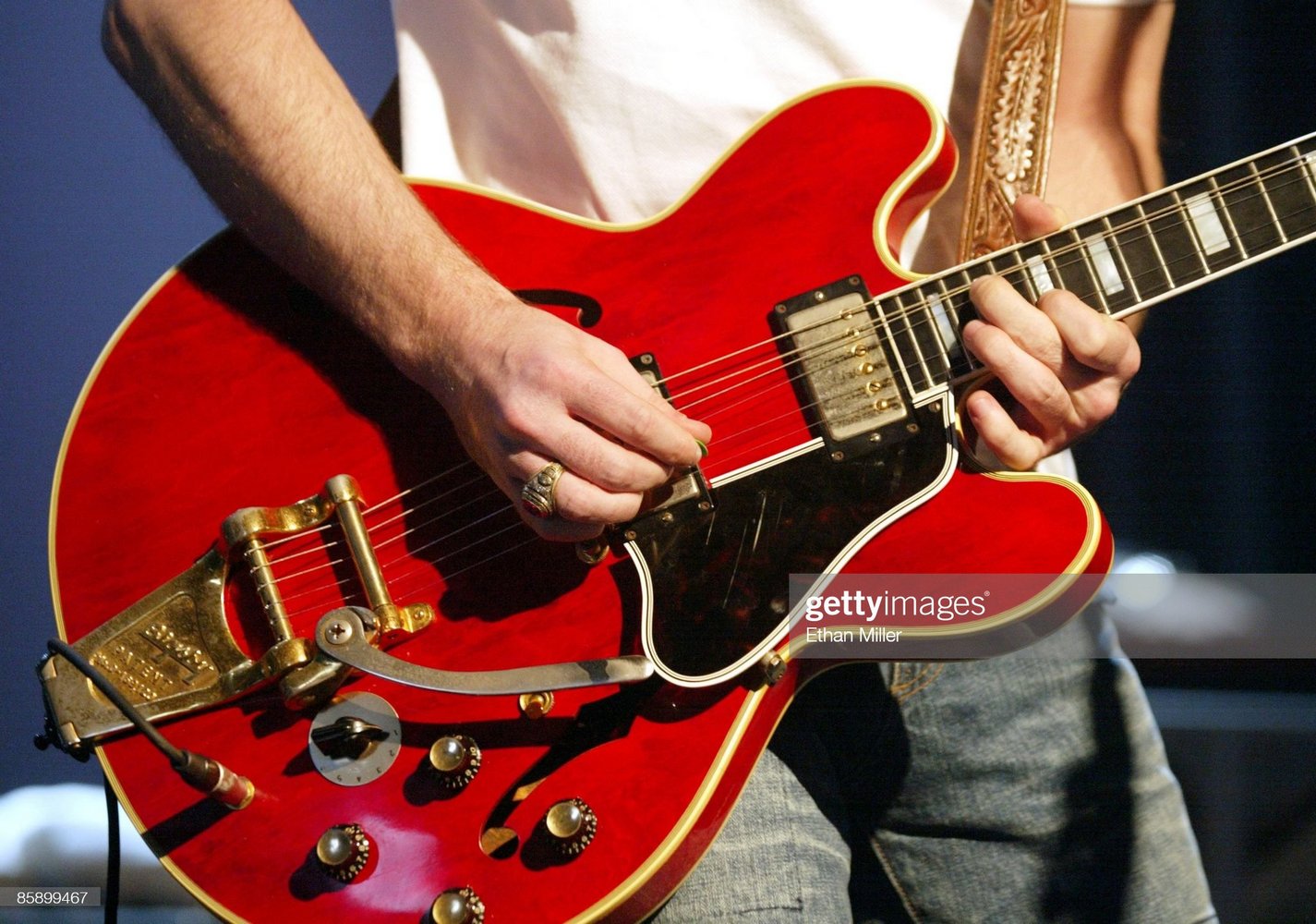
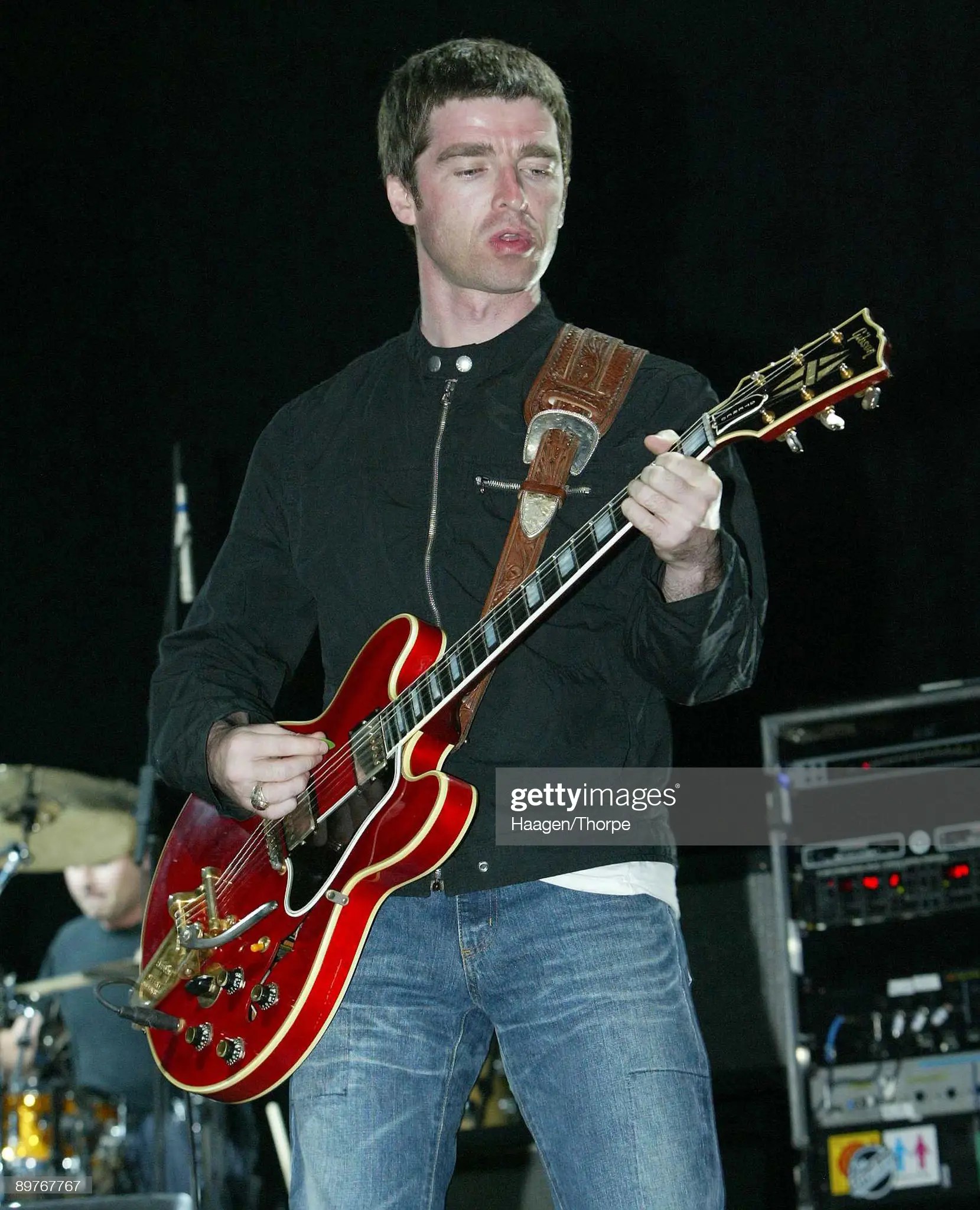
The ES-355 is the upmarket version of the ES-335, with fancier appointments including multi-ply binding on the body and neck, an ebony fingerboard with block inlays, gold-plated hardware, a faux-tortoiseshell pickguard, and the split-diamond headstock inlay on the headstock that Gibson reserves for high-end models.1 It was introduced in late 1958, although the model wasn't shipped in significant numbers until 1959. Two versions were available: the TD (Thinline, Dual pickup), with regular mono wiring, and the TDSV, equipped with Stereo circuitry and a Varitone switch (hence the "SV" designation). The Bigsby tailpiece was standard on the ES-355, although a small number were custom-ordered with a regular stopbar tailpiece.2

Noel's ES-355 #1 is a TDSV model with a Bigsby, one of only 189 built in 1960.3 It features several late-1960 details, including reflector knobs and an exceptionally slim neck: "the smallest neck in history", in Noel's own words.4 The speculated, though unconfirmed, serial number5 of Noel's #1 fits the period perfectly and would indicate a guitar completed in October 1960.6

At some point, the guitar was rewired for regular mono operation, something that was fairly common with TDSV models because of the impracticality of the stereo setup.7 The Varitone switch (a notch filter for selected frequencies, operated by the chicken-head knob with its six-position dial) may have been bypassed completely as part of the modification. Not that Noel ever fiddled with it on stage: in his own words, "I don't know what that is".8 I'm pretty sure he does, it's just that on this particular guitar it may no longer be functional.
The tuners are Grover Rotomatics and were replaced at some point during the guitar's life, probably before it ended up in Noel's hands. A 1960 ES-355 should have the distinctive "Pat. Pend." milk-bottle Rotomatics,9 whereas Noel's guitar has a later version of them: the "import" model, which has been produced since the late 1970s or early 1980s.10

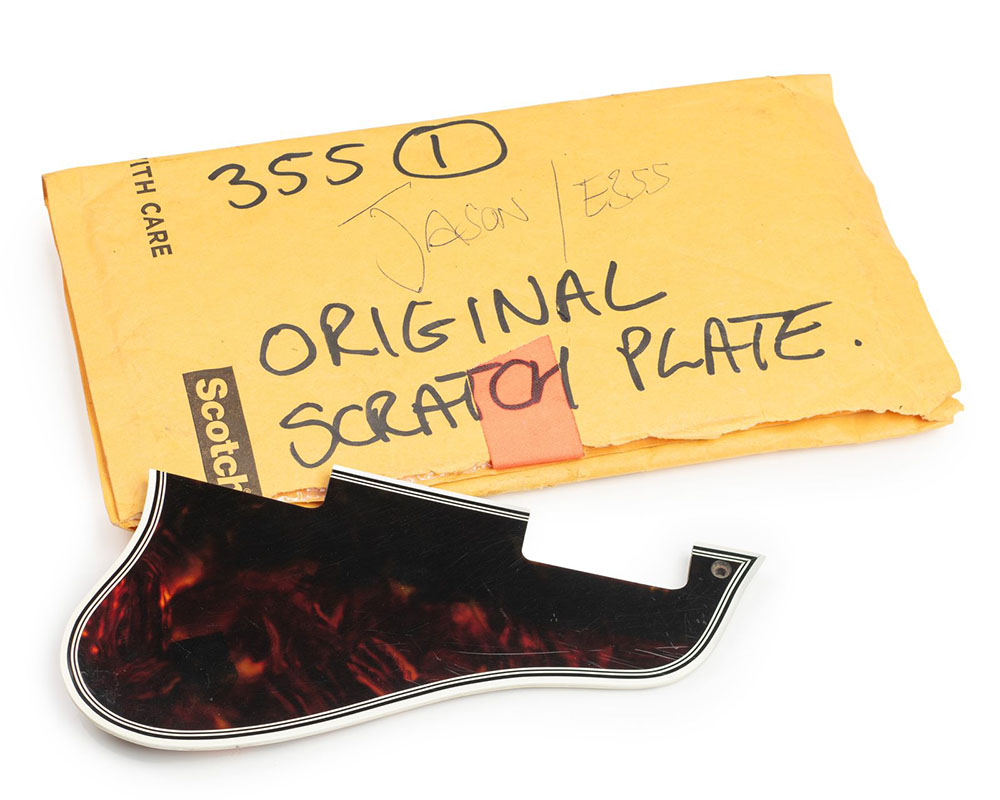
The current pickguard is not original to the guitar either. It is one of the so-called "short" pickguards, which were introduced on the ES-355 towards the end of 1960.11 Noel's ES-355 #2, which was supposedly next in line to this one at the factory, still has a "long" pickguard. Both guitars may have been built during a transition period, when both types were available to the builders and could be fitted more or less at random.12

In 2024, a pickguard labelled "355 (1) original scratch plate" appeared for sale online. This was certainly the one fitted to Noel's ES-355 #1 at least until 2006, although we can't know for certain whether it was the pickguard the guitar left the factory with in 1960. It may well have originally had a "long" pickguard like #2 after all.

Unusually, the pickguard is secured to the top of the guitar with a slotted screw rather than a normal Phillips-head screw.
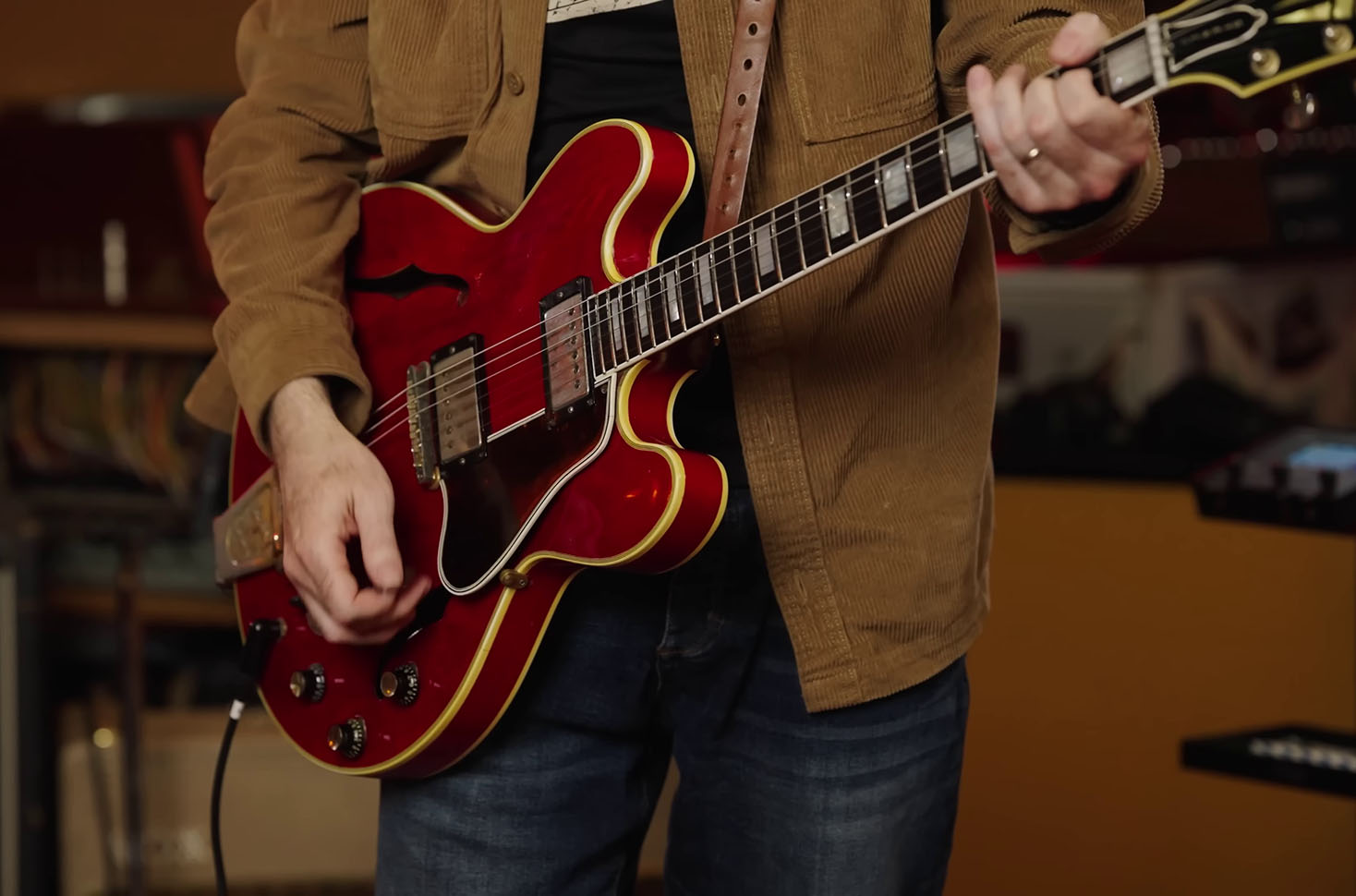
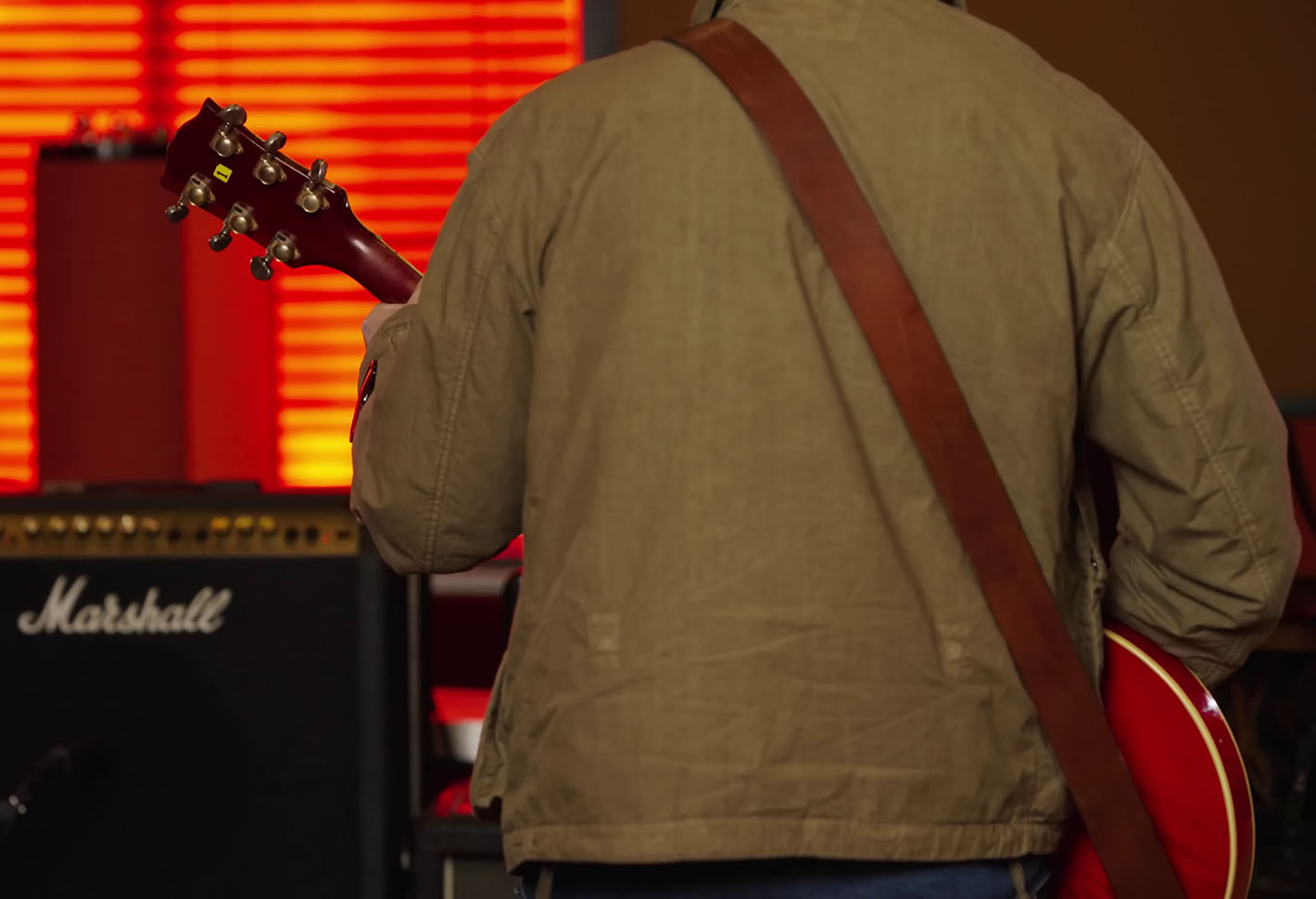
The bridge appears to be the original Gibson ABR-1 "non-wire" model. However, it is installed backwards, with the saddle adjustment screws facing the Bigsby vibrato. This is fairly common on Bigsby-equipped guitars, as it makes intonation adjustments easier.

The Bigsby unit is the original B-7 fitted at the factory. This particular version, identifiable by the specific patent number writing and the arm secured with a large Phillips-head screw, was only made between 1960 and 1961.13

The guitar has also been refretted at some point during its life: the new frets were installed removing the infamous "fret nibs" that are a typical feature of most Gibson necks.

The pickups should be the original pair of 1960 P.A.F.s, arguably the most revered humbucker of all time and the subject of countless imitations and replicas over the years.

At some point, the neck pickup mounting ring was reinstalled backwards. It's difficult to say when this happened (perhaps around 2010, although that's purely a guess). Flipping the plastic ring can make the neck pickup sit level with the strings. Eric Clapton's 1964 ES-335 famously had the same modification, and many ES players have done it to their own guitars.14 In Noel's case, it may have been intentional, or it may simply have been fitted the wrong way by mistake. Who knows.

Interestingly, when Gibson Custom Shop recreated Noel's ES-355 for his signature model in 2022, this little detail was replicated too.
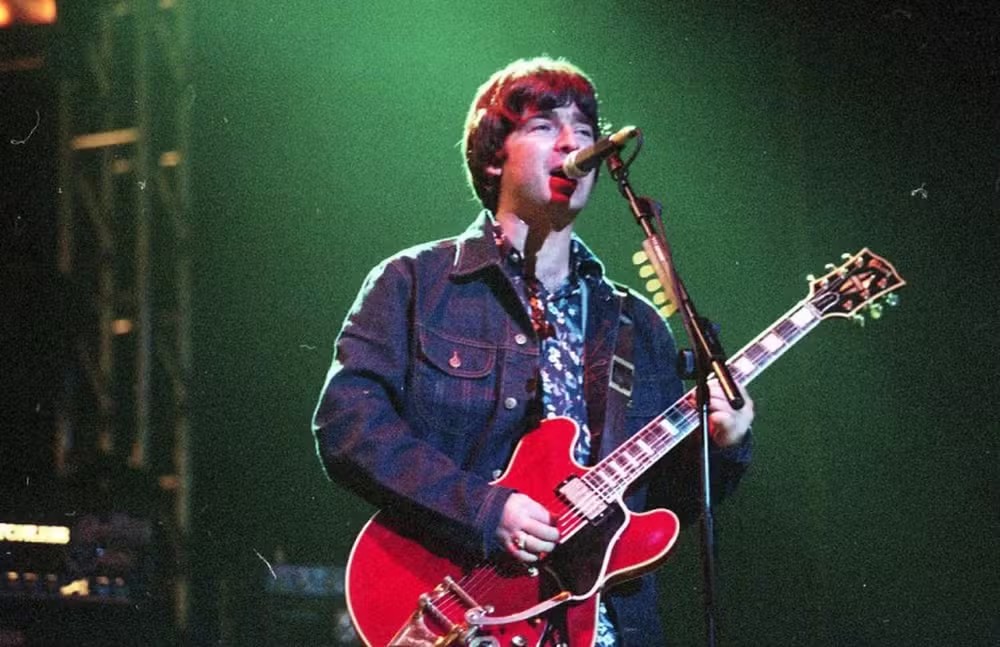

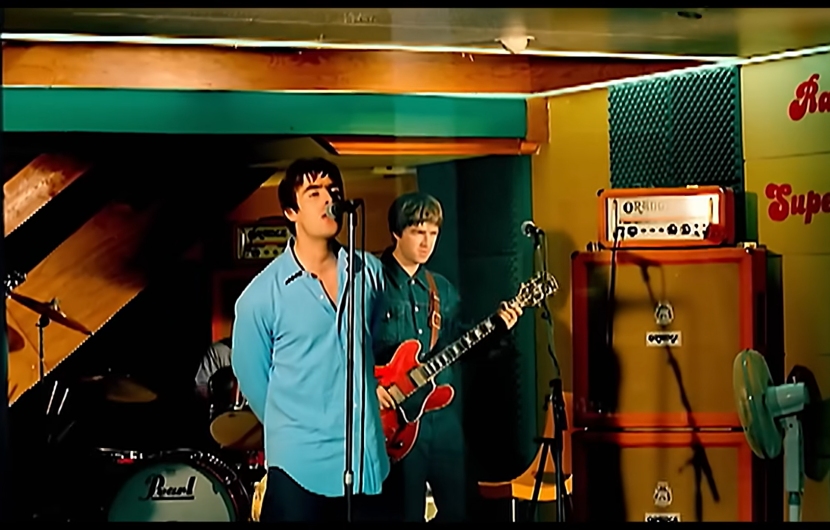
Now that the geeky details are covered, let's go back to the '90s and retrace the story of Noel and his ES-355 #1.

There are conflicting accounts of when Noel acquired the guitar. On That Pedal Show, he says he bought it in 1996, although he sounds somewhat unsure:15

"Some guitar dealer had come to where we were rehearsing. [...] This is about... 1996? It was at the end of the Morning Glory tour."

According to one source,16 the guitar was sold to Noel by dealer Rick Zsigmond, who later opened New Kings Road Guitar Shop in Fulham. This is, of course, unconfirmed, but it seems plausible, as Noel bought and sold various guitars there during the late '90s.

If the 1996 date is correct, the sale may have taken place in late July, when the band was rehearsing at Music Bank in London17, shortly before moving to Birmingham NEC for rehearsals with the full Knebworth stage setup.18

However, the ES-355 wasn't seen until the second half of 1997. It was never played live and doesn't appear in any of the available photos of the guitar racks from the Be Here Now recording sessions, taken by Jill Furmanovsky at Abbey Road and Ridge Farm Studios between late 1996 and early 1997.19 20

On at least one other occasion, Noel said that he bought the guitar in "1997".21 If that is correct, he may have bought it from the dealer while the band was rehearsing at Music Bank at the end of May 1997,22 shortly before the U2 support mini-tour in the US, or perhaps in late June or early July, when the band returned to Music Bank.23

Unless further evidence comes to light, I'm more inclined to believe the summer of 1997 is the correct date.
According to Noel, he paid £4,000 for the guitar,24 which seems plausible given that it was in line with the value of a well-kept, original 1960 ES-355 in the late '90s.25

"It's the best 4,000 pounds I've ever spent", he said. In 2026, that amount is equivalent to approximately £8,000 after adjusting for inflation: roughly the price of a modern ES-355 from the Gibson Custom Shop. As for a genuine vintage 1960 model, expect to pay upwards of £20,000–£30,000 today...

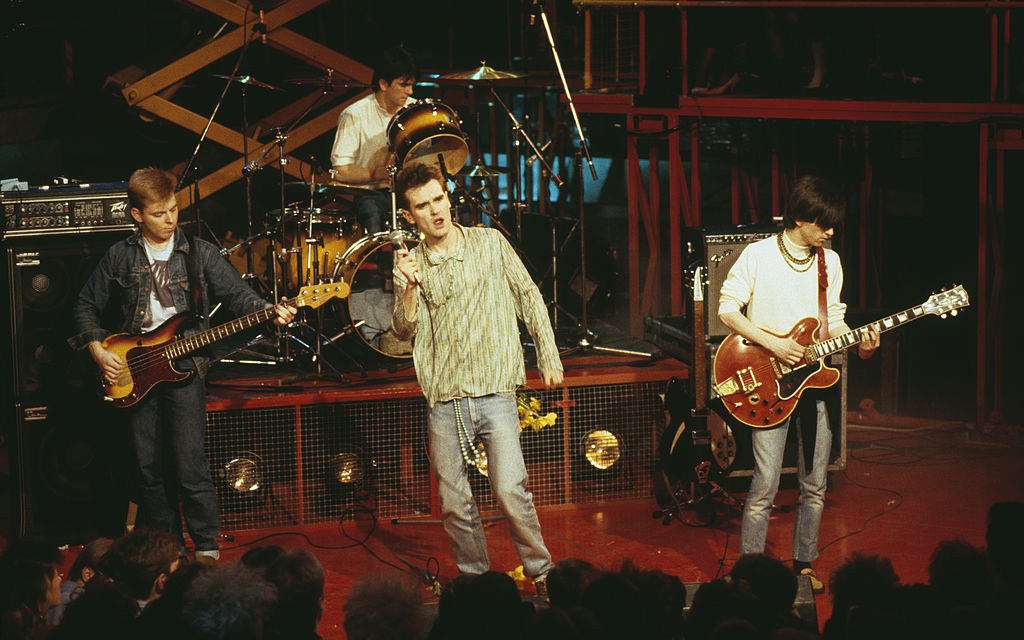
Noel's inspiration for buying a Cherry Red ES-355 with a Bigsby came from watching Johnny Marr perform with The Smiths on television, as he has explained on several occasions:26 27

"I didn't take it seriously until I saw Johnny Marr. He had the Brian Jones haircut and the shades and the turtleneck and the big red semi-acoustic. [...] When The Smiths came on Top of the Pops for the first time, that was it for me."

And again, in 2023:28 "I had always wanted a red semi-acoustic because of Johnny in The Smiths."

The two performances that may have made the biggest impression on a teenage Noel could have been What Difference Does It Make? on Top of the Pops (26 January 1984)29 and the three songs The Smiths performed on The Tube (16 March 1984).30

In 1993, Noel did buy a red semi-acoustic, specifically an early-'70s Epiphone EA-250, which also appeared on the Supersonic single cover.31 That was probably the cheapest way to get close to an ES-355. However, he would have to wait another three or four years before getting the real deal.

Incidentally, Johnny Marr's own ES-355 is also a 1960 model. However, being from early in the year (February, most likely)32 it still retains most of the late-1959 features, including the "long" pickguard, black bell knobs, and probably a thicker neck.
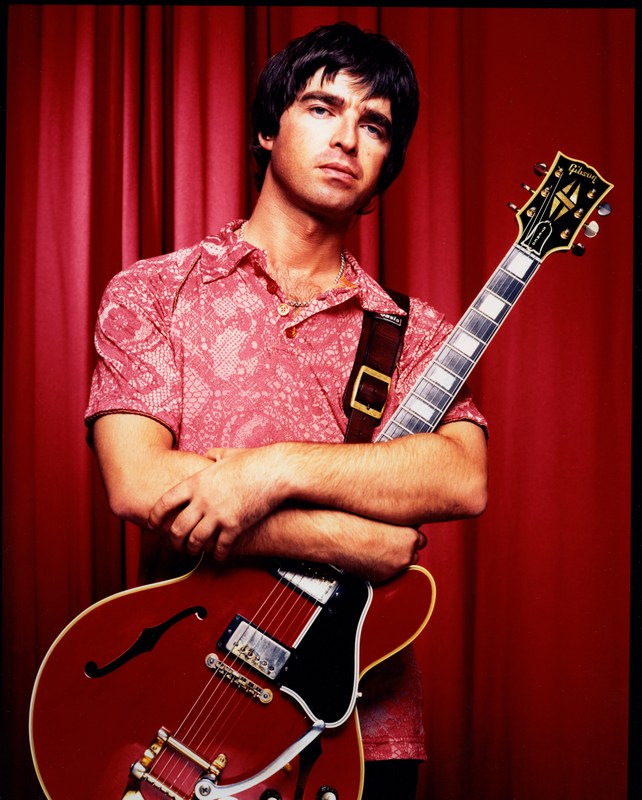
The first known appearance of Noel's ES-355 #1 was at the Stand By Me video shoot, which took place in Fulham on 8 August 1997.33

Starting in early September, it was played throughout the Be Here Now world tour, appearing on stage for a handful of songs: specifically, D'You Know What I Mean?, Fade In-Out and often Acquiesce. During the South American and Oceanian legs of the tour in February and March 1998, it was also used for I Am the Walrus.

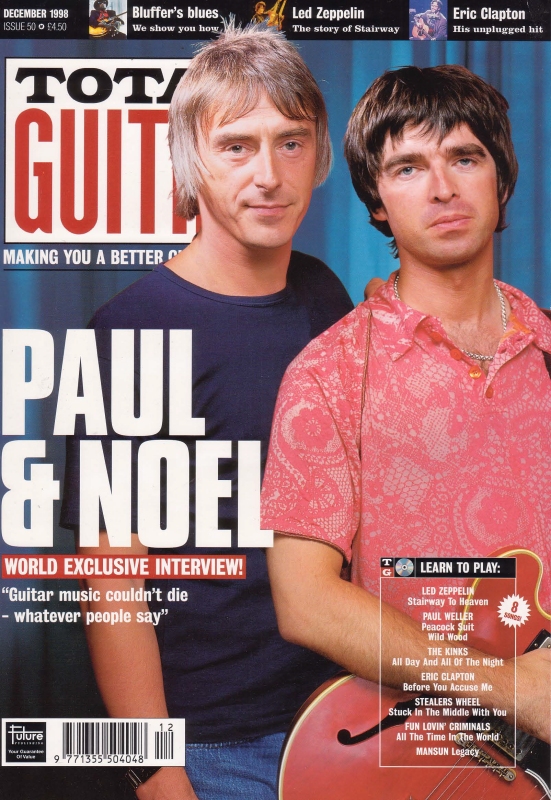
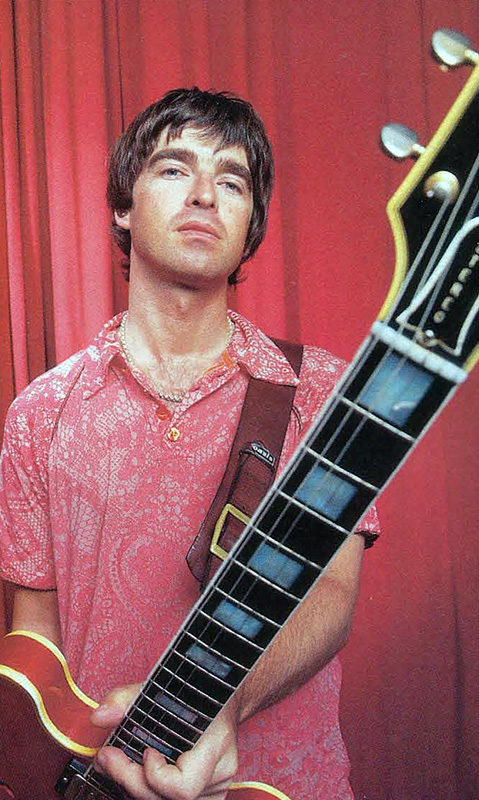
The earliest detailed photos of ES-355 #1 come from a photoshoot with Paul Weller. The photographs were taken by James Cumptsy34 backstage at the Newport Center on 6 August 1998 and were later published in Total Guitar magazine.35 Noel had been opening Weller's gigs with a short acoustic set.

Immediately after the Be Here Now tour ended in March, Noel began recording demos for the new Oasis new album, which would eventually become Standing on the Shoulder of Giants. The initial sessions took place at his home studio in Supernova Heights, followed later that year by sessions at Wheeler End.36 One of the main guitars used was the ES-355, which was played "all over the album for rhythm tracks".37 The other main guitar was the ex-Johnny Marr 1978 Les Paul Custom.38

The ES-355 was also used for some lead guitar parts, including the solo on Where Did It All Go Wrong?, recorded at Wheeler End in late 1998 or Summer 1999:

"I used the 355 with the whammy bar up, playing through a little Fender Princeton amp. The lead solo was double tracked. It's the same part, but layered maybe three or four times with different tones. When you get that going through the EMI board with the EQ and all, it's just great. It is very Neil Young, yeah."

The ES-355 was also used during the April and May 1999 recording sessions at Château de la Colle Noire. It can be just about made out in a photograph taken by Jill Furmanovsky, which was featured for the first time in her must-have 2025 book.39


Throughout 2000, ES-355 #1 was not taken on tour and may have been left at in the studio at Wheeler End. Noel's main guitars during the tour were Cherry Sunburst Les Pauls, the Mapleglo Rickenbacker, and the Custom Telecaster (which was later replaced by the Paisley Telecaster). It was again absent in early 2001, during the South American festival dates and the Brotherly Love tour with The Black Crowes.

ES-355 #1 made its debut as Noel's main live guitar in October 2001, for the Noise & Confusion tour, where it was used for several songs: Go Let It Out, Half The World Away, Whatever, The Masterplan, Slide Away and She's Electric.

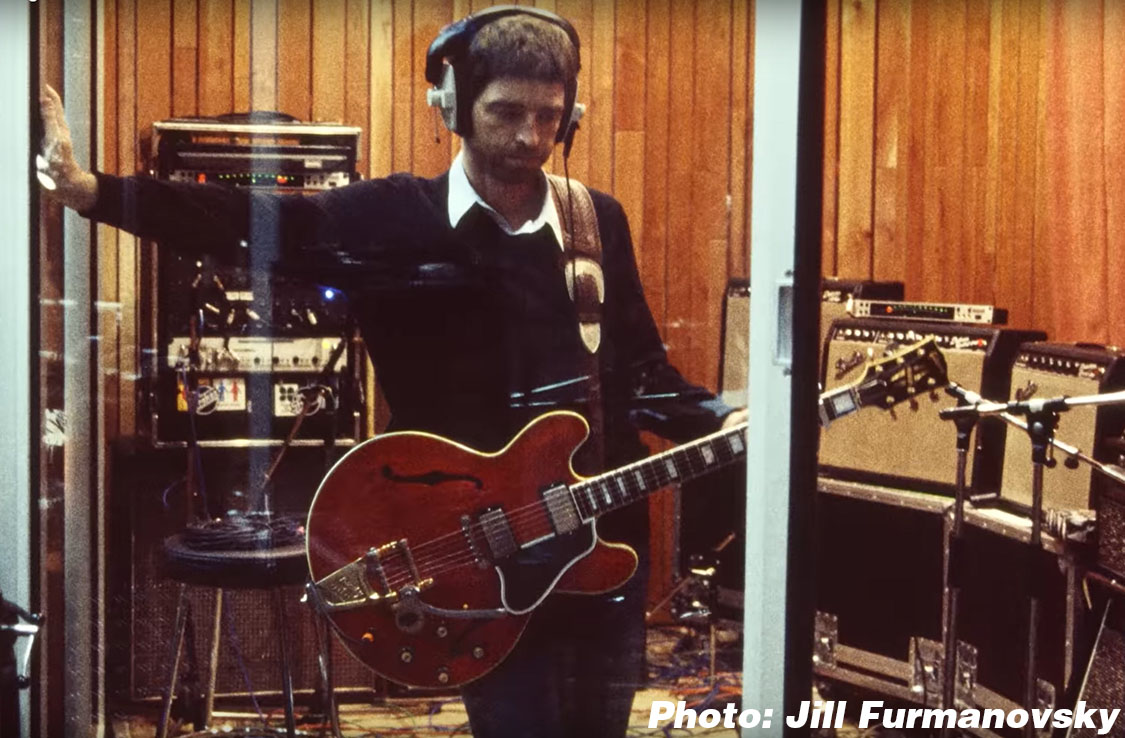
In the meantime, the band had started recording the new album, Heathen Chemistry, at Wheeler End. The ES-355 was once again Noel's main guitar during the sessions, which resumed in November and early December at Olympic Studios.40 The photographs above were taken at Olympic, again by the great Jill Furmanovsky. According to Noel, Little By Little was written and recorded entirely with the 355.41

Johnny Marr also took part in the sessions, and he may even have played Noel's ES-355 #1:42

"Johnny Marr no less picked it up in the studio, then looked like a startled wizard because of how great the guitar is."
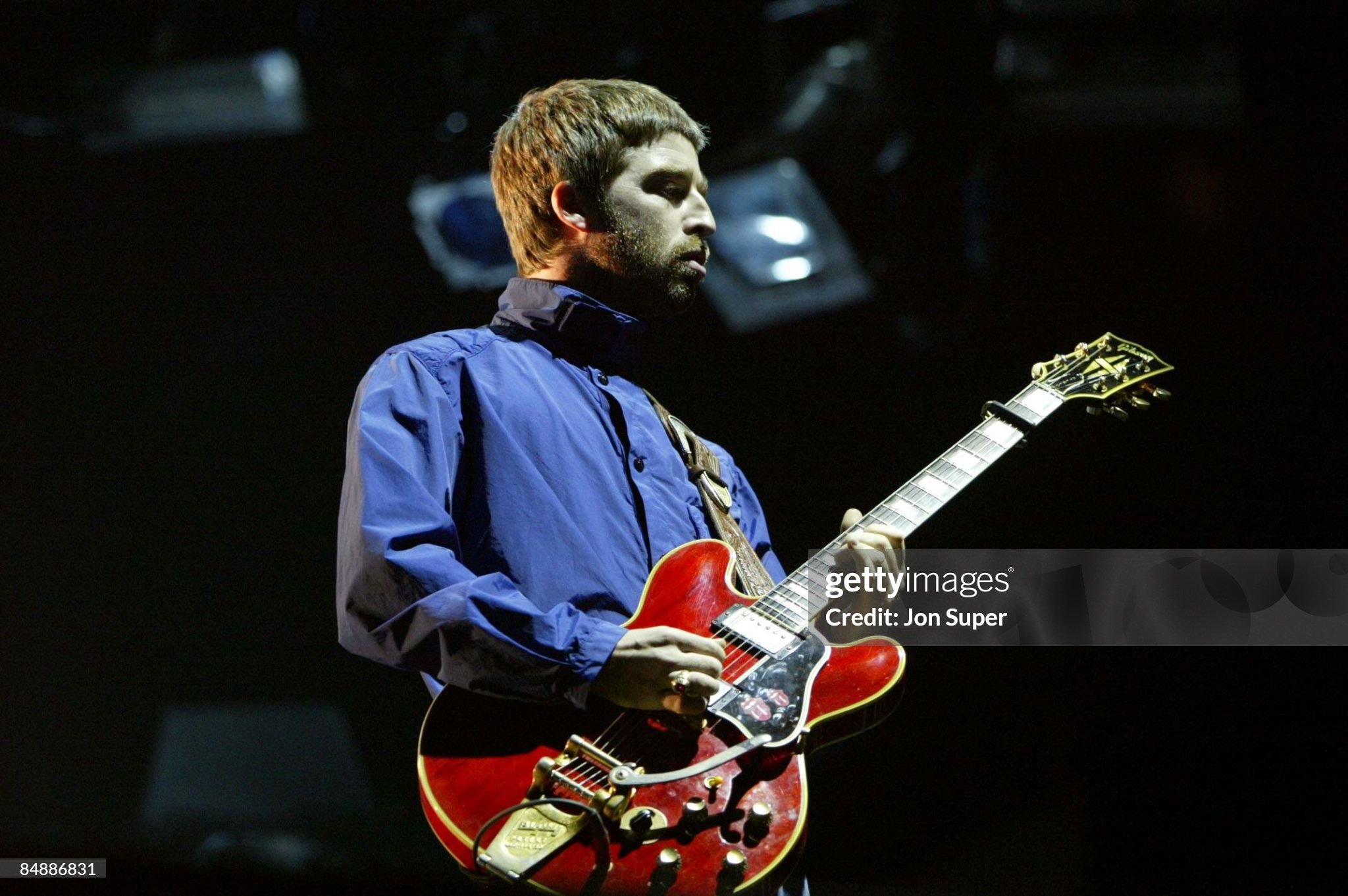
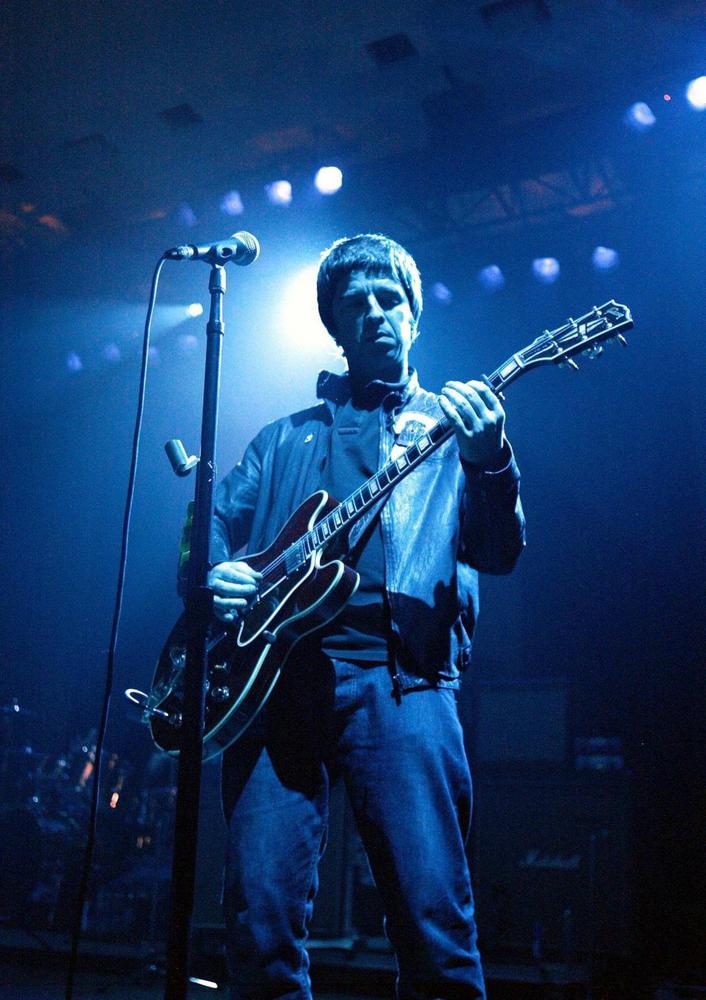
For the Heathen Chemistry tour in 2002, ES-355 #1 was again Noel's main guitar, alongside the Cherry Sunburst Les Pauls and the Trini Lopez.

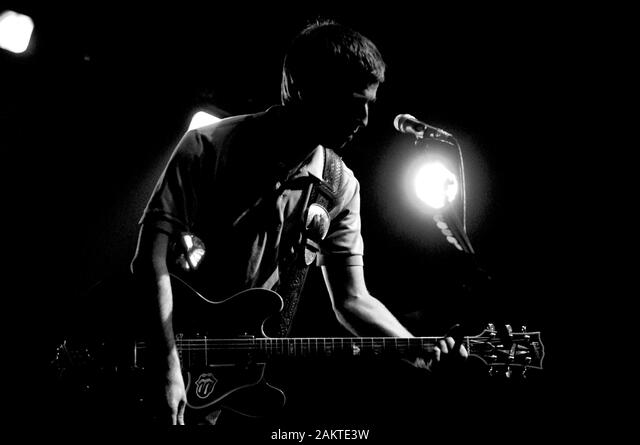
During this period, a few different Rolling Stones stickers appeared on the pickguard (more on these at the end of this page).

Throughout 2004, the guitar was used during various recording sessions for the next Oasis album, which eventually became Don't Believe The Truth. Previously unseen photos of Noel's playing ES-355 #1 at Wheeler End in April 2004 can be found in Jill Furmanovsky's book.43 The Importance of Being Idle and Lyla were written and recorded on the 355, according to Noel.44 He then played it in the video for Lyla (the album's lead single) filmed at the Round Chapel in Hackney on 18 March 2005.45

During the Don't Believe The Truth tour in 2005 and 2006, the ES-355 remained one of Noel's main guitars. It was joined on stage by the Cherry Sunburst Les Pauls, the Trini Lopez, the blonde Telecaster and, from autumn 2005, the stoptail ES-345. During the Stop the Clocks acoustic tour in 2006, Gem Archer played 355 #1 for a few songs.

In the second half of 2007, The 355 was once again used for recording, this time for what would become the last Oasis album to date, Dig Out Your Soul.46 Although the 355 was definitely used, as documented in several photos taken at Abbey Road by Lawrence Watson,47 Noel stated that the main guitars used during the sessions were two Natural Epiphone Casinos.48
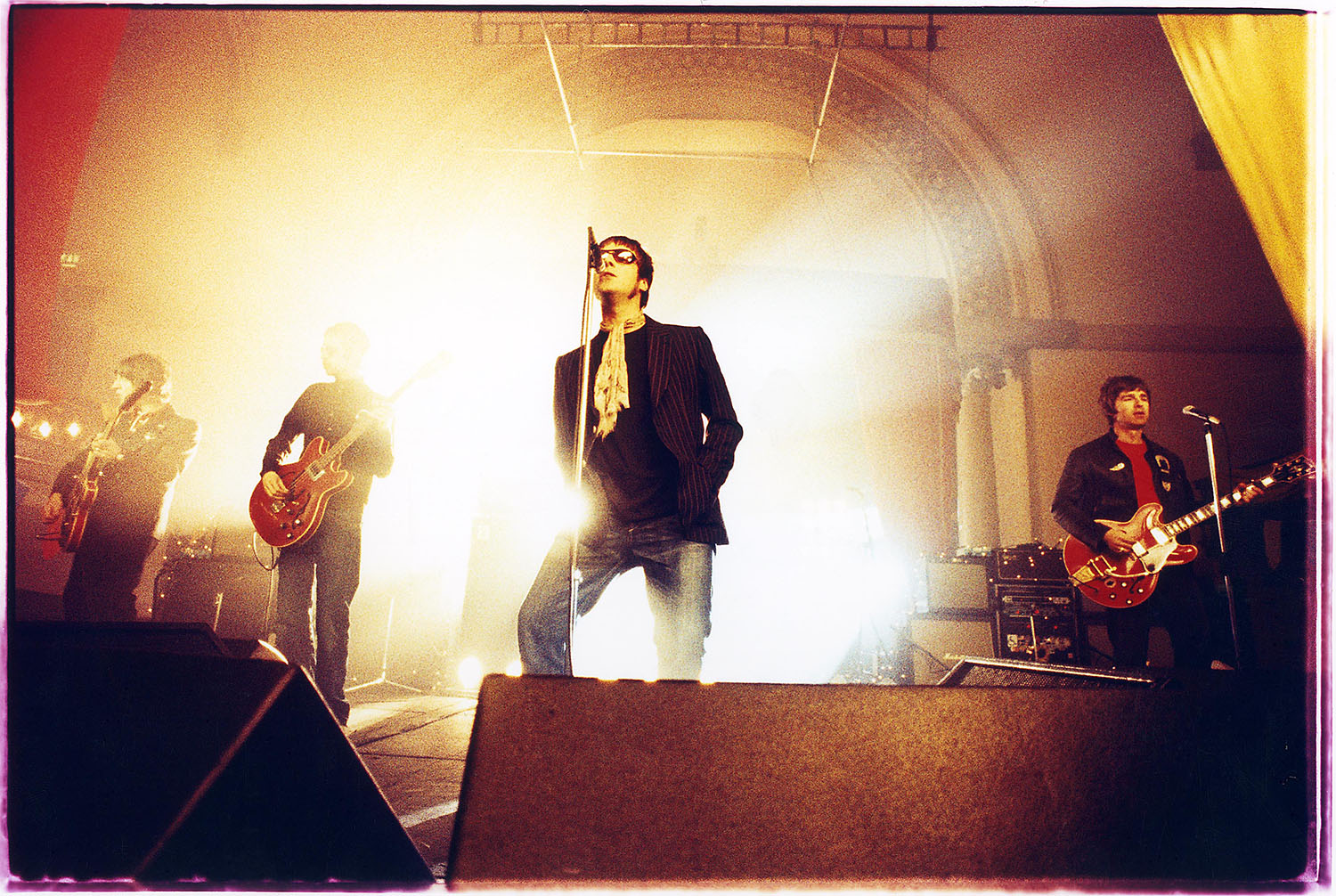
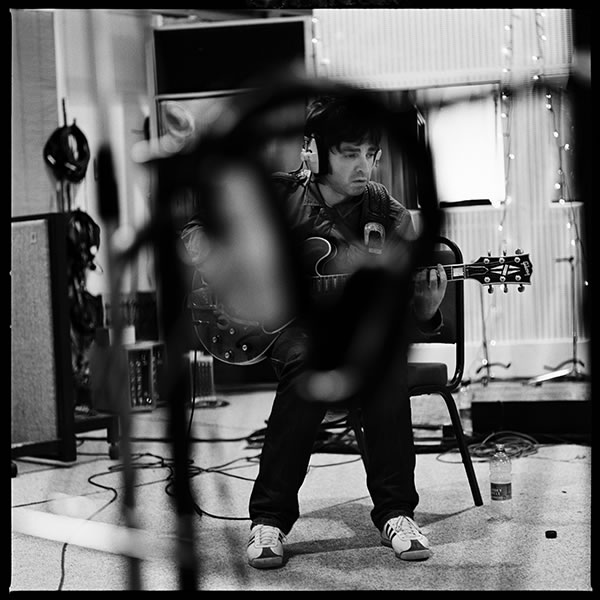
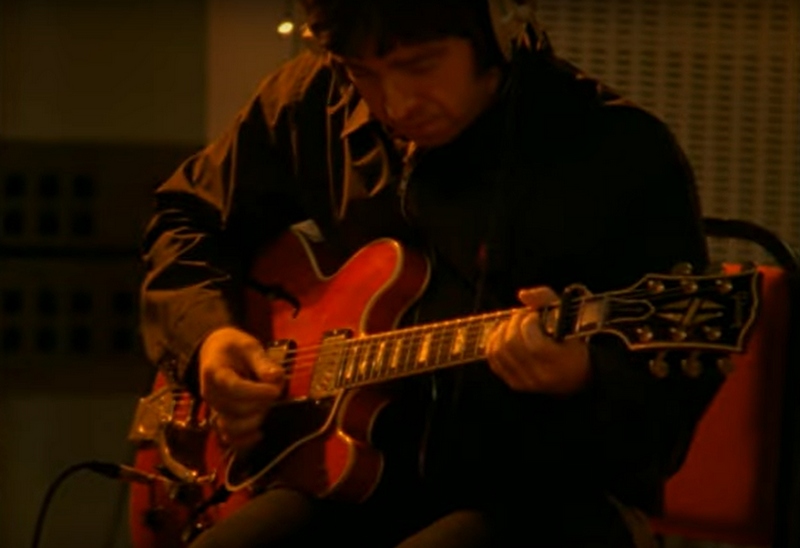
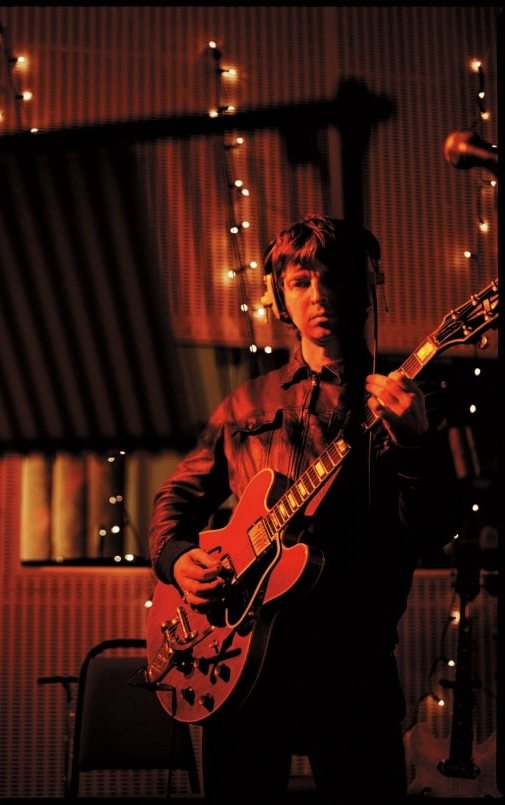
During the following tour, from 2008 to 2009, Noel's ES-355 #1 remained his main live guitar.

However, in a 26 March 2009 entry in his tour blog, Tales From the Middle of Nowhere, Noel expressed concern about the condition of the guitar:49

"I'm getting a bit concerned about my main one. The big red one. It's suddenly started to sound a bit old and tired. And it will NOT stay in tune. It is nearly 50 years old though. Might have to stop using it for a while. Bit worried, to be honest. I'm quite literally fu**ed without it."

It was probably nothing too serious. The guitar may have undergone some maintenance later in 2009 or in 2010. We don't know whether any of the electronics were replaced, but this may be when the neck pickup ring was installed backwards.

On 29 August 2009, before the band's performance at the Rock en Seine festival in Paris, a Cherry Red ES-355 was heavily damaged during the infamous argument between Noel and Liam. While many fans were understandably horrified to see such an iconic guitar with its neck snapped, "fortunately" it was ES-355 #2, the backup to #1 that Noel had been taking on tour as a spare for several years.

According to Noel, he had "two or three" of them.50 Based on the available evidence, at least two different vintage Cherry Red ES-355s have been spotted over the years (the main #1 and #2). A third one, a mono ES-355 TD, was spotted in 2015 being played by Gem Archer.

During Noel's solo career, starting with the 2010 recording sessions, ES-355 #1 has remained the workhorse behind his songs:51

"It's on all my solo records, all of them. It's the main rhythm electric guitar."

For the first High Flying Birds tour, it was once again Noel's main live guitar, alongside the two ES-345s (#1 - stoptail and #2 - trapeze) and, for a handful of gigs in summer 2012, a gorgeous black ES-355 with a stopbar tailpiece:52

"Yeah, the guitars I bring on tour are either 355s or 345s. Those are what I play."

It remained in heavy use throughout the recording sessions and subsequent tour for Noel's second solo album, Chasing Yesterday, between 2014 and 2016.
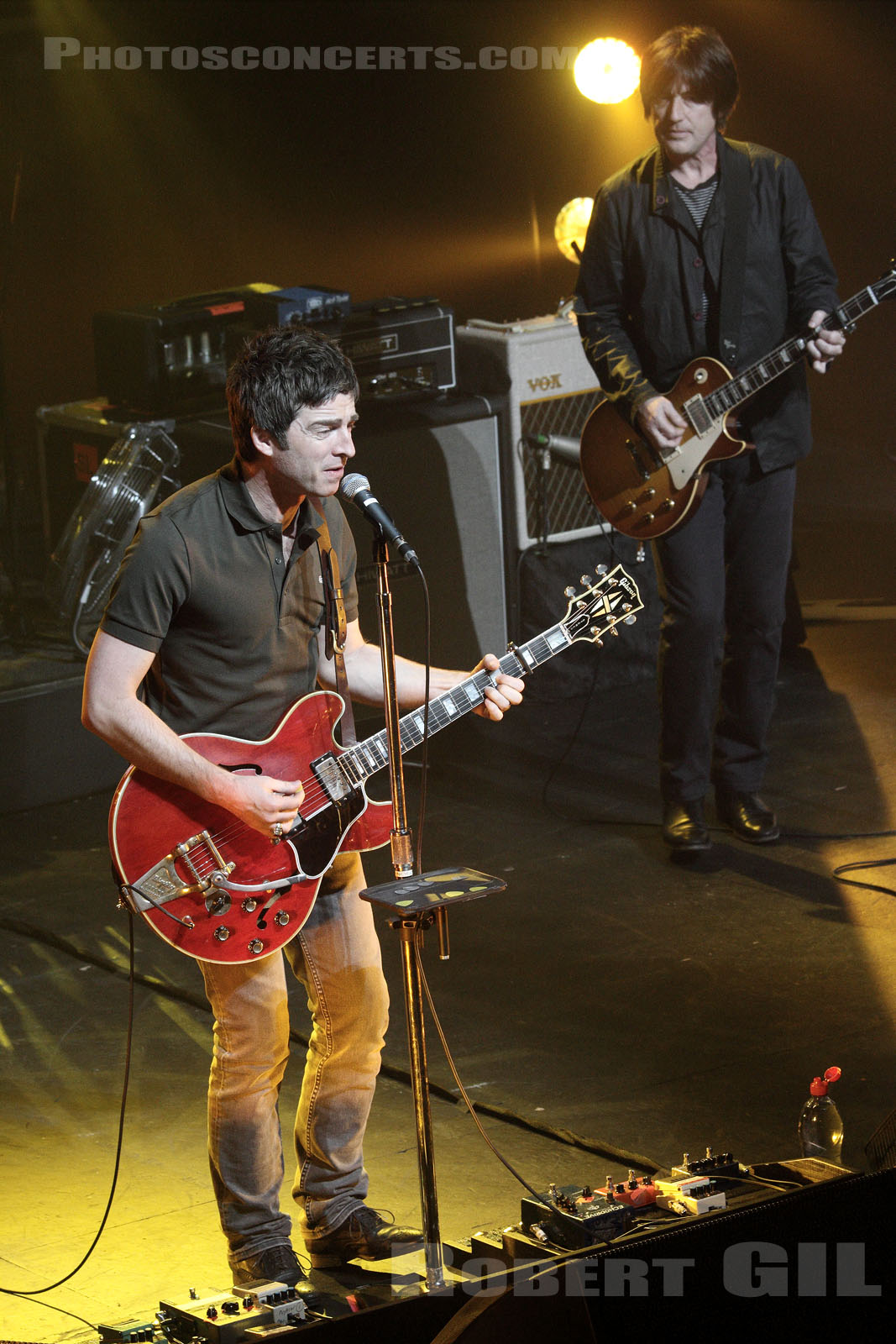

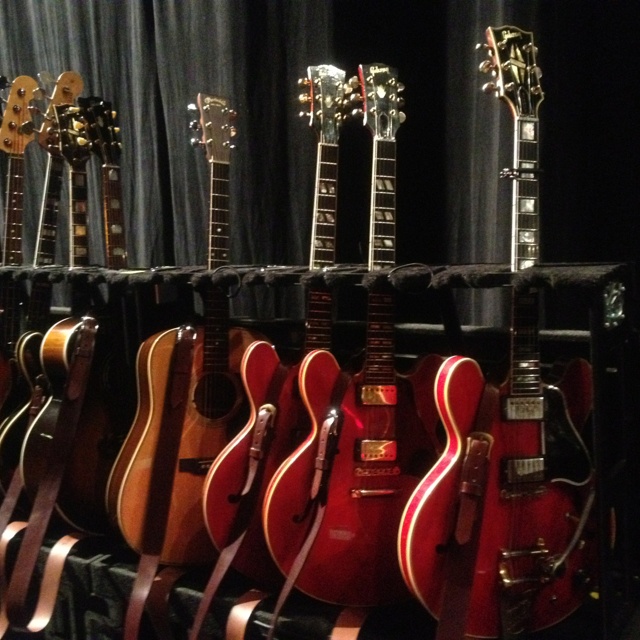
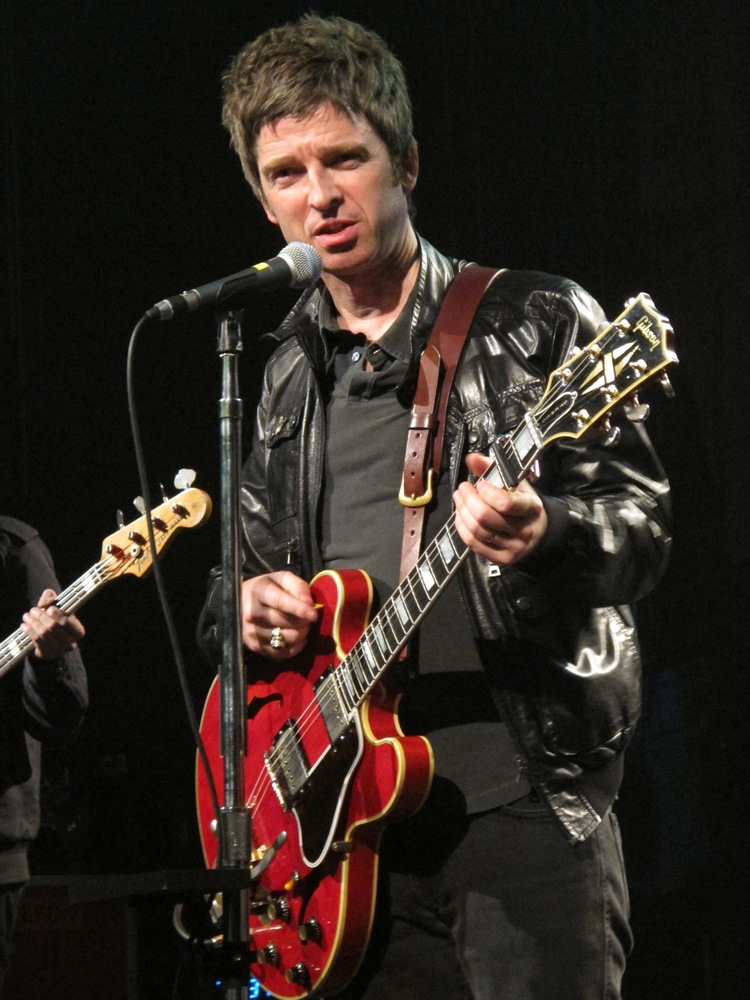
For the Who Built The Moon? and EPs era (2017-2019), ES-355 #1 was somewhat sidelined, as Noel had shifted more towards Fender-style guitars for both recording and touring. As he explained in a 2019 interview:53

"My favourite electric guitar? I bought it in the 90s, it's the 1960 Gibson 355 that I played in Oasis. I don't play it so much nowadays, because the music I'm writing is different and I'm going for a different sound. But if push came to shove, that guitar is priceless for the amount of tunes that I wrote on it."

However, alongside the Nash Jazzmasters (black and white), which had become his main live guitars, he still took the ES-355 on tour and played it every night. In 2018, it was used for Ballad of the Mighty I, Little By Little and AKA... What a Life!; in 2019, also for Black Star Dancing.

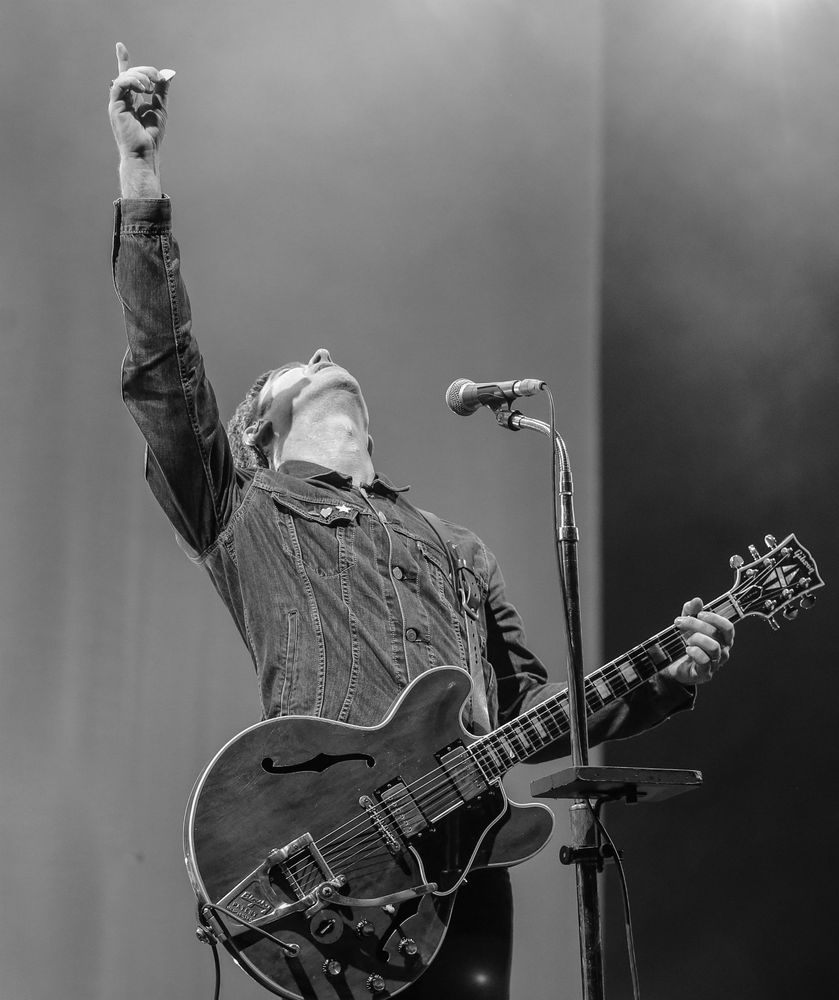
In 2022, however, the ES-355 Noel played on stage was NOT his #1, nor was it another vintage model. It was one of the pre-production examples of the ES-355 signature model that Gibson Custom Shop had been developing, closely replicating the details of Noel's iconic #1. The signature model, limited to 200 pieces, was launched at the end of August 2022.54
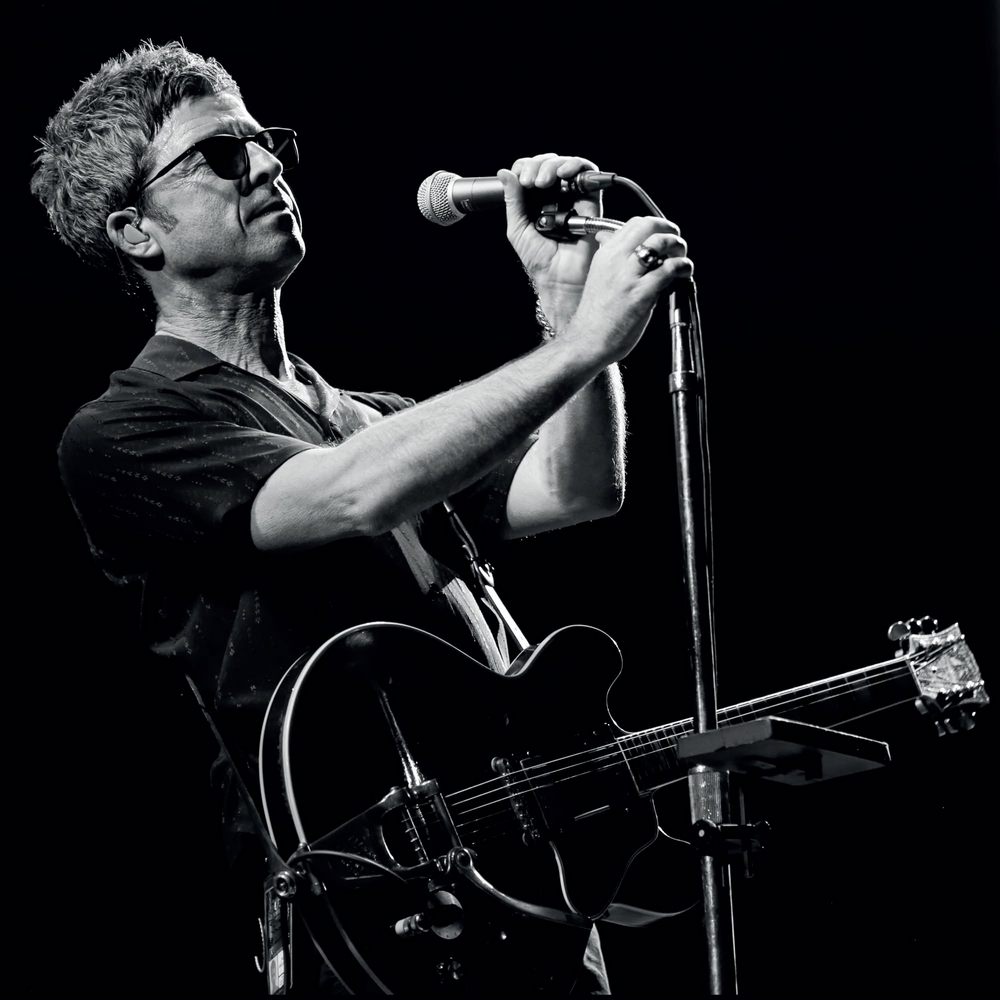
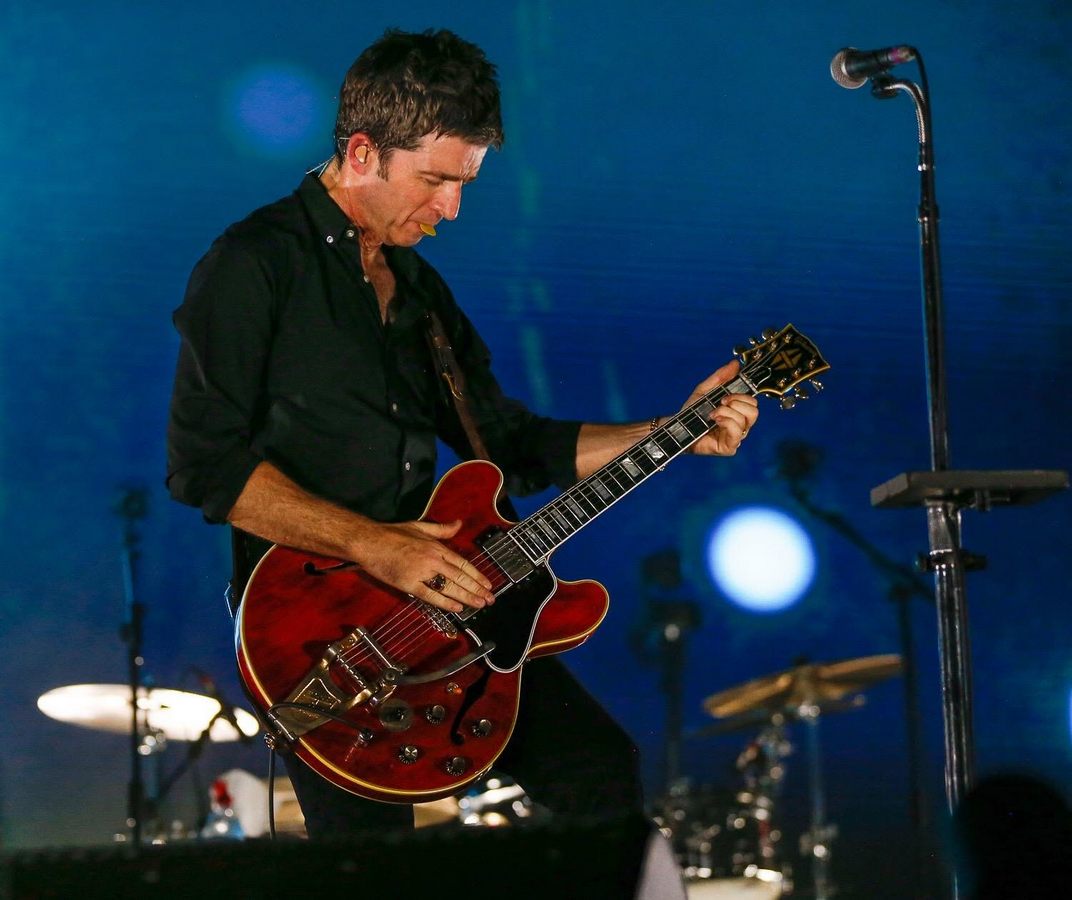
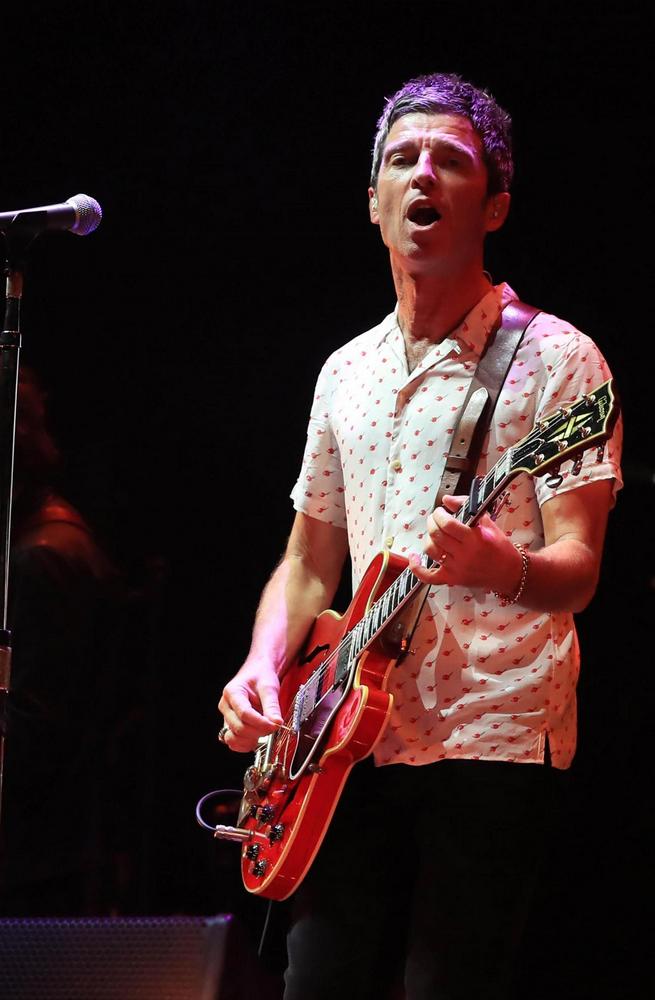
On That Pedal Show in 2023, Noel confirmed that he had retired ES-355 #1 from touring:55

"It's too important to me now to take it out on the road. [...] Honestly? This is one of the best guitars, forever. It's got the best tone. [...] This is like one of my children."

So, during the first leg of the Council Skies tour in summer 2023, the signature model effectively took the place of ES-355 #1 on stage. The switch, however, lasted only for the US and Canadian leg of the tour. After returning to the UK, ES-355 #1 was back as Noel's main guitar, while the signature model was kept as a spare for the remaining dates.

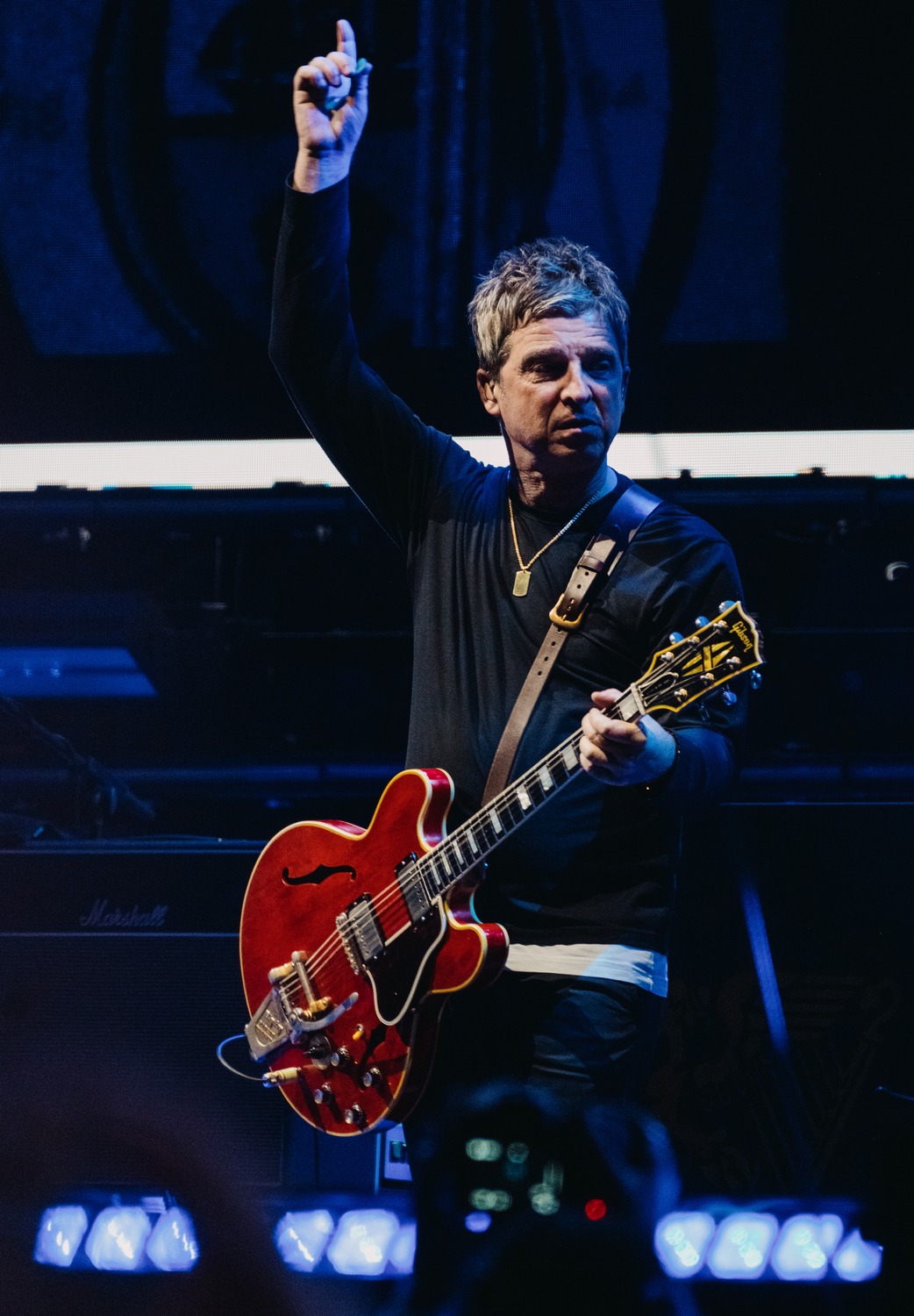
Of course, Noel's ES-355 #1 had to be an essential part of the 2025 Oasis reunion. Throughout the tour, it was played every night for seven songs.56
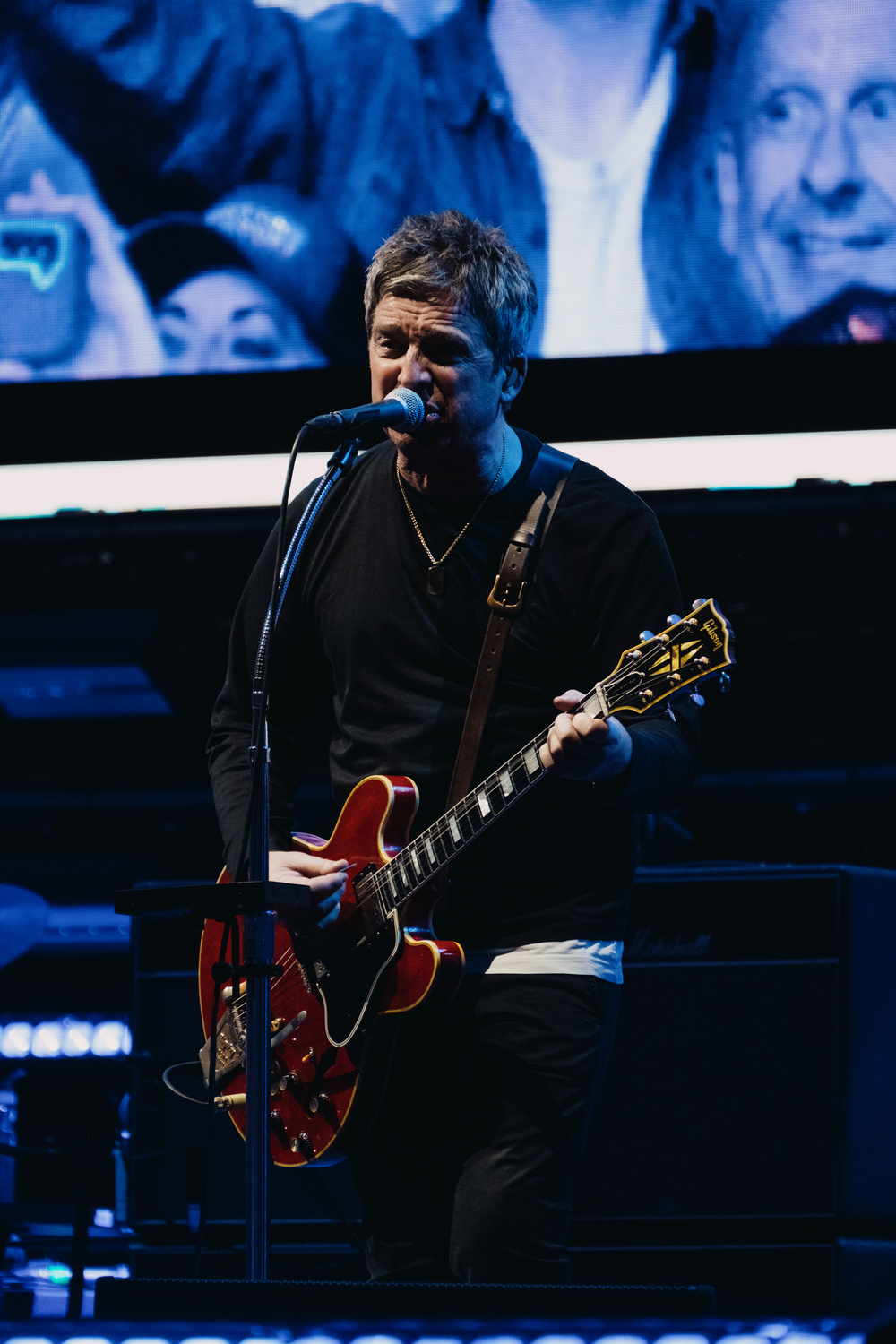

Stickers

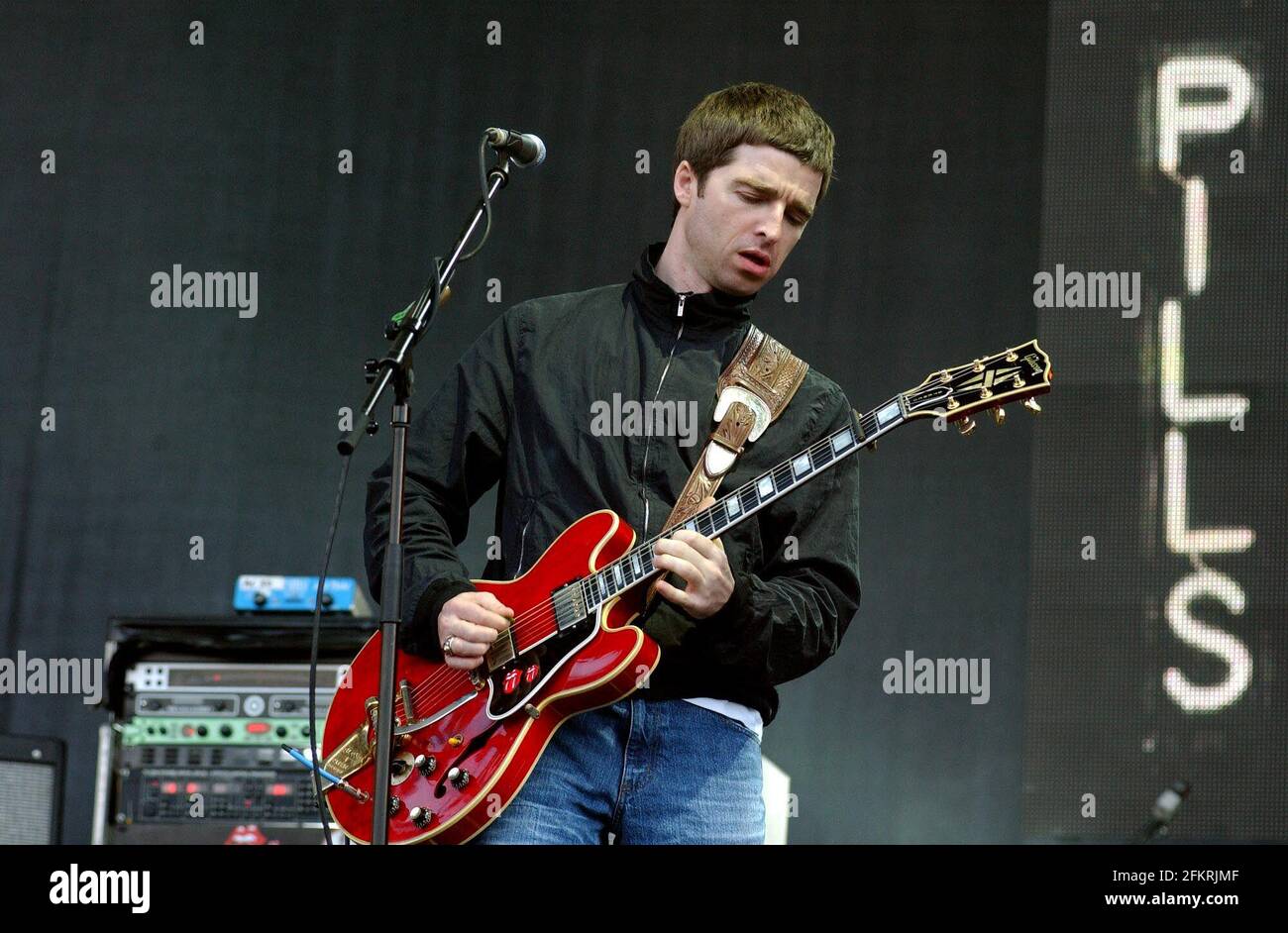
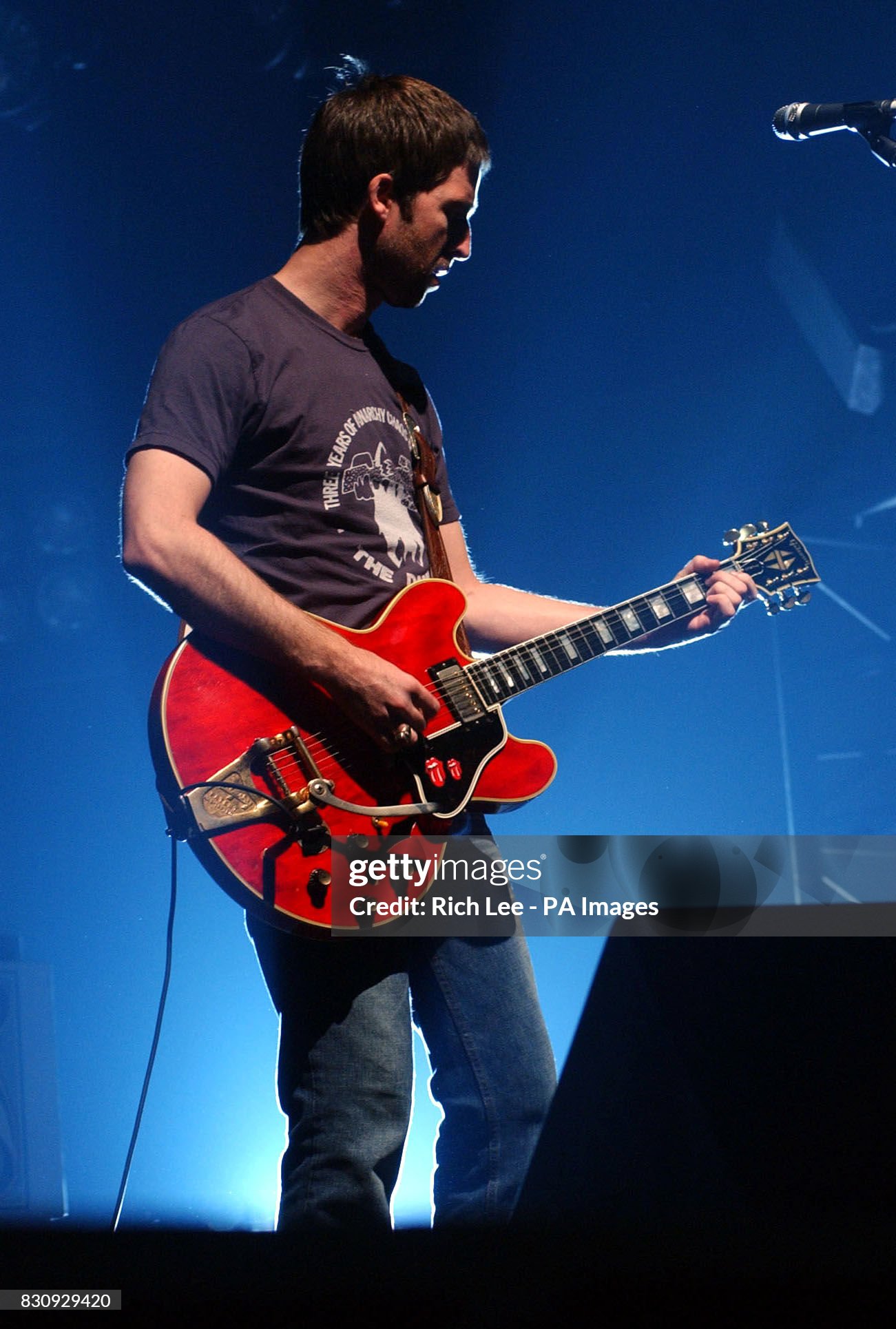
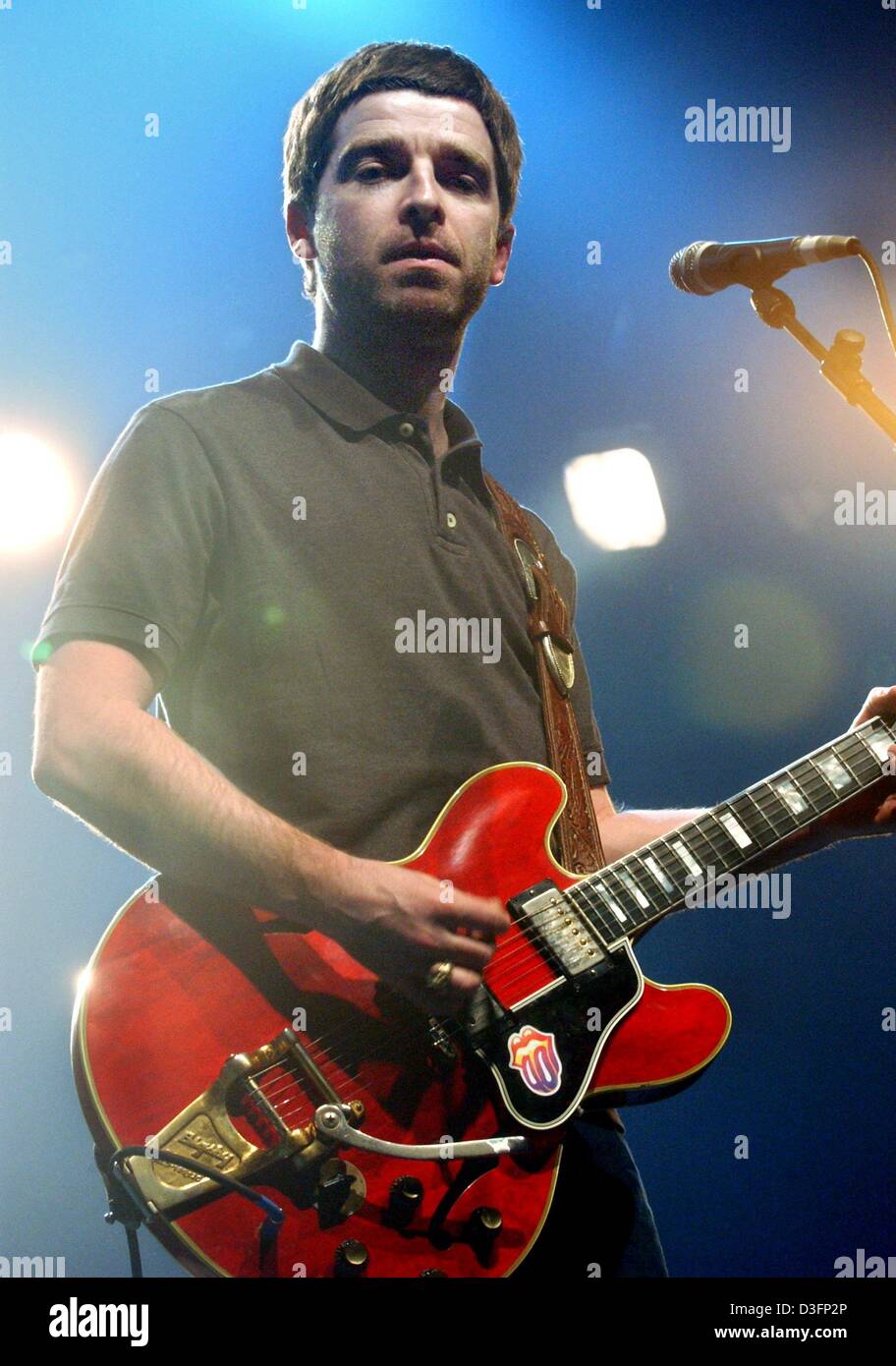
Between 2002 and 2003, Noel's ES-355 #1 featured several Rolling Stones stickers on the pickguard.

After a short trip to Tokyo for the MTV Awards and the MTV Superdry gig in late May 2002, two "tongue and lips" logos (a larger one and a smaller one) were added to the pickguard. Their first documented appearance was at the Lyon gig on 17 June 2002.

Various events suggest that putting stickers on his guitars while in Japan may have become something of a tradition for Noel. The tradition apparently dates back to September 1994, when he put the famous Oasis sticker on the ex-Johnny Marr 1978 Les Paul Custom.

The two small Stones logos remained on the pickguard throughout summer 2002. When the band returned to Japan later that year, the two stickers were replaced with a single, larger, multi-coloured "tongue and lips" logo sometime between the Tokyo and Osaka gigs, held on 29 September and 2 October 2002 respectively. Another sticker from the same batch was most likely applied around the same time to a Fender Jaguar that Noel had bought in Tokyo.

The new sticker remained on the guitar for the rest of the Heathen Chemistry tour. It was still there on 3 May 2003, at the famous gig at the Zanzibar Club in Liverpool, where Stop the Clocks was first played by Noel. That performance sparked years of hype and speculation among fans, until the track was eventually leaked57 in 2008 and later released in 2011 on Noel's first solo album.

The sticker was still present in the second half of 2003, as seen in a period photo taken at Wheeler End and posted by singer-songwriter Howie Payne.58

By the next documented appearance of Noel's ES-355, at Poole Lighthouse on 23 June 2004 (a warm-up gig for the Glastonbury performance), the Stones sticker was gone.


DISCLAIMER
This is a fansite. It is not affiliated with Noel Gallagher, his management or his record label.
The website is a personal, non-monetized project that does NOT feature advertisements, affiliate links, or sponsored content.
For informational and non-commercial use only. Please do NOT publish this content elsewhere.
If you share or use this information, please provide proper credit and link to the website.
I appreciate your respect for the years of dedicated, freely available research!
Visit the “Info & About” page for contact details and more.
Thanks!
- The Gibson 335 Guitar Book – Tony Bacon, 2016 ↩︎
- Gibson Electrics: The Classic Years – A. R. Duchossoir, 1998 ↩︎
- This production total is reported by several sources, including the two books mentioned above. ↩︎
- That Pedal Show, 2023 ↩︎
- The serial number of ES-355 #1 could be A34883. This was deduced from what Noel said on That Pedal Show in 2023, where he stated that ES-355 #2 (serial A34884, confirmed) was “next one in line” at the factory to ES-355 #1. ↩︎
- The accurate dating provided here is derived from the specific features of the guitar and from the dating charts provided in Duchossoir’s Gibson Electrics: The Classic Years. ↩︎
- The Gibson 335 Guitar Book – Tony Bacon, 2016 ↩︎
- That Pedal Show, 2023 ↩︎
- Gibson Electrics: The Classic Years – A. R. Duchossoir, 1998 ↩︎
- https://www.rickn-guitars.com/tuners/grover_ref.html ↩︎
- Ch-Ch-Ch-Changes 1960, from Charlie Gelber’s ES-335 website, 1 April 2019 (link). Nobody in the world know more about ES-335s, 345s or 355s than Charlie Gelber! ↩︎
- The Gibson 335: Its History And Its Players – Adrian Ingram, 2006 ↩︎
- Bigsby B7: A Short History, from Charlie Gelber’s ES-335 website, 22 April 2025 (link) ↩︎
- The Clapton detail gets mentioned quite often on the net while discussing neck pickups that are not level on Gibsons semi-hollows; for example, in this thread on The Gear Page. ↩︎
- That Pedal Show, 2023 ↩︎
- Thanks to reader Greg! ↩︎
- The July 1996 rehearsals at Music Bank are documented in various screen grabs from a videotape filmed by Brian Cannon; they were later featured in the album sleeve of The Masterplan. ↩︎
- Oasis: Knebworth: Two Nights That Will Live Forever – Jill Furmanovsky & Daniel Rachel, 2021 ↩︎
- Was There Then: Oasis, A Photographic Journey – Jill Furmanovsky & Daniela Soave, 1997 ↩︎
- Oasis: Trying to Find a Way Out of Nowhere – Jill Furmanovsky, 2025 ↩︎
- From an interview with H. Kobayashi that took place backstage at Makuhari Messe in 2019. Thanks to Yoshi for providing a transcription. ↩︎
- Oasis: Right Here Right Now documentary, BBC, 1997 ↩︎
- Allegedly, the band was still rehearsing at Music Bank in early July 1997 when the live performances for the BBC documentary Right Here Right Now were filmed at Air Studios. ↩︎
- Premier Guitar, April 2015 ↩︎
- The Official Vintage Guitar Magazine Price Guide, 6th Edition – Alan Greenwood, 1998 ↩︎
- Q Magazine, February 1996 ↩︎
- Seven Ages of Rock documentary series, BBC, 2007 ↩︎
- That Pedal Show, 2023 ↩︎
- https://www.youtube.com/watch?v=9Y6UyQClEj0 ↩︎
- https://www.youtube.com/watch?v=WlrsMSgmBsE ↩︎
- Here’s a link to a blog post about the Supersonic guitars, originally posted in 2024 for the 30th anniversary of the single. ↩︎
- The serial number of Johnny’s ES-355 is A32530 (source: Marr’s Guitars – Johnny Marr, 2023). According to the dating charts provided in Duchossoir’s Gibson Electrics: The Classic Years, it must have been completed in early February 1960. ↩︎
- Thanks to jezza2 on the Live4Ever forum for nailing down the date. Excellent work! ↩︎
- https://www.instagram.com/james.cumpsty/ ↩︎
- Total Guitar, December 1998 ↩︎
- For a chronology of all the events between the end of the Be Here Now tour and the Standing on the Shoulder of Giants release, check out this blog post. This was a period of major changes for Oasis, with Bonehead and Guigsy leaving during the summer of 1999. ↩︎
- The following extracts come from an unknown article that was rediscovered and shared by davidjay on the Live4Ever forum back in 2015. Check out Oasis Recording Info. ↩︎
- Total Guitar, May 2000 ↩︎
- Oasis: Trying to Find a Way Out of Nowhere – Jill Furmanovsky, 2025 ↩︎
- Oasis: Trying to Find a Way Out of Nowhere – Jill Furmanovsky, 2025 ↩︎
- That Pedal Show, 2023 ↩︎
- Premier Guitar, April 2015 ↩︎
- Oasis: Trying to Find a Way Out of Nowhere – Jill Furmanovsky, 2025 ↩︎
- From an interview with H. Kobayashi that took place backstage at Makuhari Messe in 2019. Thanks to Yoshi for providing a transcription. ↩︎
- https://oasis-live.net/shows/2005/2005-03-18 ↩︎
- Gold & Silver & Sunshine: The making of Dig Out Your Soul, 2008 ↩︎
- https://lawrencewatsonphotography.com/ ↩︎
- From an interview with Musicradar, September 2008 (link) ↩︎
- Tales From the Middle of Nowhere, 26 March 2009 ↩︎
- Premier Guitar, April 2015 ↩︎
- That Pedal Show, 2023 ↩︎
- From an interview with Musicradar, originally published in 2011 (link) ↩︎
- From an interview with Jeff Slate for Guitar.com, December 2019 (link) ↩︎
- https://guitar.com/news/gear-news/gibson-launches-noel-gallagher-es-335/ ↩︎
- That Pedal Show, 2023 ↩︎
- For a complete analysis of the Live ’25 gear, check out the blog post, and also Noel’s pedalboard and Noel’s rack system. ↩︎
- https://www.uncut.co.uk/news/oasis-say-leaked-tracks-are-old-demos-49608/ ↩︎
- Thanks to ccd204p for the heads-up! ↩︎


Finally! Nice one!
LikeLike